

Benidorm often surprises people. From a distance, it looks like a dense resort city built for cars, buses, and tourist transfers. But once you actually live here, the question changes quickly: Do I even need a car at all?
For digital nomads, long-stay visitors, and remote workers, walkability isn’t just about convenience. It affects daily routines, productivity, expenses, and even mental health. This article explores what daily life in Benidorm is really like without a car — honestly, practically, and without tourist filters.
What “Walkable” Really Means in Benidorm
Benidorm is not a small town — but it is compact in function. Most daily needs are concentrated within walkable corridors:
- Supermarkets
- Cafés and bakeries
- Pharmacies
- Gyms
- Beaches
- Public services
- Restaurants
If you live anywhere between the old town, Levante, Poniente, or near Avenida Europa, you can realistically handle most of your life on foot.
Walkability here is less about charm and more about efficiency.
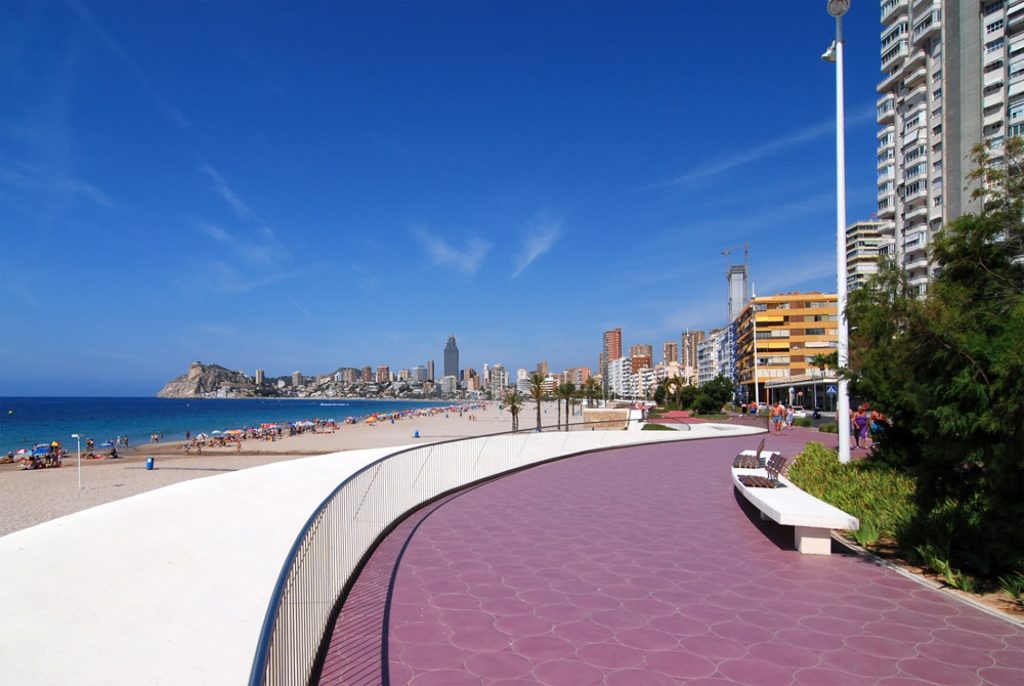
Daily Tasks Without a Car
Groceries and Essentials
You will rarely walk more than 5–10 minutes to reach a supermarket. Mercadona, Lidl, Consum, and Carrefour are spread across the city in a way that supports pedestrian living.
Small neighbourhood shops also reduce the need for big trips.
Cafés, Work Spots and Food
Benidorm is extremely café-dense. Whether you work from cafés or just use them for breaks, you are never far from an option.
The same applies to bakeries, takeaway food, and casual dining.
Gyms and Fitness
Most areas have at least one gym within walking distance. Many nomads choose their accommodation based on gym proximity — and it usually works.
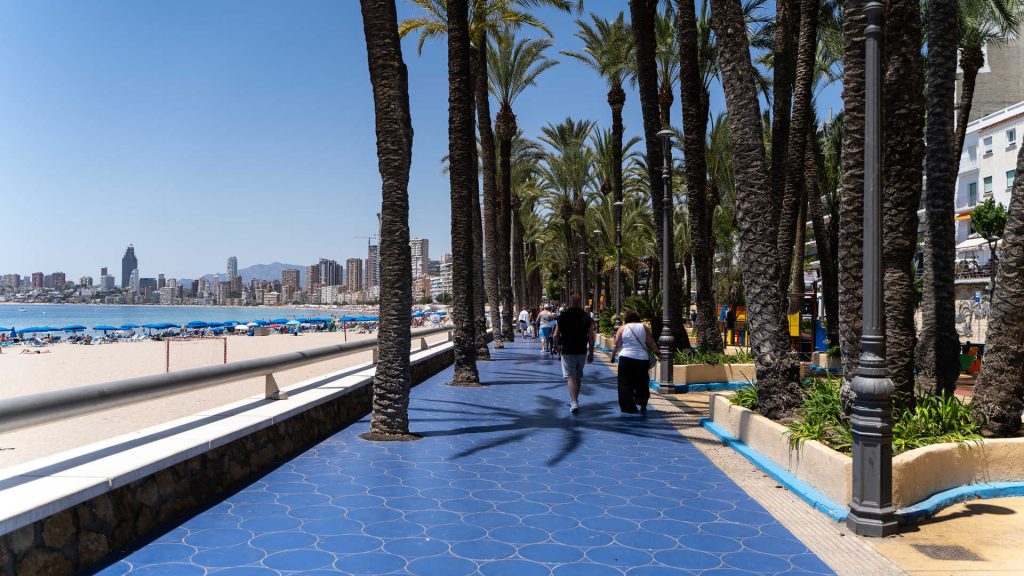
Terrain: Easier Than Expected
Benidorm is flatter than many coastal cities. While there are some uphill areas, most daily walking routes are gentle and manageable.
This matters more than people realise. Walkability isn’t just about distance — it’s about effort.
Neighbourhood Differences
Not all areas feel equally walkable:
- Old Town / Centro: Extremely walkable, dense, practical
- Levante: Walkable but busier and noisier
- Poniente: Walkable, calmer, more residential
- Rincón de Loix: Walkable but more tourist-focused
- Outer Finestrat zones: Less walkable without transport
Your experience depends heavily on where you live.
Public Transport as a Backup
Even without a car, you are not isolated.
Buses are affordable and regular, and taxis are reasonably priced for occasional use. This creates a hybrid system: walking first, transport when needed.
Many nomads use taxis only for:
- Large grocery runs
- Late-night returns
- Beach trips outside the city

The Psychological Benefit of Walkability
Walkability does more than save money.
It:
- Creates natural movement in your day
- Improves routine stability
- Reduces decision fatigue
- Makes days feel simpler
Many nomads report feeling less “stuck” in Benidorm precisely because they can walk everywhere.
The Limits of Walkability
Benidorm is walkable — but not limitless.
You may miss a car when:
- Visiting remote beaches or coves
- Exploring inland villages
- Carrying heavy shopping regularly
This is why many nomads combine walking with occasional rentals or taxis instead of owning a car.
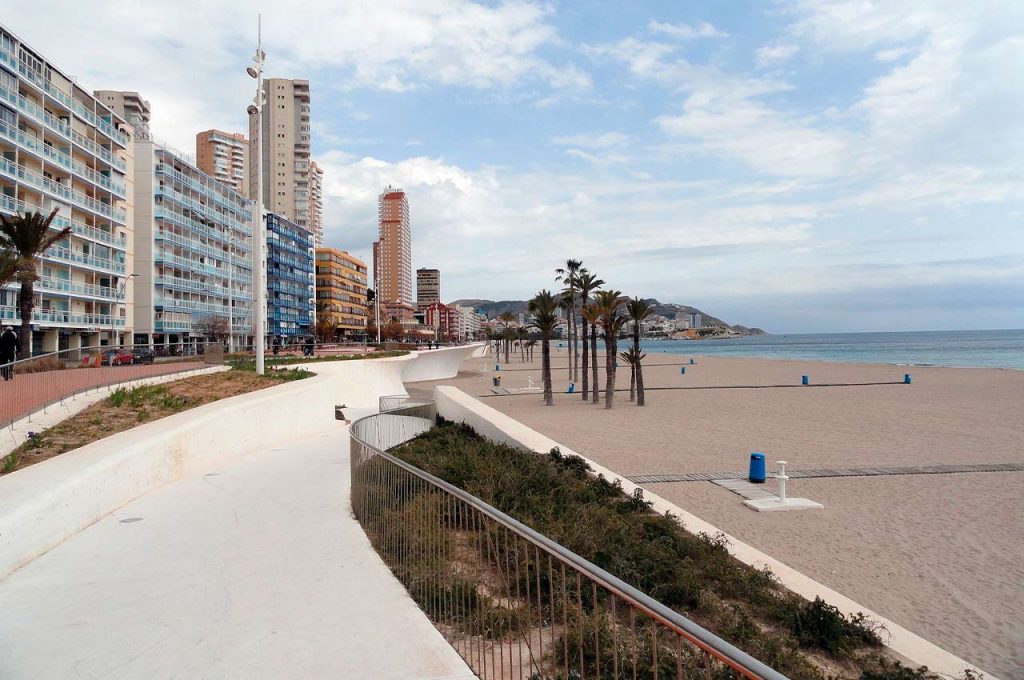
Is Benidorm More Walkable Than Other Nomad Cities?
Compared to many coastal destinations, yes.
Benidorm is more walkable than:
- Many Portuguese beach towns
- Most Mediterranean resort cities
- Large Spanish inland cities
Its density works in favour of pedestrians. Benidorm is not just walkable — it is comfortably livable without a car.
For digital nomads, this means:
- Lower monthly costs
- Simpler routines
- More physical movement
- Less logistical stress
If you choose your neighbourhood well, Benidorm supports a lifestyle where walking isn’t a compromise — it’s the default.
And in a city designed around leisure, that quiet practicality becomes one of its most underrated strengths.