

One of the biggest advantages of living in Benidorm is that you can comfortably manage daily life without owning a car.
Supermarkets, cafés, beaches, coworking spaces, restaurants, pharmacies and public services are all within walking distance for many residents. If you need to travel further, buses and the TRAM connect the city with other destinations along the Costa Blanca.
But what happens if you decide to live somewhere outside Benidorm?
Many digital nomads and long-stay visitors are attracted by quieter towns such as Altea, Villajoyosa, Finestrat, El Campello or even Alicante. Others dream of renting a villa in the hills with sea views, assuming they can simply rely on public transport whenever they need to get around.
The reality is more nuanced.
Some places on the Costa Blanca are surprisingly easy to live in without a car. Others become frustrating very quickly if you depend entirely on public transport.
Before choosing where to live, it’s worth understanding how mobility changes once you leave Benidorm behind.
Why Benidorm Is So Easy Without a Car
Benidorm was largely designed around tourism and high-density living.
Unlike many coastal towns that spread out over large areas, Benidorm is remarkably compact. Thousands of apartments, shops, supermarkets and services are concentrated within a relatively small area.
For many residents, a typical day involves nothing more than walking.
You can buy groceries, go to the gym, have lunch, work from a café, walk along the beach and return home without ever needing a vehicle.
This convenience is easy to underestimate until you move somewhere else.
Many people only realise how valuable Benidorm’s walkability is after leaving it.
The Costa Blanca Is Not One Place
When people talk about “living on the Costa Blanca,” they often imagine one continuous coastal area.
In practice, every town has a completely different character.
Some are compact and well connected.
Others are made up of residential developments built on hillsides several kilometres from the town centre.
Two places that appear close on a map can offer completely different daily experiences.
The key question is not simply which town you choose.
It is which neighbourhood you choose within that town.

Alicante: Probably the Best Car-Free Alternative
If you decide not to live in Benidorm, Alicante is probably the easiest place to remain car-free.
As a provincial capital, Alicante offers:
- an extensive bus network;
- TRAM connections to much of the northern Costa Blanca;
- railway services;
- walkable shopping districts;
- supermarkets in most neighbourhoods;
- year-round public services.
Many residents comfortably live without owning a vehicle.
Depending on where you rent, you may occasionally use public transport more often than in Benidorm, but daily life remains very manageable.
For remote workers who want a larger city while avoiding the cost and hassle of owning a car, Alicante is one of the strongest options on the Mediterranean coast.
Villajoyosa: Walkable If You Choose Carefully
Villajoyosa has become increasingly popular with digital nomads looking for a quieter lifestyle.
The historic centre and beachfront areas are highly walkable.
Shops, cafés, supermarkets and restaurants are generally close together, making everyday life relatively convenient.
However, some residential developments sit further away from the centre.
Living in one of these areas without a car may mean relying more heavily on buses or longer walks.
Fortunately, Villajoyosa is also connected to the TRAM, making travel to Benidorm and Alicante relatively straightforward.
For many long-stay visitors, it offers a pleasant balance between tranquillity and accessibility.
Altea: Beautiful, But Consider the Hills
Altea is one of the Costa Blanca’s most picturesque towns.
Its whitewashed Old Town, seafront promenade and slower pace of life attract many people looking for something different from Benidorm.
Living without a car is certainly possible in some parts of Altea.
If you stay close to the promenade or the town centre, many daily needs can be met on foot.
The challenge comes from the geography.
Much of Altea is built on hills.
Properties with spectacular sea views often require steep walks that become tiring in summer or when carrying shopping.
Some residential areas are considerably easier to reach by car than by public transport.
Choosing the right location is therefore far more important than simply choosing Altea itself.
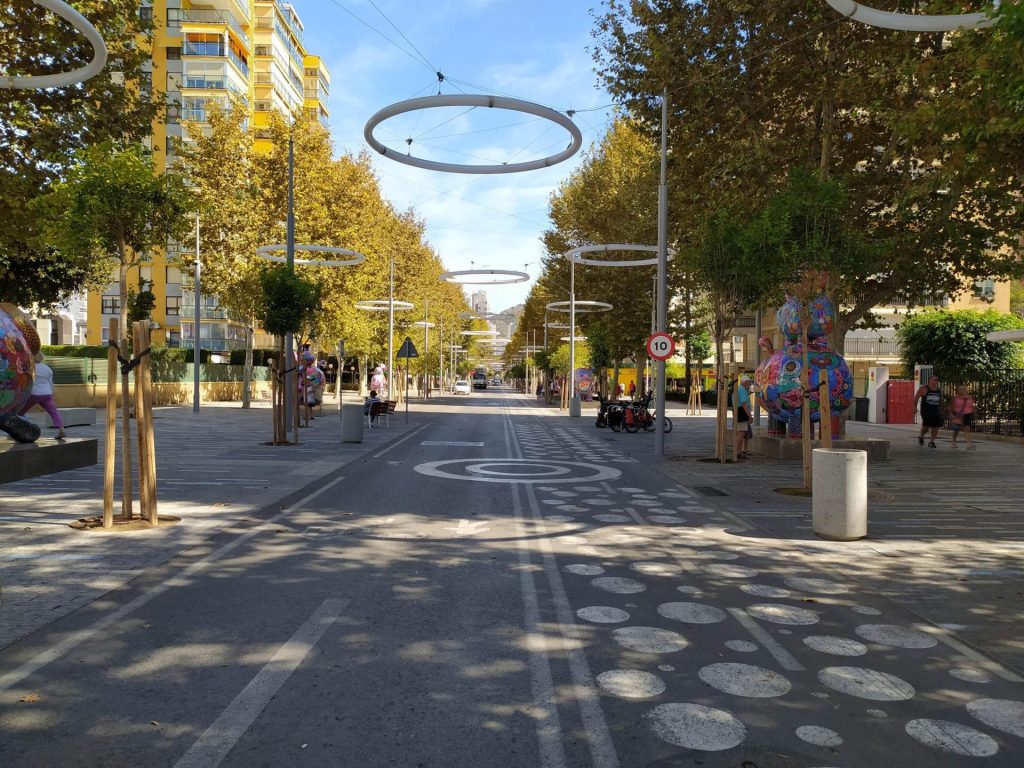
Finestrat: The Biggest Surprise
Finestrat is often misunderstood.
The municipality actually consists of two very different areas.
The traditional mountain village is charming but relatively small, with limited services for everyday living.
The newer residential developments closer to Benidorm offer supermarkets, shopping centres and modern housing, but they are spread across a much larger area.
If you live near La Marina Shopping Centre, daily life can be reasonably convenient.
If you choose a hillside urbanisation further away, owning a car quickly becomes much more practical.
This is one of those destinations where researching the exact location before renting is essential.
Smaller Coastal Towns Can Be More Challenging
Many Costa Blanca villages look idyllic in photographs.
Quiet beaches.
Small marinas.
Sea-view apartments.
Relaxed cafés.
However, everyday life can become more complicated than visitors initially expect.
Some towns have:
- fewer supermarkets;
- limited healthcare facilities;
- reduced public transport outside summer;
- fewer coworking options;
- less frequent bus services.
For retirees this may not be an issue.
For someone working remotely five days a week, these practical limitations can become much more noticeable.
Public Transport Is Good—But It Has Limits
The Costa Blanca’s public transport network is generally reliable for regional travel.
The TRAM is particularly useful for connecting Alicante, El Campello, Villajoyosa, Benidorm and several other coastal destinations.
Bus services also cover many towns.
However, public transport works best for travelling between towns.
It becomes less convenient once you need to reach residential developments located away from the main routes.
Living two kilometres uphill from the nearest stop can completely change your daily routine.
This is why experienced residents often advise newcomers to study the exact location rather than relying on the town’s reputation.
Think About Your Weekly Routine
Before deciding whether you need a car, imagine an ordinary Tuesday rather than a holiday weekend.
Ask yourself:
- Where will you buy groceries?
- How far is the nearest supermarket?
- Can you walk to a pharmacy?
- Is there a café where you can work?
- How long does it take to reach the beach?
- What happens if you need medical care?
- Can you easily reach the train or TRAM station?
These practical questions usually reveal whether a location is genuinely suitable for car-free living.

Alternatives to Owning a Car
Many long-stay visitors discover they don’t need to own a vehicle even if they occasionally use one.
Instead, they combine several options.
Walking covers most daily journeys.
The TRAM is ideal for regional travel.
Local buses connect many neighbourhoods.
Ride-hailing services and taxis are widely available for occasional trips.
Car rental companies also make it easy to hire a vehicle for a weekend, a road trip or a shopping excursion without paying the year-round costs of ownership.
For many digital nomads, this combination offers the best balance between flexibility and affordability.
Can you live car-free outside Benidorm on the Costa Blanca?
Absolutely—but only in the right locations.
Alicante makes it easy.
Central Villajoyosa works well.
Parts of Altea are perfectly manageable.
Some areas of Finestrat can be convenient, while others are much more car-dependent.
The mistake many newcomers make is choosing accommodation based on beautiful views rather than everyday practicality.
A sea-view apartment in a remote hillside urbanisation may look perfect in photos, but if every supermarket visit requires a taxi, the novelty can wear off surprisingly quickly.
If you’re planning to stay on the Costa Blanca for several months or longer, think beyond the holiday experience.
Choosing a neighbourhood with good walkability, reliable public transport and easy access to daily services can make a much bigger difference to your quality of life than simply being close to the sea.