
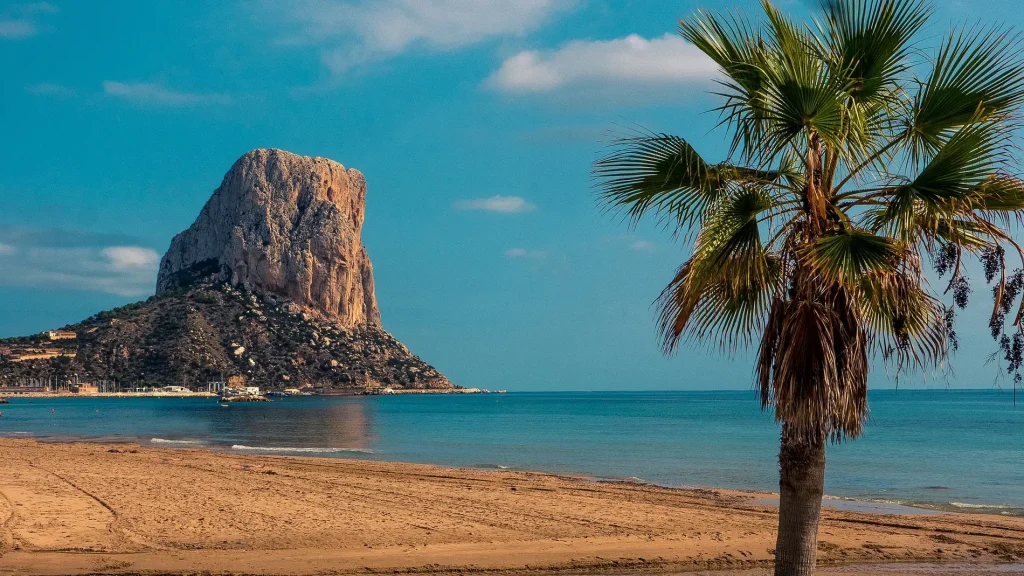
The Peñón de Ifach is one of those places you notice long before you think about visiting it.
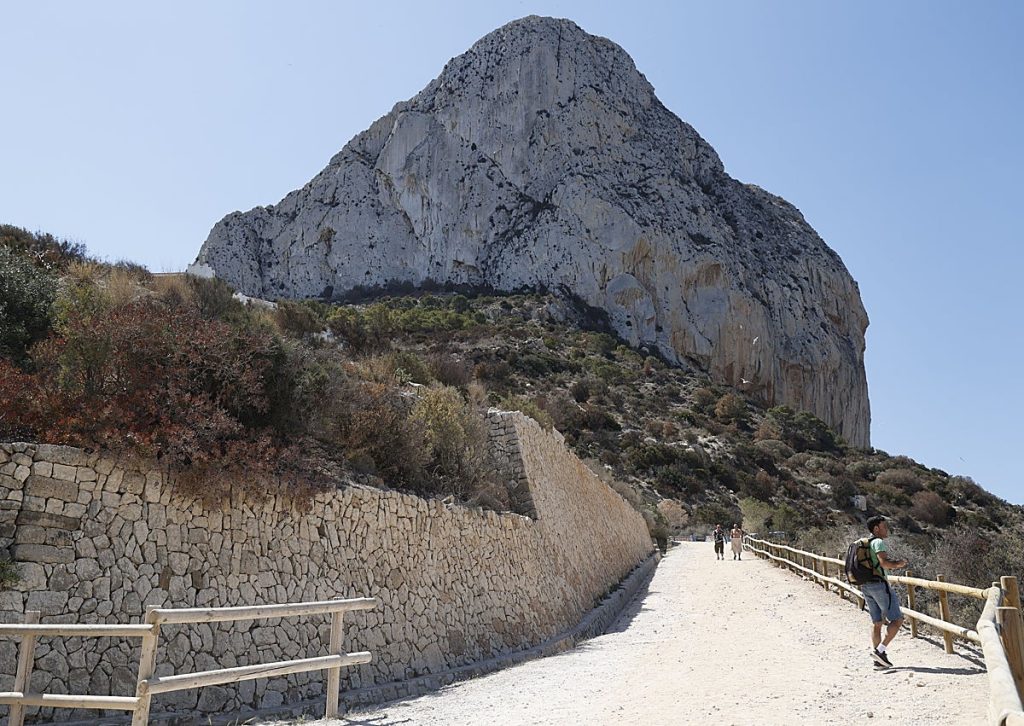
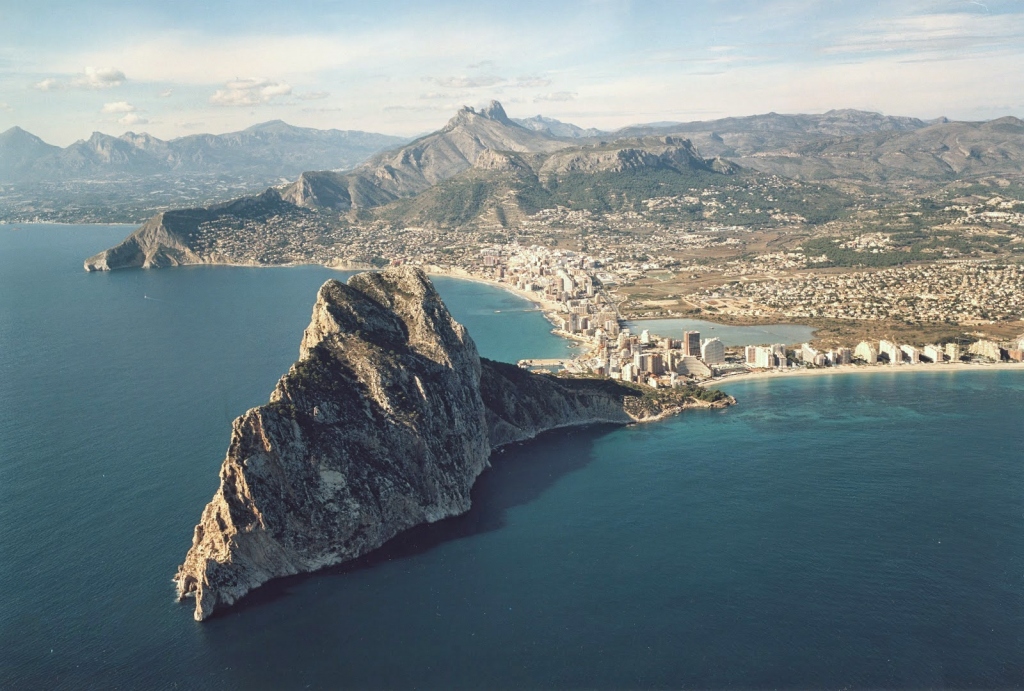
Rising almost vertically from the sea beside Calpe, this enormous limestone rock is one of the most recognisable landmarks on the Costa Blanca. You can see it from coastal roads, beaches, viewpoints and even from parts of Benidorm on a particularly clear day. It appears in countless photographs of the region, but seeing the Peñón from a distance and actually climbing it are two very different experiences.
For digital nomads, remote workers and long-stay residents based in Benidorm, the Peñón de Ifach offers something that is often missing from everyday coastal life: a physically demanding outdoor challenge that can still be reached without travelling far or organising an overnight stay.
It can be an excellent way to step away from the laptop, stretch your legs after several days of working indoors and experience a more dramatic side of the Costa Blanca. The views from the upper part of the rock are genuinely impressive, and reaching the summit creates a real sense of achievement.
However, this is not simply a pleasant paved walk with a viewpoint at the end.
The first section is relatively straightforward, but the route changes significantly after passing through the tunnel cut into the rock. From that point onward, the trail becomes narrower, rougher and considerably more exposed. Some sections require careful footing, the use of fixed ropes or chains for support and enough confidence to move across polished limestone above steep slopes.
That does not make the Peñón de Ifach an extreme mountaineering expedition. Thousands of ordinary visitors complete the route. But it does mean that you should arrive with proper footwear, realistic expectations and a willingness to turn back if the conditions or terrain make you uncomfortable.
The good news is that reaching the summit is not the only way to enjoy the natural park. You can walk through the more accessible lower section, visit the viewpoints, reach the tunnel and return without continuing onto the hardest part. You can also combine the visit with Calpe’s fishing port, beaches, salt lake and seafront promenades.
The real question, therefore, is not simply whether the Peñón de Ifach is worth visiting.
It is whether the complete hike is right for you — and how to organise the day so that the experience remains enjoyable rather than stressful.
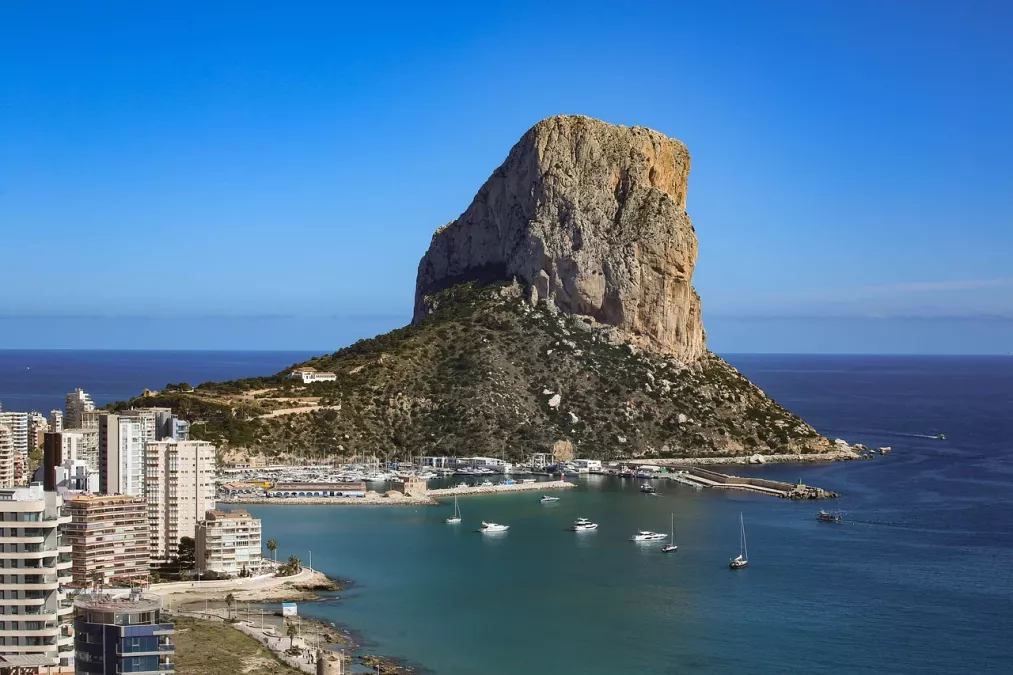
Where Is Peñón de Ifach?
The Peñón de Ifach — officially known in Valencian as the Penyal d’Ifac — stands on the coastline of Calpe, approximately northeast of Benidorm in the province of Alicante.
Calpe is one of the best-known coastal towns on the northern Costa Blanca. It sits between Altea and Moraira and can be reached from Benidorm by car, bus or the Alicante TRAM network. This makes the Peñón one of the most accessible substantial hiking experiences for people staying in Benidorm without requiring an especially long journey.
The rock rises directly beside the Mediterranean and is connected to the mainland by a narrow strip of land. It reaches approximately 332 metres above sea level and extends for around one kilometre. Although that height may sound modest compared with inland mountains, its position immediately above the sea gives it a much more dramatic appearance.
The Peñón and its surroundings form the Peñón de Ifach Natural Park, one of the smallest but most distinctive protected natural areas in the Valencian Community. Despite its compact size, the park contains considerable botanical and ecological diversity. More than 300 plant species have been recorded there, including rare and endemic Mediterranean vegetation, while its cliffs provide habitat for numerous seabirds and migratory species.
The Peñón has also played a role in the history of Calpe. Archaeological remains indicate that different communities occupied or used the area over the centuries, including an Iberian settlement on its western slope and the medieval settlement known as the Pobla Medieval d’Ifac near its base. The rock remained in private ownership until it was acquired by the Generalitat Valenciana and declared a natural park in 1987.
You do not need to know this history to enjoy the walk, but it helps explain why the Peñón is more than a convenient viewpoint. It is a natural landmark, wildlife habitat and historic site concentrated into a surprisingly small area.
Why Visit Peñón de Ifach from Benidorm?
Benidorm already offers beaches, coastal walks and several places to enjoy impressive views. Serra Gelada, the Sierra Cortina area and the viewpoints around the old town all provide opportunities to spend time outdoors without travelling far.
The Peñón de Ifach offers a different type of day.
Instead of walking without a fixed objective, you have a clear destination above you from the moment you arrive. The summit remains visible for much of the approach, and the landscape changes as you climb. The route begins close to the streets, apartment buildings and beaches of Calpe, but gradually becomes rockier and more isolated.
For people who spend much of the week sitting at a desk, that contrast can be particularly valuable. The Peñón is close enough to visit on a normal day off, yet distinctive enough to feel like a proper escape from your routine.
There are several reasons why it works especially well as an excursion from Benidorm.
First, the journey is manageable. You do not need to cross the province or rent accommodation for the night. With an early start, you can complete the walk, eat lunch in Calpe and still have time for the beach, harbour or seafront before returning to Benidorm.
Second, the experience is flexible. Strong and confident hikers can aim for the summit, while visitors who are less comfortable with exposure can stop at the tunnel or one of the lower viewpoints. A decision to turn back does not make the outing a failure.
Third, the Peñón provides some of the most extensive coastal views in the area. From the upper route, you can look across Calpe, its beaches, the salt lake and the mountains behind the town. In clear conditions, the Mediterranean horizon seems enormous, and the elevated position creates a different perspective from the coastal viewpoints around Benidorm.
Finally, the excursion combines easily with other parts of Calpe. The fishing port sits almost directly beneath the rock, while the Paseo Ecológico Príncipe de Asturias follows the base of the Peñón for approximately one kilometre. This seafront path provides an attractive alternative or addition for anyone who does not want to complete the summit route.
This flexibility is important. The Peñón de Ifach should not be approached as a summit-or-nothing experience. Even if weather, crowds, tiredness or discomfort prevent you from reaching the top, the surrounding area can still justify the journey from Benidorm.
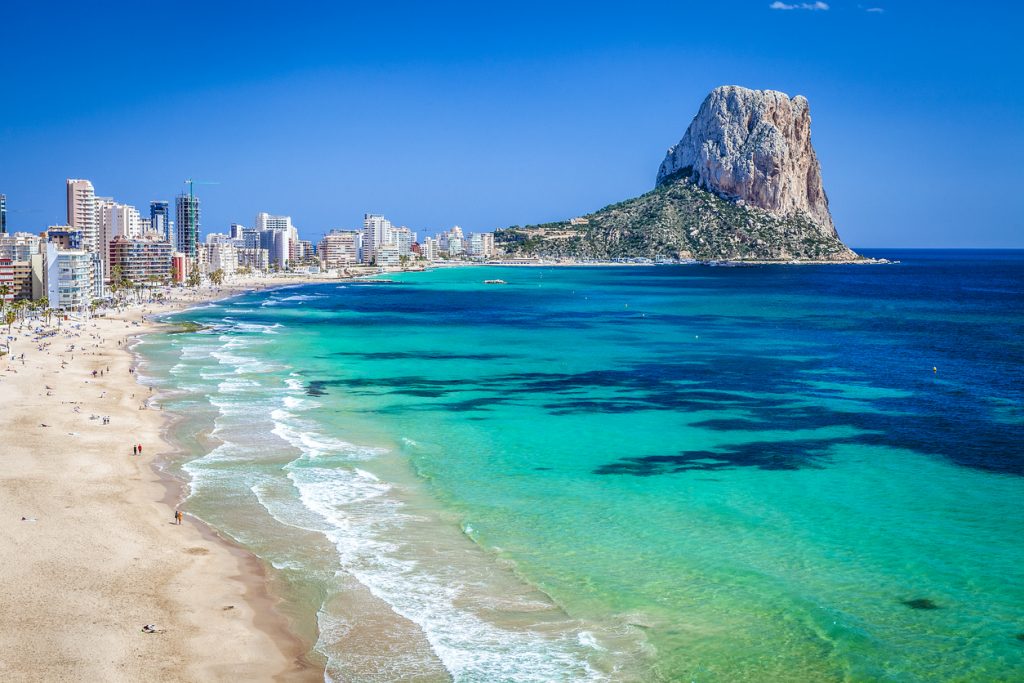
Is Peñón de Ifach a Walk or a Proper Hike?
The most accurate answer is that it is both.
The character of the route changes so sharply that descriptions of the Peñón can sometimes appear contradictory. One person may describe it as an easy walk, while another remembers slippery rock, exposed sections and an uncomfortable descent.
Both may be telling the truth. They may simply have completed different parts of the route.
The route before the tunnel
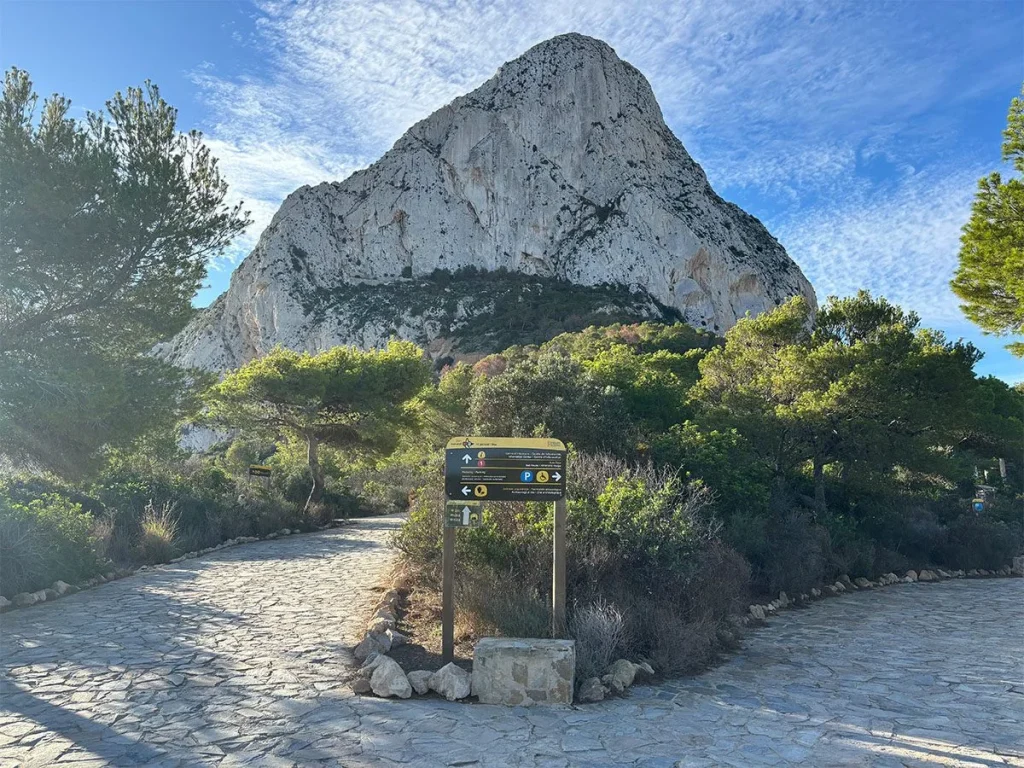
The official route begins near the natural park entrance and interpretation centre. From there, the trail climbs gradually toward the rock through a comparatively well-prepared section.
This first part includes several viewpoints and passes close to archaeological remains before reaching the tunnel. The official description of the lower section classifies the return route to the tunnel as approximately 1.6 kilometres with low difficulty.
Although the path rises steadily, it resembles a conventional recreational walk more than a mountain scramble. Visitors with a reasonable basic level of fitness should generally be able to reach the tunnel if they take their time and avoid the hottest hours.
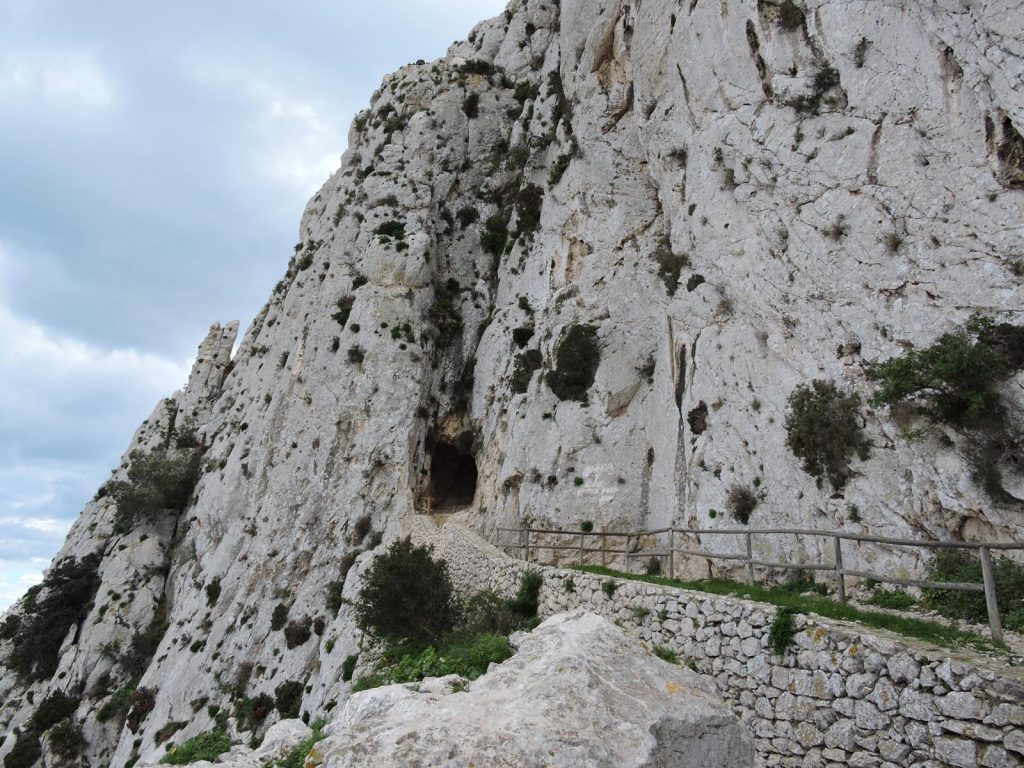
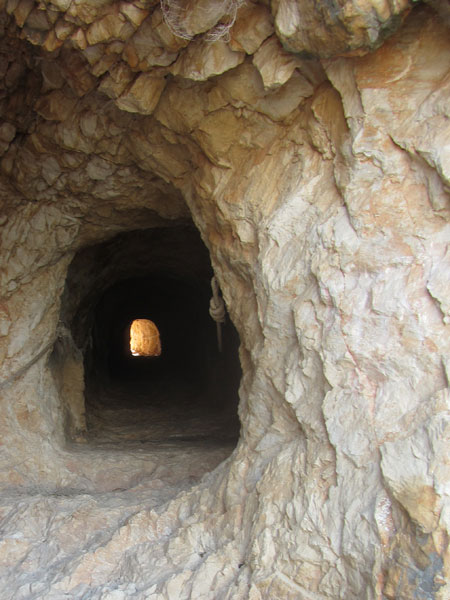
The tunnel itself was excavated through the rock in 1918. It is short — approximately 30 metres according to Calpe’s official tourism information — but the interior can feel damp and slippery. A rope fixed along the wall helps visitors maintain their balance.
Reaching the tunnel already provides a worthwhile experience. You have gained elevation, seen the surrounding coastline from several viewpoints and entered one of the Peñón’s most distinctive features.
The route after the tunnel
Once you emerge from the tunnel on the eastern side of the rock, the nature of the hike changes.
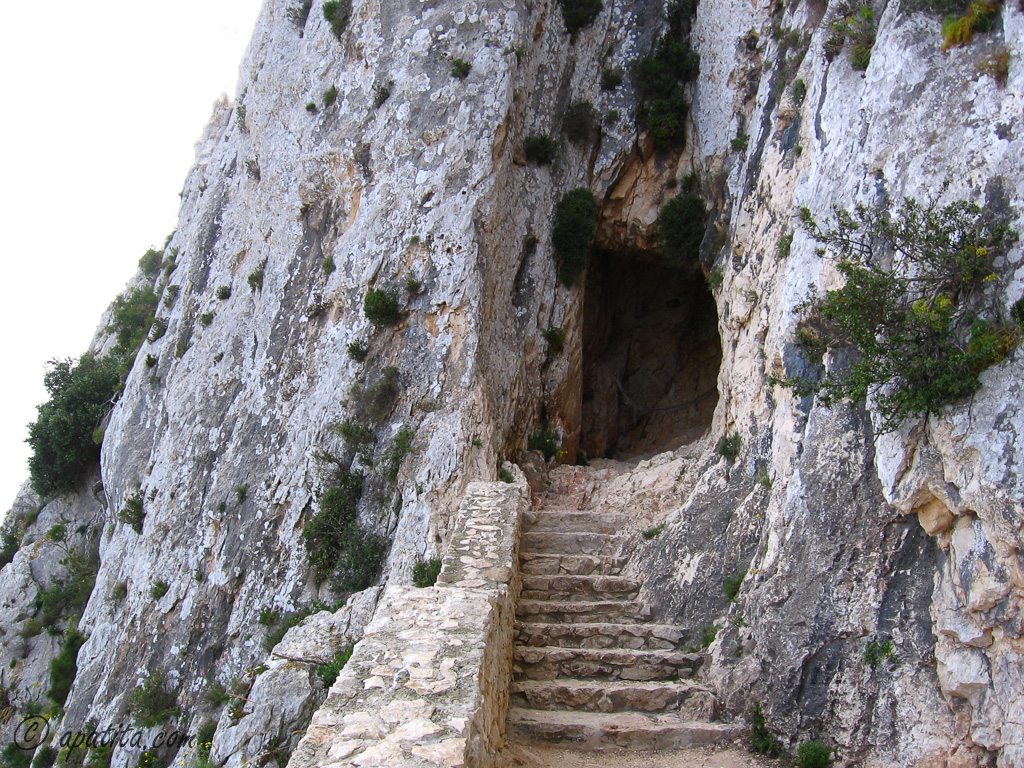
The path becomes narrower, more irregular and less protected. The limestone has been polished by the passage of many thousands of visitors, which can make it surprisingly slippery even in dry conditions. Some sections require you to place your feet carefully, use your hands or hold the fixed support ropes.
There are also places where the slope falls away beside the path. These sections are not necessarily technically difficult for experienced hikers, but they can feel intimidating to anyone with vertigo, poor balance or little experience on rocky terrain.
The official Calpe tourism description explicitly warns that a more complicated section begins after the tunnel, while municipal guidance recommends that children should not continue beyond this point because of the danger of the path.
After the tunnel, the trail eventually divides. One direction leads toward the Mirador de Carabiners, while the other continues toward the summit. The final ascent is steep and uneven, and you may need to wait for other visitors in narrow sections.
The descent demands at least as much attention as the climb. Gravity, tired legs and polished rock make downward movement less comfortable, particularly for people who felt confident while ascending. Calpe’s own route information describes the summit path on the north face as slippery.
For that reason, the Peñón should not be judged solely by its distance or altitude. It is not an especially long hike, but the terrain after the tunnel makes it more serious than its statistics suggest.
A useful way to think about the route is:
- Entrance to the tunnel: a moderately uphill recreational walk.
- Tunnel to the Carabiners viewpoint: a rougher and more exposed hiking trail.
- Final route to the summit: a short but demanding rocky ascent requiring confidence, balance and concentration.
You do not need climbing equipment for the normal hiking route, and it should not be confused with the technical climbing routes on the rock’s vertical faces. Nevertheless, ordinary beach shoes, smooth-soled trainers and casual holiday clothing are not appropriate for the upper section.
The Peñón de Ifach is accessible, but it should still be treated as a real hike.

Do You Need a Reservation for Peñón de Ifach?
Yes. At the time of writing, you must make an online reservation before accessing the official Peñón de Ifach hiking route.
This is not an optional recommendation intended only for busy summer weekends. The reservation system forms part of the management of the natural park and is used to control the number of people entering the route.
Reservations are made through the official website of the Generalitat Valenciana. They are personal and non-transferable, which means that each person in your group needs their own booking. Park staff may ask to see the reservation during your visit, so keep the confirmation accessible on your phone rather than assuming that giving the name of the person who organised the trip will be enough.
It is possible to request a reservation on the same day when spaces remain available. However, relying on this is unnecessary and potentially frustrating, particularly at weekends, during public holidays and throughout the busiest parts of spring and summer.
For a planned day trip from Benidorm, the sensible approach is to reserve your place before organising transport or making restaurant plans in Calpe.
What the reservation does not guarantee
A reservation allows you to access the route, but it does not guarantee good hiking conditions.
The park may still be unsuitable because of rain, strong wind, extreme heat or another temporary safety issue. You should therefore check the weather and any official park notices shortly before travelling.
The reservation should never be interpreted as pressure to reach the summit. It simply gives you permission to enter the route. You remain free to stop at the tunnel, choose the Carabiners viewpoint instead of the summit or turn around at any point.
This distinction matters because some visitors continue beyond their comfort level simply because they have booked the route and travelled to Calpe. That is the wrong way to approach the Peñón. The reservation is an administrative requirement, not a commitment to complete the climb.
Book each person separately
One common mistake is for a group organiser to make a single booking and assume that it covers everyone.
The official conditions specify that reservations are individual and that only one reservation may be made per person per day. They cannot be transferred to another visitor.
Before leaving Benidorm, check that everyone has:
- a valid reservation in their own name;
- access to the confirmation;
- suitable footwear;
- enough water;
- a realistic understanding of the route.
The online system and access rules can change, so the official natural park website should always be treated as the final authority rather than an old blog post, social media video or saved screenshot.
How to Get to Peñón de Ifach from Benidorm
The Peñón is close enough to Benidorm to work well as a day trip, but the best transport option depends on whether your priority is speed, cost or flexibility.
Driving is normally the easiest option for an early hiking start. The intercity bus can be surprisingly practical when its timetable fits your plan. The TRAM is scenic and useful, but it involves an additional transfer after reaching Calp station.
Whichever option you choose, do not calculate only the journey between Benidorm and Calpe. You also need to reach the natural park entrance, organise the return trip and allow enough time to descend without rushing.
By car
Travelling by car gives you the greatest control over the day.
Calpe lies northeast of Benidorm and is reached via the main coastal road network. Depending on your starting point, traffic and route, the journey will usually be manageable as part of a morning excursion rather than feeling like a long road trip.
The main advantage is the ability to arrive early, begin walking before the strongest heat and stay in Calpe for lunch or the beach without being tied to a return timetable.
The main disadvantage is parking.
There is parking in the area providing access to the interpretation centre and the north side of the Peñón, but spaces near the park and port can become difficult to find during busy periods. Official Calpe information identifies the parking area by the interpretation centre as the normal access point for the northern side of the rock.
Do not assume that the closest possible parking space will be available. During summer, weekends and public holidays, it is better to arrive early and accept that you may need to walk a little farther.
Parking farther away is not necessarily a major problem at the beginning of the day. It becomes more noticeable after the descent, particularly if your legs are tired and the temperature has risen.
A sensible driving plan is:
- leave Benidorm early;
- navigate to the natural park or interpretation centre rather than simply entering “Calpe”;
- allow extra time for parking;
- keep valuables out of sight;
- check local parking signs carefully;
- remember where you parked before beginning the route.
Never leave the reservation, water or hiking shoes in the car while walking toward the entrance. It sounds obvious, but the park is surrounded by an urban area, and some visitors treat the approach like a normal seafront stroll until they realise they are missing something essential.
By intercity bus
ALSA operates direct services between Benidorm and Calpe.
The official route information currently shows several daily departures, with scheduled journey times generally ranging from around 30 to 45 minutes depending on the service. The exact frequency and departure times must be checked for the date of travel.
This can make the bus one of the most practical car-free options. Unlike the TRAM, it may place you closer to the urban centre or coastal areas, depending on the stop used by your particular service.
However, you should confirm three things before buying the ticket:
- the precise Benidorm departure point;
- the Calpe arrival stop;
- the time and location of the return service.
Do not assume that every bus uses exactly the same stops or that the place where you arrive will automatically be the most convenient point for the Peñón.
The bus works particularly well when you can find an early outward journey and a return service late enough to allow for the hike, lunch and a margin for delays. It is less suitable when the available timetable forces you to start the route during the hottest part of the day or rush the descent to catch the last convenient connection.
Buy or reserve the ticket in advance during busy periods, and keep the digital ticket and identification required by the operator accessible.
By TRAM
The Alicante TRAM’s Line 9 connects Benidorm with Calp and continues north toward Dénia. It provides a useful public transport alternative and offers a more scenic journey than travelling by road.
The important detail is that Calp TRAM station is not beside the Peñón.
Once you arrive at the station, you need to continue toward the beaches and port area. Calpe’s official tourism information advises passengers arriving by TRAM to use the local L1 or L2 urban bus in the direction of the beaches.
This makes the TRAM journey a two-stage trip:
- Benidorm to Calp on Line 9;
- Calp station toward the coastal area by urban bus, taxi or another suitable connection.
The local urban service is operated by Autobuses Ifach, whose Lines 1 and 2 connect different parts of Calpe, including the TRAM station and beach areas.
The TRAM can still be a good option, especially for readers who already use the network regularly and do not mind the transfer. It also removes the stress of driving and parking.
Its disadvantages are the longer total journey and the need to coordinate three different elements:
- the Line 9 timetable;
- the local bus connection;
- the return journey after the hike.
TRAM Alacant publishes an official journey planner and current Line 9 timetables. These should be checked on the day of planning because seasonal services, engineering works and timetable changes can affect the journey.
For a summit attempt, choose a connection that gets you to the park early. A leisurely arrival around midday may be acceptable for visiting Calpe, but it is a poor strategy for a summer ascent.
By taxi or private transfer
A taxi offers the simplest door-to-door journey but is naturally more expensive than public transport.
It may make sense when:
- several people are sharing the fare;
- you want to start very early;
- public transport times do not fit the reservation;
- you are carrying hiking equipment;
- you want to combine the route with several places around Calpe;
- someone in the group would struggle with transfers or additional walking.
For the return journey, you can arrange a collection time or request a local taxi after the hike. Avoid setting an unrealistically precise pickup immediately after your estimated descent. Hiking times vary, and rushing downhill to meet a driver would introduce exactly the kind of pressure you should avoid.
A more comfortable arrangement is to finish the route, walk toward the port, drink something and request transport once everyone is ready.
Which Transport Option Is Best?
For most people, the choice can be reduced to three priorities.
Choose the car if you want the earliest possible start and maximum flexibility.
Choose the direct bus if you want a relatively simple car-free day and can find suitable outward and return times.
Choose the TRAM if you prefer rail travel, already understand the network and do not mind transferring to a local bus in Calpe.
The cheapest option is not automatically the best. Saving a small amount is not worthwhile if it results in a late start, missed connection or rushed descent.
For the complete summit hike, timing matters more than minor differences in transport cost.
Arriving at the Natural Park
The Peñón dominates the Calpe skyline, but seeing the rock does not mean you have reached the official hiking entrance.
The normal access is on the northern side, close to the interpretation centre. Follow signs for the natural park rather than approaching the rock from the port and assuming that any visible path leads to the summit.
When you arrive, take a few minutes to organise yourself before beginning the climb.
Use the facilities available near the entrance, check your water supply, apply sunscreen and make sure the reservation confirmation is easy to retrieve. Adjust your shoes and backpack before the gradient increases.
This is also the correct moment to assess the weather.
Look at the summit, the movement of the trees and vegetation, the amount of cloud and the general heat. Conditions at the entrance will not always reflect the wind or exposure higher on the rock, but they can provide an early warning that the original plan may need to change.
Do not begin the hike in “town mode”
Calpe’s apartments, beaches and cafés are very close to the park. That can create a misleading sense that you are still participating in an ordinary urban activity.
Once you start climbing, you should already have:
- water;
- proper footwear;
- sun protection;
- your phone;
- the reservation;
- any medication you may need;
- a small snack if completing the upper route.
Do not plan to “buy water later.” There are no cafés after you enter the hiking route.
Likewise, do not carry unnecessary beach bags, shopping or a laptop simply because you intend to use them elsewhere in Calpe later. Leave non-essential items securely at your accommodation or in the car, never visibly unattended.
Check the time before starting
Your start time should be based on the full experience, not on how long you think it will take to reach the summit.
You must allow time for:
- the climb to the tunnel;
- cautious movement after the tunnel;
- stops for photographs;
- waiting for other hikers in narrow sections;
- time at the summit or viewpoint;
- the complete descent;
- breaks caused by heat or tiredness.
You should also know when your return bus or TRAM leaves, while maintaining enough margin that missing one connection does not create a crisis.
The aim is to begin the route feeling unhurried. The Peñón is much more enjoyable when you can stop, reassess and turn back without watching the clock every few minutes.
The Peñón de Ifach Route Explained Step by Step
The official hiking route to the summit is not especially long, but it contains several clearly different stages.
Understanding those stages before you begin is one of the best ways to avoid disappointment or unnecessary risk. The first part feels like a conventional uphill walk. The middle section introduces rougher terrain and exposure. The final climb is steeper, slower and more demanding than many first-time visitors expect.
You do not need to decide at the entrance that you will definitely reach the summit. A better approach is to reassess the route at each natural turning point.
From the Entrance to the Tunnel
The walk begins near the natural park entrance and interpretation centre on the northern side of the Peñón.
At first, the surroundings still feel connected to Calpe. Apartment buildings, roads and the urban coastline remain close, and the lower paths are much more prepared than the trail higher up.
The route climbs progressively through the lower part of the natural park. The gradient is noticeable, particularly in warm weather, but the terrain is generally straightforward. This is the section where you can settle into a comfortable pace rather than trying to gain height quickly.
There are opportunities to stop, look back across Calpe and appreciate how rapidly the view opens up. The town, beaches and salt lake begin to appear below, while the rock itself becomes increasingly dominant around you.
This lower section also passes through an area with historical interest. Remains associated with earlier occupation of the Peñón can be found around the slopes, reinforcing the fact that this is not simply a modern recreational trail.
For most visitors with basic fitness and suitable footwear, the walk to the tunnel should be manageable. The main challenges are the steady climb, sun exposure and the temptation to walk too fast at the beginning.
Why you should not rush this section
The lower route may feel easy compared with what comes later, but using too much energy here is a common mistake.
The entire hike is relatively compact, which encourages some visitors to treat it almost like a race. They walk quickly to the tunnel, continue without pausing and only begin to feel tired when the terrain becomes more technical.
A better strategy is to use the lower section as a warm-up.
Walk at a pace that allows you to talk comfortably, drink small amounts of water and stop briefly at viewpoints without turning every pause into a long rest. The goal is to arrive at the tunnel feeling fresh and focused.
Passing Through the Tunnel
The tunnel is one of the most distinctive features of the Peñón de Ifach route.
Excavated through the rock, it allows the hiking trail to pass from the northern side of the Peñón to its eastern face. It is not especially long, but the conditions inside are very different from the open path outside.
The floor can be smooth, damp and slippery. The limestone has been polished by generations of walkers, and the reduced light makes it harder to judge each step.
A fixed rope runs along the wall to provide support. Use it when necessary, but do not rely on it as a substitute for secure footing.
Move slowly, leave space between yourself and the person ahead and avoid stopping in the middle to take photographs when other people are waiting behind you.
The tunnel can also become congested during busy periods because walkers are moving in both directions. Visitors returning from the summit may be tired and need more time, so patience is important.
What the tunnel tells you about the rest of the route
The tunnel is more than a physical passage through the rock. It is also the point where you should reconsider whether you want to continue.
Before the tunnel, the route is relatively controlled and predictable. After emerging on the other side, the path becomes narrower and more exposed.
Ask yourself:
- Did the slippery surface inside the tunnel make you uncomfortable?
- Are your shoes providing enough grip?
- Are you already feeling tired?
- Is the weather becoming hotter or windier?
- Are you comfortable with the idea of uneven rock and steeper drops beside the path?
There is no disadvantage in deciding that the tunnel is your turning point.
Reaching it still gives you a proper walk, elevated views and a close experience of the Peñón. Turning back here is a sensible decision for many visitors, not a failure to complete the attraction.
From the Tunnel to the Trail Junction
After leaving the tunnel, the atmosphere changes quickly.
The route now follows the eastern side of the rock, with rougher limestone underfoot and more open views toward the Mediterranean. The path is less uniform, and movement becomes slower.
You may need to step across irregular rock, place your feet at different heights and use your hands occasionally for balance. Fixed ropes or chains appear in sections where additional support is useful.
This is where casual visitors often realise that online photographs did not fully communicate the nature of the route.
The trail is still followed by large numbers of hikers, and it does not require technical climbing skills. However, it demands concentration. You cannot simply walk while looking continuously at the scenery or checking your phone.
Some parts feel exposed because there is no substantial barrier between the path and the descending slope. The actual level of danger depends heavily on behaviour. A careful hiker staying on the marked route is in a very different situation from someone moving carelessly near the edge to take photographs.
Give other hikers room
The path becomes too narrow in places for people to pass comfortably.
Allow faster hikers to move ahead when there is a safe area to stand aside. Likewise, do not pressure slower walkers by following immediately behind them.
When people are moving in opposite directions, one person may need to wait in a wider section. Communication is simple and usually friendly. A brief greeting and a clear indication of who will wait avoids confusion.
Do not attempt to overtake in an exposed or slippery section simply because you feel delayed. A few additional minutes make no meaningful difference to the day.

The Junction: Summit or Mirador de Carabiners?
Beyond the tunnel, the route eventually reaches a junction where you can choose between continuing toward the summit or heading to the Mirador de Carabiners.
This is the second major decision point of the hike.
Many visitors automatically follow the summit signs because they assume that the highest point must be the only worthwhile destination. That is not necessarily true.
The Carabiners viewpoint provides a substantial extension beyond the tunnel and allows you to experience the rougher side of the trail without committing to the steep final ascent.
It can be the better option if:
- you are enjoying the route but do not feel fully confident;
- the summit trail looks crowded;
- you are short of time;
- the weather is deteriorating;
- your legs are beginning to tire;
- someone in your group is uncomfortable with the final climb;
- you prefer a quieter viewpoint to the symbolic achievement of reaching the top.
The correct choice is the one that suits your condition at that moment, not the plan you made in Benidorm.
The Path to Mirador de Carabiners
The route toward the Mirador de Carabiners continues across rocky terrain on the side of the Peñón.
It should not be treated as an easy alternative to the lower walk. You have already passed through the tunnel and entered the more demanding section of the park. The path still requires proper footwear, balance and attention.
What it avoids is the steepest final push toward the summit.
The viewpoint provides dramatic coastal scenery and a strong sense of being on the outer face of the rock. For many visitors, this is enough to make the day feel complete.
It is particularly suitable for people who want more than the tunnel but are uncertain about the exposed summit route.
Do not assume that choosing the viewpoint will save a large amount of time. You still need to walk there, enjoy the surroundings and return across the same type of terrain. It is a different objective, not merely a quick detour.
The Final Climb to the Summit
The route to the summit is the most physically and psychologically demanding part of the hike.
The trail rises more steeply over uneven limestone. The surface can be highly polished, and secure foot placement becomes essential. Fixed ropes and chains provide support in some areas, but they do not turn the route into a protected staircase.
You may need to use your hands to steady yourself or help move over higher sections of rock. This is one reason why carrying a large bag, beach equipment or unnecessary electronics is impractical.
The climb is not technically difficult in the same way as a mountaineering route, but it can feel much harder than expected for someone whose normal activity consists of city walking or gym machines.
The strongest challenge is often the combination of factors:
- steep ground;
- slippery limestone;
- exposure;
- heat;
- people moving in both directions;
- limited places to stop;
- awareness that the same terrain must be descended later.
Keep three points of contact when necessary
On the steeper sections, use a simple principle: maintain secure contact with the rock before moving the next hand or foot.
There is no need to climb dramatically or pull your full weight on the ropes. Move deliberately, test your footing and remain close to the stable surface.
Avoid following another hiker too closely. Loose stones, sudden stops or a slip by the person above can affect those underneath.
Likewise, do not dislodge stones or place your feet carelessly on unstable edges.
Do not climb for the photograph
The summit provides expansive views, but the best photographs are not worth moving into an unsafe position.
Remain on stable ground and be aware that wind can affect balance, hats, phones and lightweight belongings. A phone held beyond the edge is easy to drop, and trying to retrieve it would be far more dangerous than losing it.
Photographs should be taken from places where you can stand securely without obstructing the trail.
Reaching the Summit
The summit of the Peñón de Ifach stands approximately 332 metres above the Mediterranean.
Because the rock rises almost directly from sea level, the view feels more dramatic than the altitude alone suggests. Calpe spreads out below, divided by its beaches, urban areas and distinctive salt lake. The coastline extends toward Altea and Benidorm in one direction and toward the northern Costa Blanca in the other.
On a clear day, the combination of sea, mountain ridges and dense coastal development creates an unusually broad perspective on the region.
The summit area can become crowded. Space is limited, and not everyone arrives with the same awareness of other hikers.
Take enough time to recover, drink and enjoy the view, but avoid occupying a narrow passage or unstable edge for an extended photo session.
This is also the moment to check your condition before descending.
If you feel dizzy, overheated or unusually tired, sit somewhere secure, drink water and allow your breathing to settle. Do not begin descending immediately simply because you are concerned about time.
The Descent: Often Harder Than the Climb
Many visitors focus so heavily on reaching the summit that they mentally treat the descent as the easy part.
It may be faster, but it is not necessarily easier.
On steep, polished limestone, descending requires precise foot placement and controlled movement. Your legs may already be tired, and the view down the slope can make exposed sections feel more intimidating than they did during the ascent.
The safest approach is to descend slowly and face toward the rock where necessary. Use the fixed ropes for balance rather than trying to walk upright through every steep section.
Do not jump between rocks or slide on smooth surfaces. Even a minor fall can result in cuts, sprains or a difficult evacuation.
Allow uphill hikers to pass safely
People climbing upward usually have less visibility of hikers descending toward them. At narrow sections, stop somewhere secure and agree who will move first.
Avoid placing yourself directly above another person when loose stones are present.
Groups should not remain bunched together. Leave enough distance that one person stopping suddenly does not cause several others to lose balance.
Tiredness changes decision-making
The descent is where small mistakes become more likely.
You may be hungry, hot, thinking about lunch or checking the time of the return bus. These distractions reduce attention at exactly the point when the terrain still requires it.
Keep your phone stored unless you are standing securely. Continue drinking water, and take short pauses before your legs become shaky.
The route does not become harmless simply because the summit is behind you.
Returning Through the Tunnel
After completing the rough upper section, returning to the tunnel can feel like reaching the easier half of the journey.
However, the tunnel floor may still be slippery, particularly after many visitors have passed through. Your shoes can also carry dust or loose material from the upper trail.
Use the rope, move calmly and give priority to people already inside when space is limited.
Once you emerge onto the northern side, the terrain becomes more predictable. This is a natural point to relax mentally, but you still need to descend the lower path back to the entrance.
The Final Walk Back to the Entrance
The last section follows the same prepared route used earlier in the day.
The views across Calpe are now familiar, and the urban surroundings gradually feel closer. This can be an enjoyable part of the walk, especially if you began early and now see the town becoming busier below.
Continue at a controlled pace. Knees and feet often feel the cumulative effect of the descent more strongly on the final paved or compacted sections.
Once you reach the entrance, take a few minutes before immediately walking toward the port or car.
Drink, stretch gently, check that everyone in the group feels well and decide whether the next priority should be food, shade or rest.
The Peñón may be close to Calpe’s beaches and restaurants, but completing the summit route is still a meaningful physical effort. Treat the period immediately afterwards as recovery rather than trying to rush into the next activity.

How Far Should You Go?
There is no single correct version of the Peñón de Ifach experience.
A practical way to choose is:
Stop before or at the tunnel if:
- you want a scenic uphill walk rather than a demanding hike;
- you have unsuitable footwear;
- you are uncomfortable with slippery surfaces;
- the weather is poor;
- you are visiting with children who should not continue;
- you have limited time or mobility.
Continue to Mirador de Carabiners if:
- you are comfortable after passing the tunnel;
- you want a more adventurous route without committing to the summit;
- you prefer a viewpoint to a steep final climb;
- the summit path is too busy;
- you want to conserve some energy for the rest of the day.
Attempt the summit if:
- you have suitable footwear and enough water;
- the rock is dry;
- you are comfortable with exposure and uneven terrain;
- you have enough time for a careful descent;
- your legs and balance still feel strong;
- the decision feels sensible rather than pressured.
The best experience is not automatically the longest one.
A visitor who reaches the tunnel, enjoys the views and returns comfortably may have a much better day than someone who forces themselves to the summit, becomes frightened and struggles during the descent.
How Long Does the Peñón de Ifach Hike Take?
The Peñón de Ifach is a good example of why hiking time cannot be estimated from distance alone.
The route is relatively short, and the summit rises only 332 metres above sea level. On paper, that can make the excursion appear much easier and faster than it feels in practice.
The upper trail contains polished limestone, narrow passages, fixed support ropes and sections where hikers moving in opposite directions must wait for one another. Time is also lost taking photographs, resting, passing through the tunnel and finding secure footing during the descent.
For that reason, you should plan the hike according to the section you intend to complete.
Entrance to the tunnel and back
For a relaxed visit to the lower route, allow approximately one and a half to two hours.
A fast walker may need less, but the purpose of this option is not to reach the tunnel and return as quickly as possible. You will probably want to stop at viewpoints, look around the historic area and move carefully through the tunnel if you decide to enter it.
This is the most suitable version for visitors who want a worthwhile walk without committing to the exposed upper trail.
Tunnel to Mirador de Carabiners and back
Allow approximately two and a half to three and a half hours for a route that continues beyond the tunnel to the Carabiners viewpoint.
The exact time depends on confidence, trail traffic and how long you spend at the viewpoint. The terrain after the tunnel slows the average pace considerably, even when the total distance remains modest.
This option often provides the best compromise for visitors who want a real hiking experience but are uncertain about the steep final ascent.
Complete summit route
For the full route to the summit and back, a realistic allowance is generally three to four and a half hours.
Experienced hikers moving in cool, quiet conditions may complete it faster. Less experienced visitors, photographers and anyone hiking during a busy period may need longer.
That estimate should include:
- walking from the entrance;
- passing through the tunnel;
- waiting in narrow sections;
- the final ascent;
- a rest at the summit;
- the complete descent;
- short hydration and photography stops.
Do not build your transport plan around the fastest completion time you find online. A person recording a sports activity may move continuously and stop the timer during breaks. That is very different from an ordinary day trip.
Allow extra time in summer
Heat reduces pace and increases the need for breaks.
Even if you begin early, the temperature may rise significantly before you finish the descent. A route that feels comfortable at 08:30 can feel very different two or three hours later.
Crowds also affect timing. The tunnel, support ropes and narrow sections can create short queues, particularly when many people begin at similar times.
For public transport users, it is sensible to leave a generous margin before the return connection. You should be able to descend carefully without worrying that every delay will make you miss the bus or TRAM.
How Difficult Is Peñón de Ifach?
Calling the Peñón simply “easy,” “moderate” or “difficult” does not communicate enough information.
The route tests several different abilities, and a person may find one aspect straightforward while struggling with another.
Cardiovascular effort
The route involves a sustained climb from close to sea level to the summit.
For someone who walks regularly, exercises or hikes occasionally, the physical ascent should normally be manageable at a controlled pace. For someone who is very sedentary, the gradient and heat may feel demanding before the technical section even begins.
You do not need exceptional fitness, but you should be capable of walking uphill for an extended period without becoming exhausted.
Terrain
Terrain is the main reason the hike feels more difficult than its distance suggests.
The limestone after the tunnel is uneven and often highly polished. Grip matters more here than speed or strength.
Hiking shoes or trail shoes with a reliable sole make a significant difference. Ordinary fashion trainers may feel acceptable on the lower route but become insecure higher up.
Wet limestone increases the difficulty substantially. Rain does not simply make the walk less pleasant; it can make already smooth surfaces dangerously slippery.
Exposure and heights
Some walkers who are physically fit become uncomfortable after the tunnel because the path feels exposed.
The route does not require you to walk continuously along a knife-edge ridge, but there are places where steep ground is visible beside the trail and where substantial protective barriers are absent.
People with strong vertigo may find these sections psychologically harder than the climb itself.
This reaction is not always predictable. Someone may feel confident looking at photographs and then become uncomfortable when standing on the actual path.
Balance and coordination
The upper trail requires more than ordinary walking.
You may need to step onto irregular surfaces, lower yourself carefully, turn toward the rock and use your hands for stability. Good balance and confidence moving over natural terrain are therefore important.
A person can have strong cardiovascular fitness and still struggle if they have little experience outside paved paths.
Heat and sun exposure
The Peñón provides limited shade on much of the route.
Direct sun increases physical effort, dehydration and fatigue. It also affects concentration, which matters on the descent.
The same route may feel moderate on a cool winter morning and extremely demanding during a hot summer day.
A realistic difficulty assessment
For practical purposes:
- To the tunnel: low to moderate physical difficulty for most active adults.
- Beyond the tunnel: moderate hiking difficulty with irregular and exposed terrain.
- Final summit route: moderate to demanding for an ordinary visitor, particularly because of grip, exposure and descent.
Experienced hikers may regard the complete route as relatively straightforward. That does not mean it is appropriate for everyone.
Difficulty is always partly personal.
Who Should Not Attempt the Summit?
The summit should not be treated as the default objective for every park visitor.
You should avoid the upper route when the terrain, weather or your physical condition creates unnecessary risk.
People with strong vertigo
Mild nervousness around heights does not automatically prevent someone from completing the hike. Strong vertigo is different.
If exposure causes freezing, dizziness, loss of balance or panic, continuing beyond the tunnel may create a difficult situation for you and for other hikers trying to pass.
The lower route remains a better and more enjoyable option.
Visitors with poor balance or limited mobility
The route after the tunnel includes irregular surfaces and movements that cannot be compared with walking on a normal pavement.
Anyone with significant knee, ankle, hip or balance problems should think carefully before continuing. The descent can place more stress on joints than the climb.
Walking poles may help on some terrain, but they are not a complete solution because certain sections require the use of hands or fixed ropes.
Anyone wearing unsuitable shoes
Footwear should be treated as a deciding factor.
Do not attempt the summit in:
- flip-flops;
- sandals without secure grip;
- smooth-soled fashion shoes;
- worn trainers;
- footwear that already slips inside the tunnel.
Turning back because your shoes are unsuitable is responsible, not overly cautious.
Visitors who are already tired at the tunnel
The tunnel is an excellent checkpoint.
If you are breathing heavily, running low on water or experiencing pain before entering the harder section, the summit is unlikely to improve the situation.
Remember that every metre climbed must also be descended.
People uncomfortable using their hands
The normal hiking route does not require technical climbing, but the upper section may involve using hands, ropes or chains for balance.
Anyone expecting to remain upright on a conventional walking path may be disappointed.
Visitors under 18
The Generalitat Valenciana’s current reservation guidance states that continuing after the tunnel is not recommended for people under 18 because of the danger of the route. This is stricter than many older guides suggest and should be taken seriously when planning a family visit.
Families can still enjoy the lower natural park route and use the tunnel area as their main objective.
Anyone under time pressure
A fixed deadline can encourage poor decisions.
Do not continue toward the summit when you already know that you must descend unusually quickly to reach a bus, restaurant booking or another activity.
The correct response to limited time is to choose a shorter version of the route.
Wet, stormy or strongly windy conditions
The hike should be reconsidered when rain has made the limestone wet or when strong wind affects stability on exposed sections.
A reservation does not make the route appropriate in bad conditions. Calpe, the harbour and the lower coastal walks provide alternatives if the summit plan must be abandoned.
Best Time to Visit Peñón de Ifach
The Peñón can be visited throughout the year, but the experience changes significantly with temperature, daylight and visitor numbers.
Spring
Spring is one of the best periods for the hike.
Temperatures are generally more comfortable than in midsummer, the surrounding vegetation is more noticeable and the days provide enough light for an unhurried excursion.
The main disadvantage is popularity. Weekends, Easter and public holidays can produce high demand for reservations and a busy upper trail.
A weekday morning is usually preferable when your schedule allows it.
Summer
Summer offers long days and generally dry conditions, but it is the most demanding period in terms of heat.
The route has substantial sun exposure, and the climb can become uncomfortable or unsafe during the middle of the day.
For a summer summit attempt:
- reserve in advance;
- begin as early as practical;
- carry more water than you expect to need;
- use strong sun protection;
- avoid adding unnecessary weight;
- be prepared to abandon the summit if the heat becomes excessive.
An afternoon visit may work for the lower area or seafront, but it is not the best default plan for the full hike.
Summer crowds also increase waiting times in the tunnel and narrow sections.
Autumn
Early and mid-autumn can provide excellent hiking conditions.
Temperatures are often milder than in summer, while the sea and coastal landscape remain attractive. Weekdays may also feel less crowded after the main holiday season.
The main issue is unstable weather. Heavy rain episodes can occur on the Costa Blanca, and wet limestone is a serious disadvantage on this particular route.
Check recent as well as current conditions. Rock can remain damp in shaded areas after the rain has stopped.
Winter
Winter is often underrated.
Cool temperatures make the physical climb more comfortable, and the route may be quieter outside weekends and holiday periods. Clear winter days can also provide excellent visibility.
The disadvantages are shorter daylight hours, occasional strong wind and cooler conditions at exposed viewpoints.
Begin with enough time to complete the route well before darkness. Carry a light extra layer even when Calpe feels warm at sea level.
What Is the Best Overall Choice?
For most visitors, the best conditions are likely to be found on a dry weekday morning in spring, autumn or winter.
Summer is still possible, but it requires a much earlier start and stricter attention to water and sun exposure.
Whatever the season, dry rock and sufficient daylight are more important than following a fixed itinerary.
The Peñón will still be there another day. A cancelled summit attempt is preferable to continuing in unsuitable conditions.
What Should You Bring to Peñón de Ifach?
The Peñón de Ifach does not require specialist mountaineering equipment, but the difference between arriving well prepared and treating it like an ordinary seafront walk is considerable.
You should aim to carry enough for several hours outdoors without turning your backpack into an unnecessary burden.
Proper Footwear
Footwear is the most important item.
The lower route may be manageable in ordinary trainers, but the polished limestone beyond the tunnel demands better grip. Trail shoes or lightweight hiking shoes are the safest option for most visitors.
Your shoes should:
- fit securely;
- have a sole with visible grip;
- feel stable on uneven ground;
- be comfortable enough for the descent;
- remain reliable if the surface is dusty or slightly damp.
Do not wear new hiking shoes for the first time on this route. Blisters or pressure points become much more frustrating when combined with steep terrain.
Before continuing beyond the tunnel, pay attention to how your shoes behave on the smoother rock. If they already feel insecure, turn back.
Water
Carry enough water for the entire route.
There are no places to buy drinks once you begin climbing, and the amount you need depends on temperature, pace and the section you intend to complete.
A small bottle may be enough for a cool lower-route visit, but it is not a sensible supply for the full summit hike in warm weather.
For a complete ascent, many visitors will be more comfortable carrying at least one litre per person, and more may be necessary during hotter months. The objective is not to finish every drop but to avoid rationing water because you underestimated the route.
Drink gradually rather than waiting until you feel very thirsty.
Sun Protection
The Peñón is highly exposed to the sun.
Bring:
- sunscreen;
- a cap or secure sun hat;
- sunglasses;
- lightweight clothing appropriate for the season.
Apply sunscreen before starting rather than waiting until you are already sweating. Reapply it when necessary, particularly if you plan to spend additional time on the beaches or seafront after the hike.
Loose hats can become a problem in windy sections. Choose one that fits securely or store it when the wind increases.
A Small Snack
The route is not long enough to require a full meal, but a compact snack can be useful.
Fruit, a simple sandwich, nuts or an energy bar may help if the hike takes longer than expected or if lunch is still some distance away.
Avoid carrying food that melts easily, creates excessive packaging or needs to be prepared on the trail.
All rubbish must return with you.
A Charged Phone
Your phone is useful for:
- showing the reservation;
- checking the route;
- monitoring the weather;
- contacting others;
- taking photographs;
- checking return transport.
Charge it before leaving Benidorm. A small power bank may be useful if your battery is unreliable or if you plan to spend the full day in Calpe.
However, do not walk while staring at the screen. Stop in a secure place before checking maps, messages or photographs.
Reservation Confirmation and Identification
Keep the reservation confirmation accessible.
A screenshot can be useful if mobile coverage or website access becomes unreliable, but it is still sensible to retain the original confirmation.
Carry any identification required by the reservation system or transport operator.
Do not bury these items at the bottom of a tightly packed bag. You may need to retrieve them before beginning the route.
A Light Extra Layer
Outside summer, the summit and exposed upper trail may feel cooler or windier than the streets of Calpe.
A lightweight jacket or windproof layer is usually enough. It should fold into a small backpack when not needed.
In winter, do not judge the entire hike by the temperature beside the beach. Conditions higher on the Peñón can feel very different.
A Small Backpack
Use a compact backpack that leaves both hands free.
A shoulder bag, large beach bag or shopping bag is inconvenient on steep and narrow sections. You may need your hands for balance or to use the fixed supports.
Keep the load close to your body and avoid attaching loose objects that can swing, catch on rock or fall.
What You Probably Do Not Need
Avoid carrying:
- a large camera kit unless photography is the main purpose of the day;
- excessive food;
- beach equipment during the ascent;
- glass bottles;
- large towels;
- heavy clothing;
- unnecessary electronics;
- valuable items you will not use.
A lighter backpack improves balance, reduces fatigue and makes the upper route more comfortable.
Should You Bring Your Laptop?
For the hike itself, the answer is no.
The Peñón de Ifach is not a practical remote-work location. There are no tables, power outlets, reliable work surfaces or comfortable places to sit for a long session. The purpose of the visit is movement, scenery and a break from your normal routine.
Carrying a laptop adds:
- weight;
- financial risk;
- concern about impacts or falls;
- problems with heat;
- one more item to protect from dust and moisture.
It can also restrict movement when you need to keep your balance or place your backpack against the rock.
For most digital nomads, this is exactly the kind of excursion where the laptop should remain at home.
Working in Calpe before or after the hike
It is possible to combine the day trip with work in Calpe, but this requires a different plan.
You could complete a short work session in a suitable café or accommodation before visiting the park, or return to the town after the hike and work once you have eaten and recovered.
However, carrying a computer to the summit simply because you plan to use it later is rarely worth the inconvenience.
A better option is to separate the activities:
- make the Peñón a complete day away from work;
- choose the lower route and return to Benidorm earlier;
- travel with someone who can keep valuables secure;
- use a properly secured luggage facility if a reliable option is available;
- organise work from Calpe on a different day.
The Peñón is valuable to remote workers because it offers a break from screens, not because it provides an unusual outdoor office.
Safety and Responsible Hiking
Most visits to the Peñón de Ifach end without incident, but the popularity of the route can create a false sense of security.
Seeing many other people on the trail does not remove the need for individual judgement.
Stay on the Official Route
Do not leave the marked path to find shortcuts, quieter viewpoints or better photographs.
Unmarked ground may contain loose rock, protected vegetation or terrain that becomes much harder to reverse than it appeared from below.
Shortcuts also contribute to erosion and damage within the natural park.
Do Not Continue on Wet Rock
Polished limestone can become extremely slippery when wet.
If rain begins or the upper trail remains damp from earlier weather, reconsider the summit. The route will not become safer simply because other people are continuing.
The safest decision may be to return through the tunnel and enjoy another part of Calpe.
Respect Personal Space on Narrow Sections
Do not follow immediately behind another walker.
Leave enough room for the person ahead to stop, move backward or use a support rope without feeling pressured.
When the trail is busy, wait in a secure wider area rather than forcing a pass.
Use the Ropes and Chains as Support
Fixed ropes and chains help with balance in difficult sections, but they should not be treated like recreational equipment.
Do not swing from them, pull unnecessarily or allow several people to crowd around the same support.
Test your footing before transferring weight.
Keep Both Hands Available
Store your phone, water bottle and camera before crossing a more difficult section.
Trying to film while moving over slippery rock reduces your ability to react if you lose balance.
The same applies to eating, adjusting clothing or carrying loose objects.
Do Not Approach Edges for Photographs
The best panoramic photograph is usually available from a safe standing position.
Do not step backward while looking at a phone screen, sit on unstable edges or climb beyond the normal path to remove other people from the frame.
Wind can also affect balance and make it easier to drop a phone or hat.
Do Not Feed the Birds
Birds around the Peñón may appear confident around visitors.
Feeding wildlife changes its natural behaviour and can encourage birds to approach people aggressively or depend on inappropriate food.
Keep snacks inside your bag until you are ready to eat, and do not leave food scraps behind.
Keep Noise Under Control
The Peñón is a protected natural area, not an outdoor party venue.
Avoid speakers, loud music and unnecessary shouting. Headphones can also reduce awareness of approaching hikers, warnings or changes in weather.
If you use headphones, keep the volume low enough to remain aware of your surroundings.
Take All Waste with You
There should be nothing left on the route after your visit.
This includes:
- food wrappers;
- fruit peel;
- tissues;
- bottle caps;
- cigarette ends;
- broken equipment;
- biodegradable items.
Natural waste does not necessarily decompose quickly in a dry, exposed environment, and it can attract wildlife.
Common Mistakes When Visiting Peñón de Ifach
The most common problems are rarely caused by the length of the route. They are usually caused by poor preparation, incorrect expectations or unnecessary pressure.
Arriving Without a Reservation
This is the easiest mistake to avoid.
Do not travel from Benidorm and assume that staff will allow access because the park appears quiet. Check the official reservation system before leaving.
A screenshot from an old article or social media post is not proof that the rules remain unchanged.
Treating the Whole Route as an Easy Walk
The lower section does not represent the entire hike.
Visitors often reach the tunnel comfortably and assume that the remaining route will be similar. The change in terrain after the tunnel can therefore come as a surprise.
Read the signs, observe the path and make a fresh decision before continuing.
Wearing Beach Shoes or Casual Footwear
The proximity of beaches and the harbour encourages some visitors to combine the hike with a beach day without changing footwear.
This may work for a walk around the base of the Peñón, but it is a poor choice for the upper trail.
Bring separate footwear when necessary.
Starting Too Late
A late start creates several problems:
- stronger heat;
- more crowded paths;
- less daylight;
- time pressure during the descent;
- possible conflict with return transport.
Starting early is especially important in summer.
Carrying Too Little Water
The rock may appear small from below, but sun exposure and climbing increase water consumption.
Do not rely on buying a drink after the tunnel or reaching the summit quickly.
Carry what you need from the entrance.
Taking Too Much Equipment
Large backpacks, beach bags and unnecessary electronics make the upper section more difficult.
Plan the day around the hike rather than trying to carry everything needed for several unrelated activities.
Continuing Because Everyone Else Is Doing It
Other visitors may have more experience, better footwear or a higher tolerance for exposure.
Their decision to continue provides no useful information about whether the route is suitable for you.
Make your own assessment.
Feeling Obliged to Reach the Summit
The summit is the symbolic objective, but it is not the only worthwhile part of the park.
Turning back at the tunnel or choosing the Carabiners viewpoint can still produce an excellent day.
The route should not become a test of pride.
Underestimating the Descent
Some visitors use most of their energy reaching the top and assume the return will be simple.
The descent requires concentration, secure footing and enough strength to control movement on steep rock.
Always preserve energy and water for the return.
Planning a Tight Return Connection
Do not schedule a bus or TRAM connection that requires the hike to go perfectly.
Crowds, heat, photography stops and slower movement can all extend the route.
Build in enough time to descend safely, recover and reach the stop without running.
Ignoring the Weather Because the Reservation Is Booked
A booking does not make the route safe.
If conditions are poor, change the plan. Calpe offers beaches, promenades, the salt lake and the port, so the day does not have to be wasted.
Trying to Fit Too Much into One Day
It is possible to combine the Peñón with lunch, the harbour, the salt lake and a beach.
It is less realistic to complete the summit, visit several distant areas, work for several hours and return to Benidorm on a tightly controlled schedule.
Choose two or three priorities and leave space for rest.
A successful day at Peñón de Ifach should feel active and memorable, not rushed from beginning to end.
What Else Can You Do Near Peñón de Ifach?
The hike does not need to occupy the entire day.
One of the main advantages of visiting the Peñón from Benidorm is that several worthwhile places are concentrated around its base. You can complete the route in the morning, recover over lunch and spend the afternoon walking, swimming or observing wildlife without crossing Calpe repeatedly.
The key is not to turn the day into a rushed checklist.
After reaching the summit, most people will enjoy one or two relaxed activities more than an ambitious attempt to see every attraction in Calpe.
Walk Along the Paseo Ecológico Príncipe de Asturias
The Paseo Ecológico Príncipe de Asturias is the easiest addition to a Peñón de Ifach visit.
This broad coastal path begins near Cala El Racó and the fishing port, then follows the southern base of the rock. Calpe’s official tourism information describes it as a stone walkway extending for almost one kilometre, with landscaped areas, Mediterranean vegetation and viewpoints beside the sea.
The experience is completely different from the summit route.
Instead of climbing over exposed limestone, you walk close to sea level beneath the immense cliffs of the Peñón. The path provides a strong sense of the rock’s scale and offers views toward Serra Gelada, Puig Campana, Sierra de Bernia and the surrounding coastline.
It works particularly well:
- after completing only the lower hiking route;
- while waiting for lunch;
- as a gentle recovery walk after the summit;
- for companions who do not want to climb;
- as the main activity when weather makes the upper route unsuitable.
If your legs feel tired after descending, there is no need to complete the entire promenade. A short walk along the first section still provides attractive views and a quieter transition back to sea level.
Stop at Cala El Racó
Cala El Racó sits behind the Peñón, close to the fishing port and the beginning of the ecological promenade.
It is a small cove of pebbles rather than a wide sandy beach. Official Calpe information lists it as approximately 70 metres long and notes that it generally has calm water.
This is not necessarily the best place for a long conventional beach day, particularly if you prefer soft sand and extensive facilities. However, it can be ideal for:
- cooling your feet after the hike;
- a brief swim in suitable conditions;
- sitting near the water;
- beginning the Príncipe de Asturias walk;
- seeing the Peñón from a very different angle.
Bring suitable footwear if you plan to enter the water, as pebbles can be uncomfortable with tired feet.
Never assume that calm-looking water guarantees safe swimming. Observe the conditions, local signs and any instructions in place on the day.
Visit Calpe’s Fishing Port
The fishing port lies immediately beside the Peñón and is one of the most logical places to continue the day.
Its proximity means you do not need to make another journey after the hike. You can descend, recover and walk toward the harbour for food or a drink.
The port area is strongly associated with fish and seafood restaurants, and it provides a more coherent ending to the excursion than immediately travelling to another distant part of Calpe.
The atmosphere varies according to the time and season. At busy lunch periods, the area can feel lively and commercial rather than quiet or undiscovered. That does not make it unsuitable, but it is worth adjusting expectations.
You are visiting one of Calpe’s best-known areas, not a hidden fishing village untouched by tourism.
Walk Around the Calpe Salt Lake
The Salinas de Calpe are situated close to the Peñón and form one of the town’s most distinctive natural spaces.
The old salt-lake area provides habitat for migratory birds and creates an unusual visual contrast between the high-rise town, the Peñón and a shallow wetland. Calpe’s official tourism material identifies the salinas as an important ecological area supporting numerous migratory species.
Flamingos are the birds most visitors hope to see, but sightings, numbers and proximity cannot be guaranteed. The salt lake is a functioning habitat rather than a wildlife attraction where animals appear on demand.
A walk around the area is most worthwhile when:
- you enjoy birdwatching;
- you have binoculars or a camera with useful zoom;
- the temperature is comfortable;
- you want a flat activity after the climb;
- you are not in a hurry.
Do not approach birds, cross barriers or enter protected areas to obtain a closer photograph.
The salinas can add variety to the day, but they should not be treated as an essential stop if everyone is tired after the hike.
Relax at Playa de la Fossa
Playa de la Fossa lies on the northern side of the Peñón.
It offers the familiar image of a broad urban beach backed by apartments, cafés and restaurants, with the rock rising dramatically at one end.
This is one of the most practical places to spend a relaxed afternoon after hiking. You can eat, swim, sit on the sand or walk along the promenade without needing another demanding activity.
The beach is particularly convenient for visitors who used public transport and want somewhere straightforward to wait before beginning the journey back to Benidorm.
During summer, expect a busy resort atmosphere rather than isolation.
Visit Playa del Cantal Roig
Playa del Cantal Roig is located near the fishing port and Peñón.
Its position makes it easier to combine with the hike than a beach farther from the park. It can work as a short swimming or resting stop after lunch, especially when you do not want to carry beach equipment across Calpe.
The main practical question is whether you genuinely want a beach session after hiking.
If you intend to swim, leave suitable clothing and a lightweight towel securely in the car or carry only compact equipment. Avoid taking a large beach bag up the Peñón.
Explore Calpe’s Old Town
Calpe’s historic centre provides a different experience from the beaches and port.
Its older streets, murals, squares and remains of former fortifications can justify a separate walk, particularly for readers interested in urban photography or local history.
However, the old town is not directly beside the Peñón.
Adding it requires more time and movement, so it is better suited to:
- visitors completing only the lower route;
- people arriving by car;
- a cooler day;
- travellers who prefer streets and history to an afternoon on the beach.
After a full summit hike, the port and nearby coast will usually be the more comfortable choice.
How Many Additional Activities Should You Plan?
For a balanced day, choose no more than two substantial additions.
Good combinations include:
Summit hike, lunch and coastal walk
Complete the ascent early, eat near the port and finish with the Príncipe de Asturias promenade.
Lower route, salt lake and beach
Walk to the tunnel, observe birds around the salinas and relax at Playa de la Fossa.
Summit hike, lunch and short swim
Complete the route, recover over food and spend the afternoon at Cala El Racó or a nearby beach.
Lower route, old town and port
Choose the less demanding version of the Peñón, then explore Calpe more broadly.
Trying to combine the summit, both beaches, the salinas, the old town, a long lunch and several hours of work is likely to produce a rushed day.
Food and Drink After the Hike
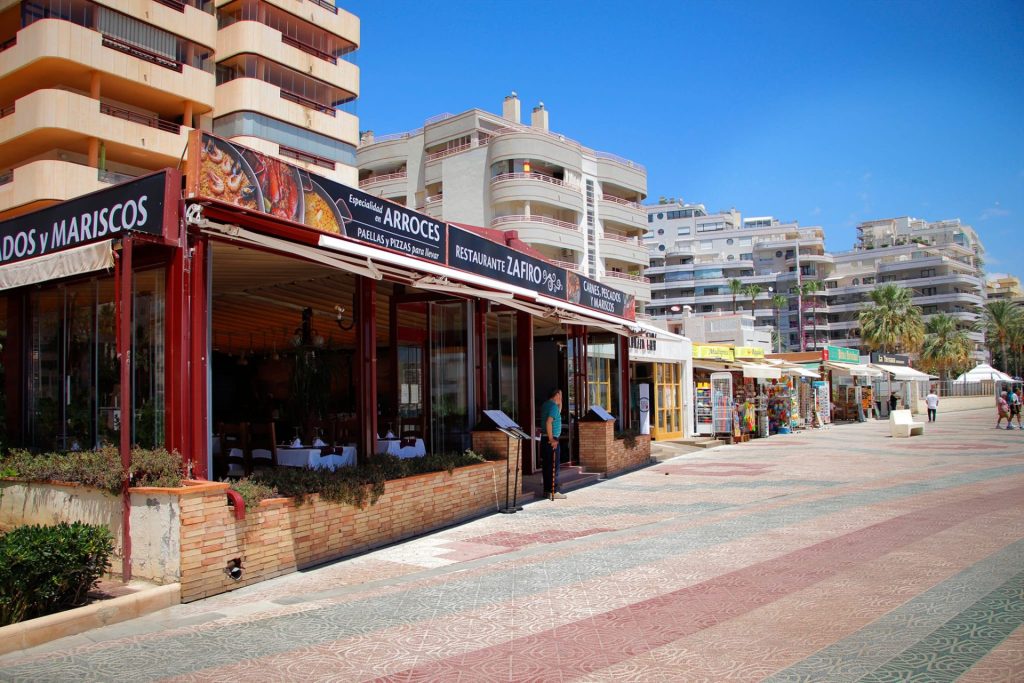
Food is best treated as part of the recovery plan rather than an afterthought.
After several hours of climbing and descending, you may be dehydrated and hungrier than expected. This is not the ideal moment to walk around Calpe comparing a large number of restaurants.
Decide beforehand whether you prefer:
- a proper restaurant lunch;
- a simple menu del día;
- a sandwich or picnic;
- a light meal followed by an early return to Benidorm.
Eating Near the Fishing Port
The port is the most obvious choice after the hike.
Restaurants in this area commonly focus on:
- local fish;
- seafood;
- rice dishes;
- grilled food;
- Mediterranean menus.
A rice dish can be an excellent end to the excursion, but remember that many restaurants prepare rice for a minimum of two people and may require advance ordering or additional waiting time.
Check the menu and price before sitting down. A highly visible display of fish or seafood does not always make the eventual bill obvious, particularly when products are priced by weight.
During weekends and summer, reserving a table can reduce waiting. Avoid making the reservation so early that it creates pressure during the descent.
A flexible lunch time is safer than promising to arrive immediately after your predicted hiking finish.
Restaurants Around Playa de la Fossa
The seafront around Playa de la Fossa offers a wider range of casual options.
This can be useful when a group wants different types of food or when you prefer something faster than a traditional seafood lunch.
The atmosphere is more resort-oriented, and quality and value can vary considerably. Read the menu rather than choosing only by position or sea view.
Bringing Your Own Food
A picnic is the cheapest and most flexible option.
You could carry a small sandwich, fruit and snack for after the route, then sit in an appropriate area near the beach or promenade.
However, avoid turning the summit into a crowded picnic location. Space is limited, birds may approach food and all packaging must be carried back down.
A small snack during the hike and a larger meal at sea level is usually more practical.
Alcohol After the Hike
A beer or glass of wine may sound appealing after the descent, but rehydrate first.
Heat, physical effort and mild dehydration can increase the effect of alcohol. Drink water, eat something and allow your body to recover before ordering several alcoholic drinks.
Drivers should naturally avoid alcohol entirely or remain within the applicable legal limits, remembering that fatigue can already affect concentration.
Realistic Budget for a Day at Peñón de Ifach
Access to the normal hiking route has traditionally been free, although a reservation is required. Always check the official booking information before travelling in case the conditions change.
The total cost depends much more on transport and food than on the Peñón itself.
The estimates below are intended for planning rather than as guaranteed prices.
Low-Budget Day by Public Transport
A careful low-cost day could include:
- return public transport from Benidorm;
- your own water and food;
- free hiking route;
- free coastal walk or beach;
- no paid activities.
A sensible total allowance is approximately:
€10–€20 per person
The lower end assumes inexpensive transport and food prepared at home. The upper end allows for a coffee, additional drink or minor local connection.
TRAM d’Alacant has temporary reduced fares in force throughout 2026, although the exact ticket required depends on the zones travelled and any connecting local transport. The official fare tables and journey planner should be checked before departure.
Public Transport with Lunch
For a more comfortable day including a restaurant or substantial café meal, allow approximately:
€25–€45 per person
This can cover:
- return bus or TRAM journey;
- possible urban bus connection;
- water or coffee;
- lunch;
- a small additional expense.
The total can rise beyond this range if you choose seafood priced by weight, a full rice meal, several drinks or a taxi between the station and coast.
ALSA operates daily services between Benidorm Bus Station and its Calpe stop on Avenida Diputación, but ticket prices depend on the selected journey and should be checked directly when booking.
Travelling by Car
For one person travelling alone, allow for:
- fuel;
- possible paid parking;
- food and drink;
- any additional driving around Calpe.
A broad estimate would be:
€20–€50 for the day
The cost per person falls when several people share the car.
The Peñón can be reached through the N-332 or the AP-7 network, and official Calpe information identifies the parking area near the interpretation centre as the normal approach to the northern side.
Do not assume that every nearby parking area is free. Read the local signs and check payment hours and restrictions.
More Comfortable Day
A day involving a taxi or private transfer, restaurant lunch and several drinks could easily cost:
€60–€100 or more per person
This may still represent reasonable value when several people share transport, but it is no longer a low-cost excursion.
Example Budget Table
| Expense | Budget approach | Comfortable approach |
|---|---|---|
| Natural park access | Usually free with reservation | Usually free with reservation |
| Return transport | €5–€15 | €20–€60+ |
| Local connection | €0–€5 | €8–€20 by taxi |
| Food | €5–€12 | €20–€40+ |
| Drinks and coffee | €2–€6 | €8–€15 |
| Beach or coastal walk | Free | Free |
| Estimated total | €10–€25 | €45–€100+ |
These figures are deliberately broad.
The most important budgeting rule is to check the transport price for your actual date and inspect restaurant prices before ordering.
Is Peñón de Ifach Good Value?
Yes, particularly for people already based in Benidorm.
The main experience does not require an expensive entrance ticket, specialist guide or overnight accommodation. A well-organised visitor can enjoy:
- a substantial hike;
- panoramic coastal views;
- a protected natural park;
- the harbour;
- a beach;
- a coastal promenade;
- the Calpe salt lake.
The day becomes expensive only when transport and dining choices make it expensive.
For digital nomads or long-stay residents managing a monthly budget, the Peñón is one of the stronger-value excursions on the Costa Blanca. It feels like a significant change of scenery without requiring a long journey or a large admission fee.
Suggested One-Day Itinerary from Benidorm
The best Peñón de Ifach day trip begins early and leaves enough space for delays, rest and a change of plan.
A rigid timetable is not appropriate for this route. Trail conditions, crowds, transport and individual fitness can all affect the day. The itinerary below should therefore be treated as a realistic framework rather than a schedule that must be followed minute by minute.
Full Summit Itinerary
07:30–08:00: Leave Benidorm
An early departure is particularly important during warmer months.
Travelling by car gives you the most flexibility, but an early bus or TRAM connection can also work if the arrival time allows you to begin hiking before the strongest heat.
Before leaving, confirm that you have:
- the reservation;
- water;
- suitable footwear;
- sun protection;
- a charged phone;
- return transport information.
Do not wait until Calpe to discover that someone in the group has forgotten their booking confirmation or arrived in unsuitable shoes.
08:15–09:00: Arrive in Calpe and Reach the Park
The exact arrival time depends on transport and parking.
Use this period to:
- reach the official entrance;
- use any available facilities;
- organise your backpack;
- apply sunscreen;
- check the weather;
- assess how everyone feels.
Avoid beginning the route immediately after rushing from a delayed bus or searching for parking. A calm start improves the rest of the hike.
09:00–12:30: Complete the Summit Route
Allow approximately three to four hours, with additional time when the trail is busy.
The route should include:
- the lower path;
- the tunnel;
- the more exposed upper section;
- the summit;
- a controlled descent.
Do not treat 12:30 as a deadline. If the hike takes longer, reduce the afternoon activities rather than descending too quickly.
Likewise, if someone decides to stop at the tunnel or Carabiners viewpoint, the group can adapt the day without considering the excursion unsuccessful.
12:30–13:00: Recover Near the Entrance or Port
Once you return to sea level, take a short recovery period.
Drink water, sit in the shade and allow your breathing and body temperature to return to normal. This is also the moment to check for blisters, sore knees or signs of excessive heat.
Do not immediately begin a long walk around Calpe simply because the route is finished.
13:00–14:30: Lunch Near the Port
The fishing port is the most convenient place for a substantial lunch after the hike.
A proper meal can be one of the most enjoyable parts of the day, but avoid ordering only according to hunger. Check prices, especially for seafood sold by weight, and rehydrate before drinking alcohol.
During busy periods, a reservation may be useful, but leave enough flexibility that the restaurant booking does not influence your hiking decisions.
14:30–16:00: Choose One Relaxed Activity
After lunch, choose one activity according to energy levels.
Good options include:
- walking part of the Príncipe de Asturias promenade;
- resting at Cala El Racó;
- swimming at a nearby beach;
- walking along Playa de la Fossa;
- observing the salt lake and birdlife.
Do not automatically choose the activity that involves the most walking. After reaching the summit, sitting beside the sea may be more rewarding than adding another ambitious route.
16:00–17:00: Coffee, Final Walk or Return Preparation
Use the final part of the afternoon to return toward your transport connection.
Public transport users should begin moving toward the correct stop with a comfortable margin. Drivers can decide whether to remain longer or avoid the busiest traffic period.
This is also a useful time for a coffee or light snack before returning to Benidorm.
17:00–18:30: Return to Benidorm
The exact return time is flexible.
An early start should allow you to complete a full and satisfying day without arriving back late or feeling that the excursion consumed the entire evening.
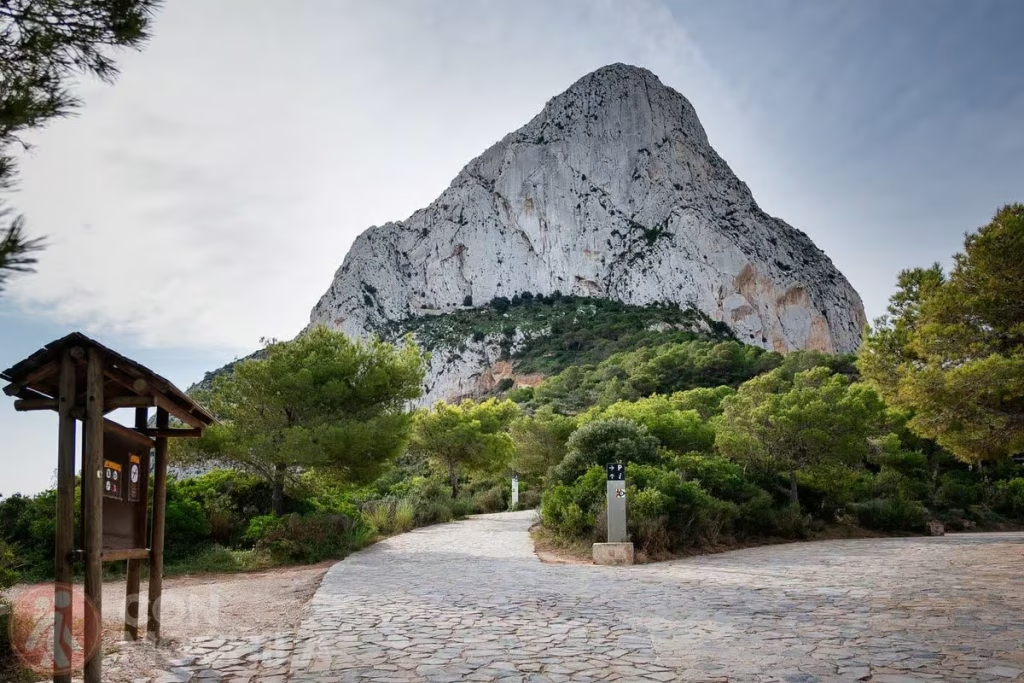
A Shorter Itinerary Without the Summit
Not everyone needs or wants to complete the upper route.
A shorter itinerary can still provide an excellent day and may be more suitable for visitors with limited hiking experience, concerns about heights or a preference for combining nature with Calpe itself.
08:30–09:00: Leave Benidorm
The start can be slightly later than for the summit itinerary, although summer visitors should still avoid the hottest part of the day.
09:30–11:30: Walk to the Tunnel and Return
Follow the lower natural park route at a relaxed pace.
Stop at the viewpoints, explore the tunnel if conditions are suitable and return without continuing onto the exposed upper trail.
This provides a genuine sense of the Peñón without committing to the hardest terrain.
11:30–12:30: Walk the Príncipe de Asturias Promenade
Continue toward Cala El Racó and walk beneath the cliffs.
This creates an effective contrast between seeing the Peñón from above and experiencing its scale from sea level.
12:30–14:00: Lunch
Eat near the port or Playa de la Fossa.
Because the morning activity is less physically demanding, you may prefer a lighter lunch and a more active afternoon.
14:00–16:30: Choose Calpe, the Beach or the Salt Lake
Possible plans include:
- swimming and relaxing;
- walking around the salinas;
- exploring the old town;
- spending more time around the port;
- photographing the Peñón from different angles.
16:30–18:00: Return to Benidorm
This version provides more flexibility for public transport and avoids the physical fatigue of the complete summit route.
A Poorly Planned Day
It is also useful to understand what not to do.
A poor itinerary would look something like this:
- leaving Benidorm late in the morning;
- reaching Calpe around midday;
- beginning the summit route in strong heat;
- carrying beach equipment and a laptop;
- rushing the descent for a restaurant booking;
- attempting to visit the old town, salinas and two beaches;
- running for the final convenient public transport connection.
Every individual activity may be possible, but the combination produces a stressful and potentially unsafe day.
The Peñón is best enjoyed when it is the main purpose of the excursion rather than one item in an overloaded itinerary.
Is Peñón de Ifach Worth Visiting for Digital Nomads?
Yes, but not because it offers somewhere unusual to work.
The Peñón is valuable for digital nomads precisely because it creates a clear separation from work.
Remote workers often spend long periods indoors, repeat the same neighbourhood routine and postpone physical activity because work has no fixed finishing time. A day trip with a defined route and destination can interrupt that pattern.
The Peñón offers:
- a strong physical challenge without requiring a long journey;
- a clear reason to leave the laptop behind;
- extensive views and photography;
- an activity that feels different from an ordinary beach day;
- a sense of achievement;
- easy combination with lunch and the coast;
- access by public transport.
For someone living in Benidorm for several weeks or months, this makes it more valuable than many conventional tourist attractions.
It can become a genuine reset day rather than simply another place to photograph.
Can You Work at Peñón de Ifach?
Not realistically.
The hiking route has no work facilities, appropriate seating, power or stable surfaces. Attempting to work from the natural park would be uncomfortable, distracting and potentially irresponsible.
Mobile coverage may exist in parts of the route, but connectivity does not make a place suitable for remote work.
The upper trail requires concentration. Answering calls, typing messages or participating in a meeting while walking would create an unnecessary safety risk.
The Peñón should be considered a work-free environment.
Could You Combine It with a Workday in Calpe?
Yes, but only with careful planning.
A remote worker could:
- complete a short morning work session in Benidorm and visit the lower route later;
- hike early, then work from a suitable place in Calpe after lunch;
- stay overnight in Calpe and separate the work and hiking days;
- use the excursion as a half-day activity outside peak working hours.
However, the complete summit route is better treated as the main activity of the day.
After several hours of hiking, sun exposure and lunch, many people will not be at their most productive. Scheduling an important meeting or demanding work session immediately afterwards is unlikely to be a good idea.
Is It Better as a Complete Break?
For most remote workers, yes.
A full break allows you to:
- walk without monitoring messages;
- take longer pauses;
- adapt the route according to conditions;
- eat without rushing;
- enjoy Calpe after the hike;
- return to Benidorm mentally refreshed.
The psychological value of the trip is reduced when the entire day is organised around keeping a laptop safe or returning in time for a video call.
Use the Peñón as an opportunity to disconnect rather than as another attempt to work from an impressive location.

Who Will Enjoy Peñón de Ifach Most?
The experience is particularly suitable for several types of visitor.
Active remote workers
Anyone who spends much of the week sitting indoors may appreciate the clear physical objective and the feeling of using the whole body.
The hike is demanding enough to feel meaningful without requiring advanced mountain experience.
People who enjoy panoramic views
The upper route provides some of the most dramatic coastal views available within a short journey from Benidorm.
The relationship between the rock, Calpe, the sea and the surrounding mountains creates strong visual variety.
Photographers
The Peñón offers:
- wide coastal landscapes;
- views over Calpe;
- the salt lake;
- the fishing port;
- cliffs and limestone terrain;
- different perspectives from the summit and base.
Photographers should still keep equipment compact and prioritise secure footing.
Visitors who like a clear challenge
Some people enjoy walks but feel more motivated when the route has an obvious destination.
The summit provides that sense of purpose and achievement.
Long-stay residents looking for variety
After several weeks in Benidorm, another beach or promenade may no longer feel like a meaningful change.
The Peñón provides a different landscape and level of activity while remaining close enough for an ordinary day trip.
Car-free travellers
The availability of bus and TRAM connections makes the destination relevant to people living in Benidorm without a vehicle.
The journey requires more planning than driving, but the excursion remains feasible.
Who Might Be Disappointed?
The Peñón is not suitable for every visitor, and presenting it honestly is more useful than pretending it is universally enjoyable.
People expecting a relaxed coastal walk
The lower route may meet this expectation, but the summit route will not.
Anyone looking for a gentle promenade should choose the Príncipe de Asturias path or remain below the tunnel.
Visitors with strong vertigo
The upper section may feel much more exposed than photographs suggest.
A physically fit person can still find the route psychologically uncomfortable.
People who dislike crowds
The trail can become busy, especially during popular periods.
Narrow sections, the tunnel and the summit may not provide the quiet mountain atmosphere some hikers expect.
An early weekday visit improves the experience but cannot guarantee solitude.
Anyone seeking an outdoor workplace
There is no realistic work setup on the route.
The Peñón should not be chosen because someone wants a photograph of a laptop against a Mediterranean background.
Visitors who dislike planning
The reservation, transport timing and need for suitable conditions make spontaneous visits less reliable.
Someone who prefers to wake up late and decide what to do without checking anything may find the process inconvenient.
People motivated only by reaching the summit
An achievement-focused visitor may become frustrated by weather, crowds or the need to turn back.
The experience is better when the route itself matters as much as the final point.
Visitors looking for complete isolation
The Peñón is a protected natural landmark beside a developed resort town.
You can enjoy nature and dramatic scenery, but apartment buildings, beaches, roads and other hikers remain part of the broader setting.
It is not a remote wilderness experience.
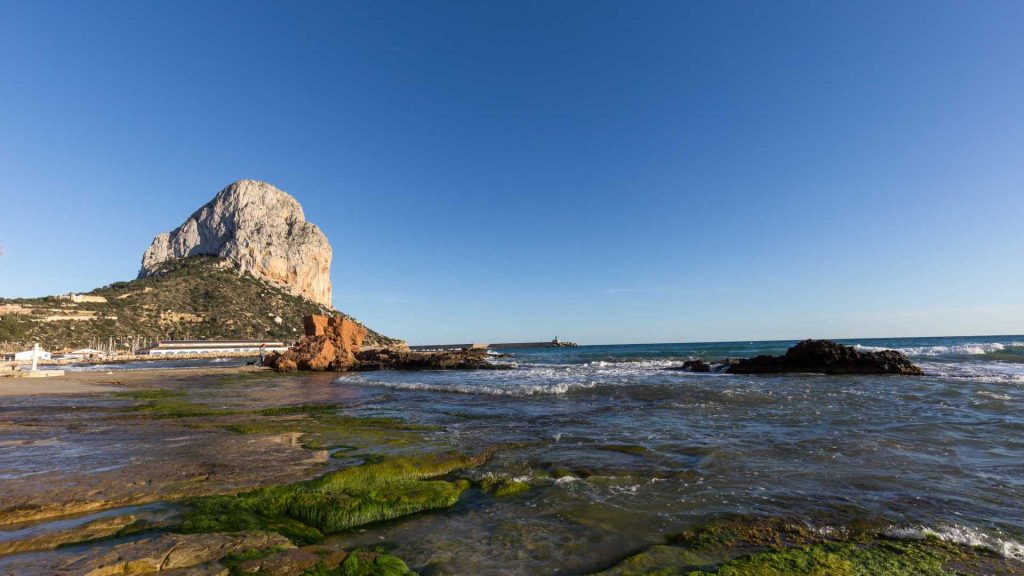
BenidormNomads Verdict
The Peñón de Ifach is one of the strongest day trips available from Benidorm for anyone who wants more than a beach, promenade or conventional sightseeing excursion.
Its greatest advantage is the combination of accessibility and impact. You do not need to travel far, stay overnight or spend a large amount of money, yet the experience feels physically and visually substantial.
The complete summit route is not suitable for everyone. The polished limestone, exposed sections and awkward descent require more confidence than the modest distance might suggest. However, the natural park remains worthwhile even for visitors who stop at the tunnel or combine the lower walk with the port and coastal promenade.
Scenery: 9.5/10
The views are the main reason the Peñón deserves its reputation.
The elevated position above Calpe provides a broad perspective over the coastline, beaches, salt lake, harbour and surrounding mountain ranges. Because the rock rises almost directly from sea level, the scenery feels much more dramatic than its height of 332 metres might suggest.
The only limitation is that Calpe is highly developed. This is not a view over untouched wilderness, but the contrast between the Mediterranean, mountains and urban coastline is still impressive.
Hiking Experience: 8.5/10
The route offers a satisfying progression from a prepared lower path to rougher and more demanding terrain.
The tunnel, exposed eastern side and final summit climb make the hike memorable despite its relatively short distance.
It loses some points because the polished limestone can feel unpleasantly slippery and because congestion sometimes interrupts the rhythm of the route.
For experienced hikers, it may not feel especially challenging. For ordinary active visitors, it provides a genuine sense of achievement.
Accessibility from Benidorm: 8.5/10
The Peñón is comparatively easy to reach by car and remains possible without one.
Direct buses and the TRAM connection make it relevant to digital nomads and long-stay residents who depend on public transport. The main inconvenience is that the Calp TRAM station is not close to the park, requiring an additional local connection.
Driving remains the simplest option, particularly for an early start.
Value for Money: 9.5/10
The route offers excellent value.
The main experience does not normally require an entrance fee, although advance reservation is necessary. The surrounding coastal walk, beaches, port and salt lake can also be enjoyed without paying for attractions.
A low-budget visitor can organise a full day for little more than transport and food.
Photography: 9/10
The Peñón provides strong photography opportunities throughout the day.
The summit offers wide coastal landscapes, while the port, Cala El Racó, salinas and beaches provide alternative angles from sea level.
Photography becomes more difficult on crowded or exposed sections, and visitors should never move into unsafe positions for a cleaner image.
Crowd Management: 6.5/10
The reservation system helps control access, but it does not guarantee a quiet experience.
The tunnel, fixed support ropes and narrow upper trail can become congested. The summit also has limited space compared with the number of people who may arrive at similar times.
An early weekday visit is strongly preferable for anyone who dislikes waiting or hiking close to others.
Food and Nearby Facilities: 9/10
The location beside Calpe’s port and beach areas makes post-hike food unusually convenient.
Visitors can choose between seafood restaurants, rice dishes, casual seafront dining and simple picnic options. Beaches, promenades and urban facilities are also close to the natural park.
This convenience makes the Peñón easier to organise than a more isolated mountain hike.
Walking Variety: 9/10
The area offers several distinct walking experiences:
- the lower natural park route;
- the tunnel;
- the upper trail;
- the summit;
- the Carabiners viewpoint;
- the Príncipe de Asturias promenade;
- the salt lake;
- Calpe’s seafront.
This allows visitors to adapt the day according to fitness, weather and personal confidence.
Remote Work Suitability: 2/10
The Peñón is not a place to work.
There are no suitable facilities, and carrying a laptop makes the hike less comfortable and more risky. Mobile coverage is irrelevant when the environment itself is unsuitable for productive work.
The low score is not a criticism. The Peñón is valuable precisely because it offers remote workers a compelling reason to disconnect.
Overall Atmosphere: 8.5/10
The Peñón combines natural drama, physical challenge and the convenience of a developed coastal town.
It does not feel remote, and the presence of other visitors is often noticeable. Nevertheless, passing through the tunnel and moving onto the exposed side of the rock creates a genuine sense of leaving the ordinary resort environment behind.
Overall Rating: 8.9/10
The Peñón de Ifach earns a high overall score because it delivers a memorable experience without requiring complex travel or a large budget.
Its main weaknesses — crowds, slippery rock and limited remote-work potential — are outweighed by the scenery, flexibility and accessibility from Benidorm.
The Peñón de Ifach is worth visiting from Benidorm, but the correct version of the experience depends on what you expect from the day.
Choose the complete summit route if you are active, comfortable on uneven and exposed terrain, wearing suitable shoes and willing to move carefully. The views and sense of achievement justify the effort, especially on a dry, clear morning.
Choose the tunnel or Carabiners viewpoint if you want a substantial walk without committing to the steepest final climb. This is not a lesser version of the excursion. It may provide a more enjoyable balance between scenery, challenge and comfort.
Choose the lower park, Príncipe de Asturias promenade and port if hiking is not your priority. You can still experience the scale of the Peñón, enjoy the coastline and create a worthwhile day in Calpe without approaching the summit.
The main mistake is assuming that reaching the top is the only successful outcome.
For digital nomads and long-stay residents in Benidorm, the Peñón works best as a deliberate break from routine: an early start, several hours away from screens, a physical challenge and a relaxed afternoon by the sea.
Leave the laptop behind, reserve your place in advance and make the decision to continue beyond the tunnel according to the conditions you find on the day.
That approach will give you a much better experience than treating the Peñón as another attraction to complete as quickly as possible.