

Pink Lagoon in Torrevieja from Benidorm: Is the Famous Pink Lake Worth the Trip?
Torrevieja’s Pink Lagoon is one of those places that seems almost unreal the first time you see a photograph of it.
A broad sheet of water.
A pale horizon.
White salt deposits.
And, under the right conditions, a distinctly pink surface that looks more like something from another climate than a wetland on the Costa Blanca.
That unusual colour is the main reason most visitors become interested in the lagoon.
But it is only part of the story.
The Pink Lagoon, known locally as the Laguna Rosa or Laguna de Torrevieja, belongs to the Natural Park of the Lagoons of La Mata and Torrevieja, a protected wetland covering approximately 3,700 hectares. The park contains two major salt lagoons: the pink lagoon of Torrevieja and the lagoon of La Mata.
Together, they form one of the most distinctive natural landscapes in southern Alicante.
The two lagoons are visually different, function differently within the salt-production system and offer different experiences for visitors.
That distinction is important.
If you arrive expecting to walk freely around the entire edge of the Pink Lagoon, swim in the water and take photographs wherever you choose, you are likely to be disappointed.
The lagoon is both a protected ecosystem and part of an active salt-producing landscape.
Access is controlled.
Bathing is prohibited.
And much of the experience involves observing and understanding the lagoon rather than treating it like a conventional lake.
For someone travelling from Benidorm, this raises an obvious question.
Is a pink lake worth driving more than an hour to see?
The answer depends partly on what you expect from the day.
If your only objective is to find a fluorescent pink lake, take one photograph and leave, the experience can feel surprisingly brief.
If you understand the salt landscape, combine the Pink Lagoon with La Mata and spend some time exploring Torrevieja, the excursion becomes far more interesting.
That is the approach we will take in this guide.

What Is the Pink Lagoon in Torrevieja?
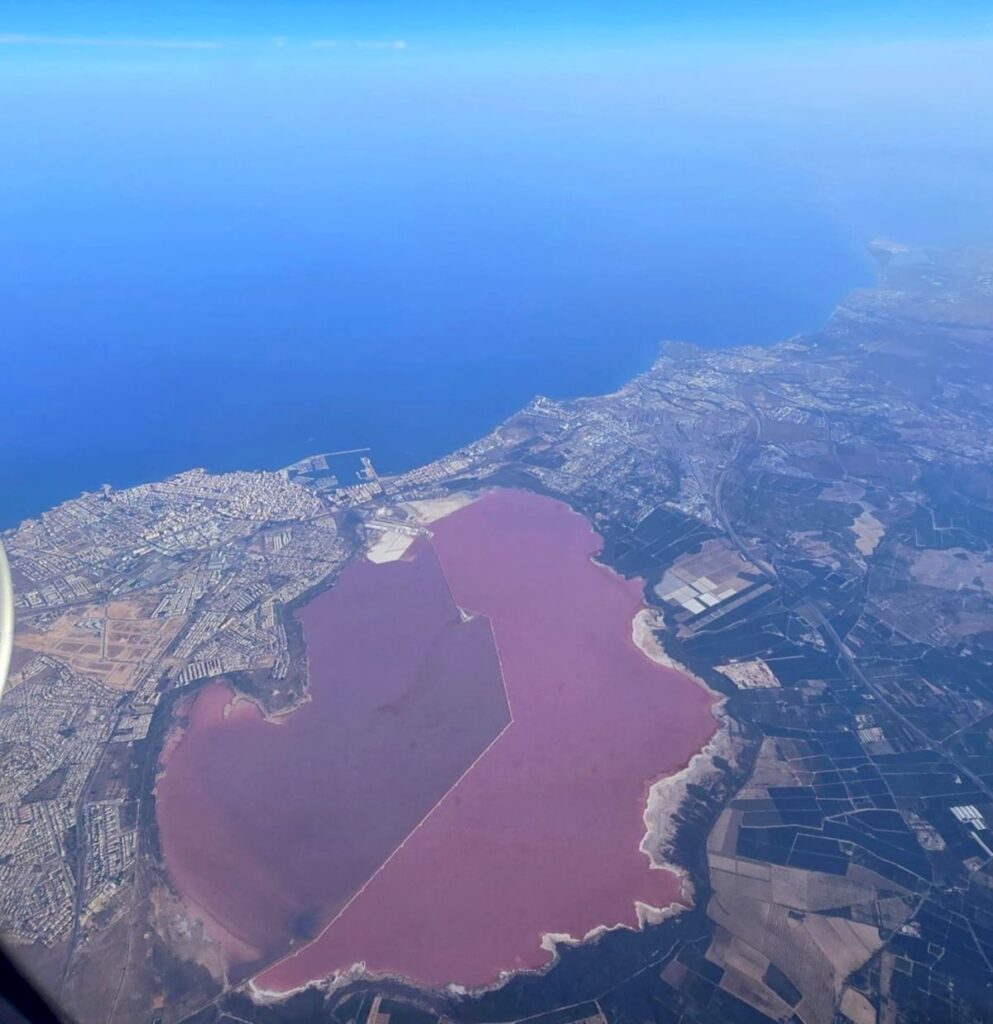
The Pink Lagoon is a large hypersaline lagoon immediately west of Torrevieja.
It forms part of a connected system with the nearby Laguna de La Mata and has been closely associated with the town’s salt industry for generations.
The relationship between Torrevieja and salt is so strong that it is difficult to understand one without the other.
Salt production helped shape the town economically, influenced its relationship with the sea and created a landscape that remains one of its defining features today.
The lagoon is therefore not simply an unusual natural attraction.
It is also a working landscape.
Two Lagoons, Two Different Roles
One of the easiest mistakes to make when reading about the area is assuming that the Pink Lagoon and La Mata are essentially the same destination.
They are not.
Both belong to the same natural park and the same interconnected saline system, but they have different characteristics.
The Laguna de La Mata lies farther north and has a more conventional wetland appearance. Its surroundings include marked walking routes, birdwatching areas and viewpoints, making it the more accessible part of the park for independent exploration.
The Laguna de Torrevieja is larger and considerably more saline.
This is the lagoon associated with the famous pink colour and with the main salt-production activity.
The contrast between them is part of what makes the natural park interesting.
One feels primarily like a wetland that you can explore on foot.
The other feels more industrial, surreal and visually unusual.
For a complete visit, seeing both gives you a much better understanding of the landscape than concentrating exclusively on the pink water.
A Landscape Created by Nature and Human Activity
The lagoons are natural depressions, but the landscape visible today has also been shaped by centuries of salt production.
Water movement between the lagoons and the sea forms part of a managed system designed to increase salinity and ultimately allow salt to crystallise.
La Mata plays an important role in concentrating the brine.
The water then becomes increasingly saline before salt is harvested in the Torrevieja lagoon.
The process is aided by two of the region’s most abundant natural resources:
sunshine and wind.
Evaporation gradually increases the concentration of salt until extraction becomes possible.
Additional brine has also been introduced into the system from inland salt deposits, reinforcing Torrevieja’s position as an important salt-producing centre.
The result is a landscape where industry and ecology exist side by side.
Large white salt piles rise near the lagoon.
Industrial equipment appears against the horizon.
Birds use the wetlands for feeding and resting.
And the water itself can change colour according to biological and environmental conditions.
This mixture is one of the reasons the Pink Lagoon is more interesting than a simple photographic attraction.
Much Bigger Than It Looks in Photographs
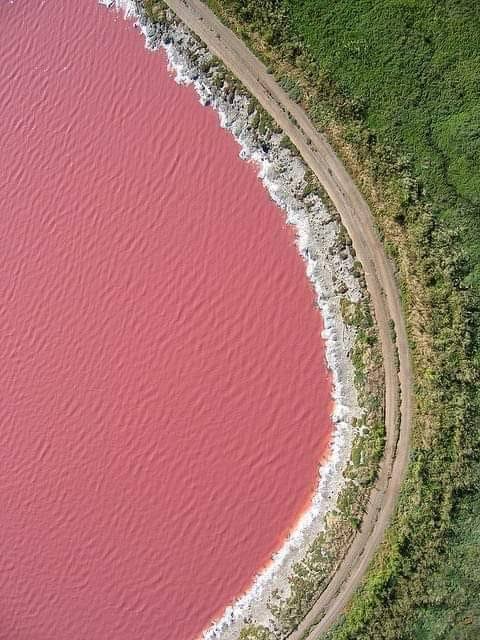
Images of the Pink Lagoon often focus on a small foreground section of coloured water.
In reality, the lagoon occupies a very large area.
The Torrevieja lagoon alone covers around 1,400 hectares of water, while La Mata adds roughly another 700 hectares.
Standing beside such a large, flat landscape creates a very different impression from seeing it on a phone screen.
There is little vertical drama.
No mountains rise directly from the shore.
There are no waterfalls or dramatic cliffs.
Instead, the appeal comes from scale, colour and openness.
Sky and water dominate the view.
On a calm day, the horizon can feel almost empty.
That minimalism is part of the landscape’s character.
It also explains why weather and light have such a strong effect on what visitors see.

Why Is the Water Pink?
The colour of the lagoon is the result of an extreme environment.
Torrevieja’s lagoon contains very high concentrations of salt, creating conditions in which only certain microorganisms can thrive.
Among them is Dunaliella salina, a microscopic alga capable of living in highly saline water.
Under suitable conditions, it produces pigments that contribute to the lagoon’s characteristic reddish or pink appearance.
Another organism associated with the saline ecosystem is Artemia salina, a tiny brine shrimp adapted to environments where most aquatic animals could not survive.
Together with the lagoon’s salinity, light conditions and other biological factors, these organisms help create the colours visitors associate with the Pink Lagoon.
It Is Not Artificial Colouring
The first thing to understand is that the pink colour is natural.
Nothing is added to the lagoon to create it for tourism.
The unusual appearance results from biological processes occurring within an extremely saline environment.
Similar phenomena can be found in other salt lakes and salt-production areas around the world.
What makes Torrevieja particularly interesting is that this happens within a large protected wetland beside a major Mediterranean town.
You can be walking along Torrevieja’s waterfront and, a short distance inland, find a landscape that looks completely different.
Why Does High Salinity Matter?
Salt determines almost everything about the lagoon.
In ordinary freshwater environments, a huge variety of organisms compete and coexist.
In extremely saline water, the number of species capable of surviving falls dramatically.
The organisms that remain are highly specialised.
Dunaliella salina is one of them.
The alga produces protective pigments that help it cope with intense light and stressful saline conditions.
Those pigments can influence the colour of the water.
This means that the pink appearance is not an isolated curiosity.
It is a visible consequence of the lagoon’s unusual chemistry and biology.
The colour tells you something about the ecosystem.
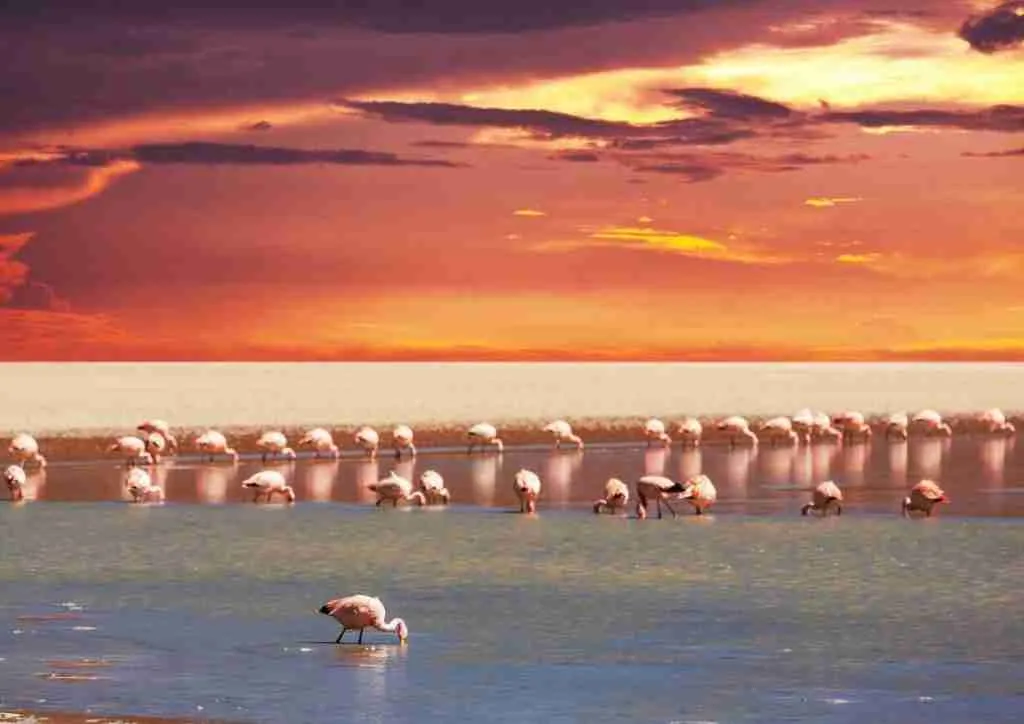
The Connection With Flamingos
The saline environment also helps explain why flamingos are associated with the park.
Brine shrimp and other small organisms form part of the food available within saline wetlands.
Flamingos feed by filtering tiny organisms from shallow water, which makes salt lagoons potentially valuable feeding habitats.
The birds’ own pink coloration comes from pigments obtained through their diet.
However, it is important not to oversimplify the relationship.
The lagoon is not permanently filled with huge flocks of flamingos waiting beside the pink water for photographs.
Bird numbers change throughout the year.
Their location changes.
Water conditions change.
And wildlife never follows a visitor schedule.
We will explore birdwatching in more detail later in the guide, particularly around La Mata, where the visitor infrastructure makes nature observation much easier.
Why Doesn’t the Lagoon Always Look the Same?
Because the biological conditions are not constant.
Salinity can change.
Water levels change.
Sunlight changes.
Temperature changes.
The concentration and activity of microorganisms change.
Even the angle from which you look at the lagoon changes how the colour appears.
That is why photographs taken on different days can look as though they show completely different places.
One may display strong pink tones.
Another may look pale rose.
Another may appear almost purple.
And under less favourable conditions, the colour can be much more subdued.
This variability is completely normal.

Is the Pink Lagoon Really as Pink as the Photos?
Yes.
And no.
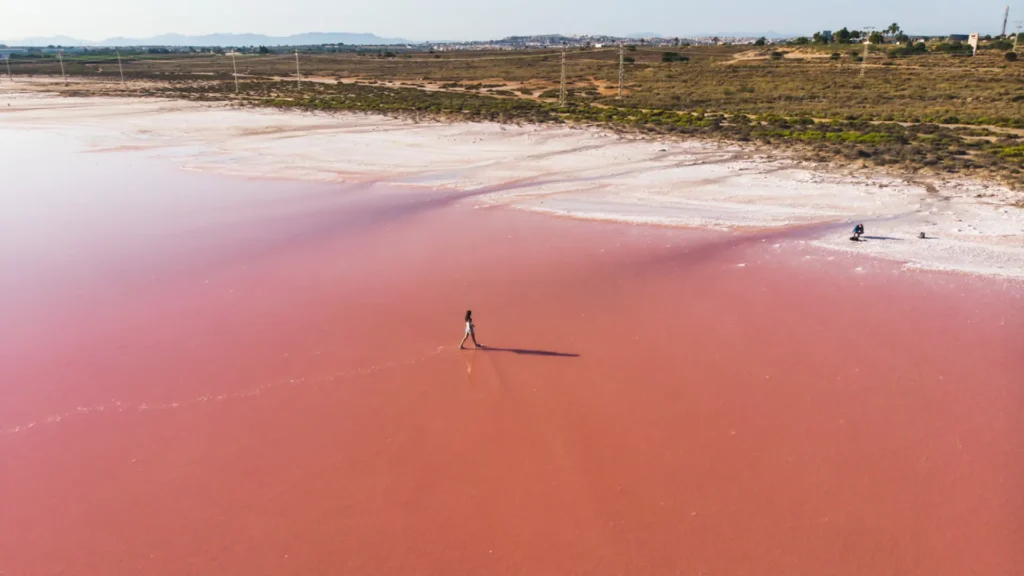
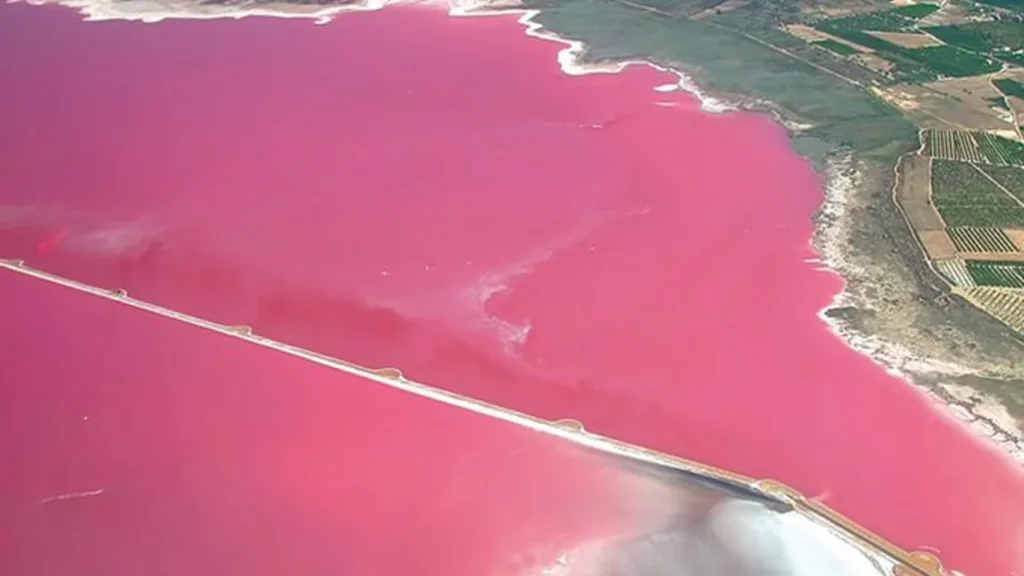
The Pink Lagoon really can display striking pink tones.
But expecting the water to resemble digitally saturated travel photographs every day of the year is unrealistic.
This is probably the single most important expectation to adjust before travelling from Benidorm.
The Colour Is Real
Under favourable conditions, there is no doubt that the lagoon can look distinctly pink.
You do not need an elaborate explanation to recognise it.
The colour can be immediately visible, particularly where sunlight, water conditions and salinity combine effectively.
Against white salt deposits and a blue Mediterranean sky, the contrast can be beautiful.
This is why the lagoon photographs so well.
But It Is Not a Giant Pink Swimming Pool
Many heavily edited images create a misleading impression.
The real landscape is more subtle.
Different areas of the lagoon may show different tones.
The water may appear pinker near certain viewpoints.
Clouds can flatten the colour.
Strong sunlight can intensify it.
Reflections can shift the appearance towards silver, violet or pale red.
What you see with your eyes may also be less saturated than what your phone camera produces after automatic processing.
That does not make the lagoon disappointing.
It simply means you should appreciate it as a changing natural landscape rather than expect a fixed visual effect.
Light Matters
A bright day generally provides stronger contrast.
When sunlight reaches the water at a favourable angle, the pink coloration becomes easier to appreciate.
Overcast conditions can make the surface appear flatter and less colourful.
The position of the sun also influences reflections.
At certain times, the water can reflect so much sky that the underlying pink becomes less obvious.
At others, the colour appears considerably richer.
This is why two visitors standing in the same location several hours apart can come away with different impressions.
Season Matters Too
Warmer periods are often associated with strong evaporation and high salinity, conditions that can favour the intense appearance people hope to see.
However, there is no guaranteed calendar date when the lagoon suddenly becomes perfectly pink.
Nature is not that predictable.
Rather than planning the entire excursion around finding the strongest possible colour, it is better to treat the lagoon as one part of the day.
If the water looks intensely pink, excellent.
If the colour is more subdued, you still have the salt landscape, La Mata, wildlife and Torrevieja itself to explore.
That makes the excursion much less dependent on obtaining one perfect photograph.
Photography Can Exaggerate the Effect
Modern phones automatically adjust contrast, saturation, white balance and exposure.
Social media adds another layer through filters and editing.
As a result, some online images show colours that are much stronger than a visitor would experience naturally.
This is not unique to Torrevieja.
Turquoise beaches, sunsets, autumn forests and mountain lakes all suffer from the same problem.
The safest expectation is simple:
you are visiting a naturally coloured salt lagoon, not a special-effects set.
If the conditions are good, the pink can be spectacular.
If they are not, the landscape can still be interesting.
Do Not Judge the Experience by One Photograph
This is perhaps the most useful advice before visiting.
The Pink Lagoon works better as part of a broader landscape than as a single Instagram location.
Look at the water.
But also look at the salt piles.
The enormous open horizon.
The birds.
The industrial structures.
The vegetation surviving around such saline ground.
And the contrast with the neighbouring La Mata lagoon.
Once you stop expecting one perfect shade of pink, the place becomes considerably more interesting.
You begin to see what the lagoon actually is:
a protected wetland, a functioning salt-production landscape and one of the strangest natural environments on the Costa Blanca.
The next question is more practical.
How do you actually visit it?
Because unlike many natural attractions in the region, the Pink Lagoon is not somewhere you should simply drive towards, find an unofficial path and walk down to the water.
Understanding the permitted ways to experience the lagoon is essential to planning the trip properly.

How Can You Visit the Pink Lagoon?
The most important thing to understand before visiting Torrevieja’s Pink Lagoon is that you cannot treat it like an ordinary lake.
This is not a place where you simply park beside the water, walk freely along the shore and choose whichever viewpoint you prefer.
The lagoon forms part of a protected natural park and, at the same time, an active salt-production area.
That combination changes the way visitors experience it.
Access is managed.
Some zones are restricted.
And the best way to see the lagoon properly is through the authorised visitor options rather than trying to improvise your own route.
For someone travelling from Benidorm, this is actually useful.
It means you can plan the visit around a clear experience instead of spending time searching for unofficial access points that may be unsuitable, restricted or disappointing.
The Tourist Train
One of the easiest ways to see the Pink Lagoon is through the tourist train that operates within the saltworks visitor experience.
This option is particularly useful for visitors who want to understand the landscape without doing much walking.
The route takes you into the salinas environment and gives you a closer look at the relationship between the lagoon and the salt industry.
You see much more than pink water.
The landscape includes salt mountains, industrial areas, crystallisation zones and equipment linked to the production process.
That context matters.
Without it, the lagoon can seem like a strange coloured lake with an industrial background.
Once you understand how the saltworks function, those industrial elements become part of the experience.
The train is also a good option for families, older visitors or anyone travelling during warmer weather who does not want to spend long periods walking through exposed terrain.
However, it is still worth checking schedules and availability before travelling.
The visitor programme can vary during the year, and organised access is far easier when you know what is operating on the day of your visit.
Guided Walking Visits
For visitors who prefer a slower and more informative experience, guided walking tours are another strong option.
In 2026, organised visits to the Torrevieja saltworks have included approximately 90-minute guided walks through areas of the industrial and salt-production landscape.
These visits provide a closer look at how the salinas work and why Torrevieja became so strongly connected with salt.
Instead of observing everything from a vehicle, you move through the landscape at walking pace.
That gives you more time to appreciate details that are easy to miss.
The scale of the salt piles.
The colour variations in the water.
The contrast between machinery and wetlands.
The birdlife using an environment that also functions as an industrial site.
For many visitors, this is probably the most interesting way to experience the Pink Lagoon.
It turns the visit from a photographic stop into something you actually understand.
Is the Walking Tour Difficult?
No.
This is not a hiking route.
The organised walk is designed as an interpretive visitor experience rather than a demanding outdoor activity.
However, the area can be exposed.
Sun protection, water and comfortable footwear are still sensible, particularly during warmer months.
The lack of shade can make even an easy walk feel more tiring in strong summer heat.
If you are visiting during July or August, choose your time carefully and follow any recommendations given by the tour organisers.
Bicycle Visits
Authorised bicycle visits may also be available as part of the saltworks visitor programme.
This gives the experience a different character.
The distances become easier to cover, and you can see more of the landscape without relying on the tourist train.
However, this should not be confused with simply arriving with a bicycle and riding wherever you want.
The salinas remain a controlled industrial and protected environment.
If cycling appeals to you, use the official visitor system and confirm what is available before travelling.
Why Organised Access Is Actually Better
At first, restrictions can sound frustrating.
Visitors often prefer the idea of exploring natural places independently.
But the Pink Lagoon is unusual.
You are not only dealing with a sensitive wetland.
You are also entering a functioning salt-production landscape.
Organised access makes it possible to visit areas that would otherwise remain closed while maintaining safety and protecting the environment.
It also gives the visit far more context.
The Pink Lagoon becomes much more interesting when someone explains what you are actually looking at.
The Torrevieja Salt Works and Guided Tours
The saltworks are one of the main reasons Torrevieja developed into the town it is today.
Salt has shaped the local economy, the landscape and even the town’s identity.
You can see that connection everywhere around the lagoon.
The enormous salt piles are the most obvious sign.
From a distance, they can almost look like artificial white hills.
Closer up, their scale becomes much clearer.
But salt production involves far more than simply waiting for water to evaporate.
How the System Works
The lagoons of La Mata and Torrevieja form part of an interconnected saline system.
Water enters through channels and gradually becomes more concentrated.
La Mata plays an important role in the early concentration process.
The brine then reaches the Torrevieja lagoon, where evaporation and high salinity allow crystallisation and extraction to take place.
Additional highly saline water can also enter the system from inland sources, increasing the concentration further.
Sun and wind do much of the work.
The Costa Blanca’s dry climate creates ideal conditions for evaporation, while the broad, shallow lagoons provide an enormous surface area.
By the time the process reaches its final stages, large quantities of salt can be harvested.
The Industrial Landscape Is Part of the Experience
This is something worth emphasising.
Do not expect an untouched wilderness.
The Torrevieja lagoon is beautiful partly because nature and industry overlap in such an unusual way.
You may see machinery.
Service roads.
Salt infrastructure.
Production areas.
Large white deposits.
For some visitors, this initially conflicts with the romantic image of a pink natural lake.
But the industrial side is not an intrusion that appeared recently.
It is part of the history and identity of the place.
The lagoon has been managed for salt production for generations.
That relationship between human activity and natural processes is one of the reasons the landscape is so distinctive.
What You Learn on a Guided Visit
A good guided visit should help you understand several things at once.
Why the water becomes pink.
How salinity increases.
How salt is extracted.
Why birds use the wetlands.
How industrial activity is managed within a protected environment.
And why some parts of the lagoon are inaccessible to independent visitors.
This context transforms the visit.
Without it, you might spend ten minutes admiring the colour and feel that you have seen everything.
With it, the landscape begins to make sense.
The Salt Mountains
The enormous salt piles are among the most memorable features of the salinas.
Their bright white colour creates a striking contrast with the pink lagoon and blue sky.
They also provide an immediate sense of scale.
Salt production here is not a small artisanal operation.
It is a major industrial activity.
That is one reason Torrevieja has such a strong historical association with salt.
The product has been harvested, stored and exported from this landscape for generations.
For photographers, the combination of pink, white and blue creates some of the strongest visual contrasts of the entire visit.
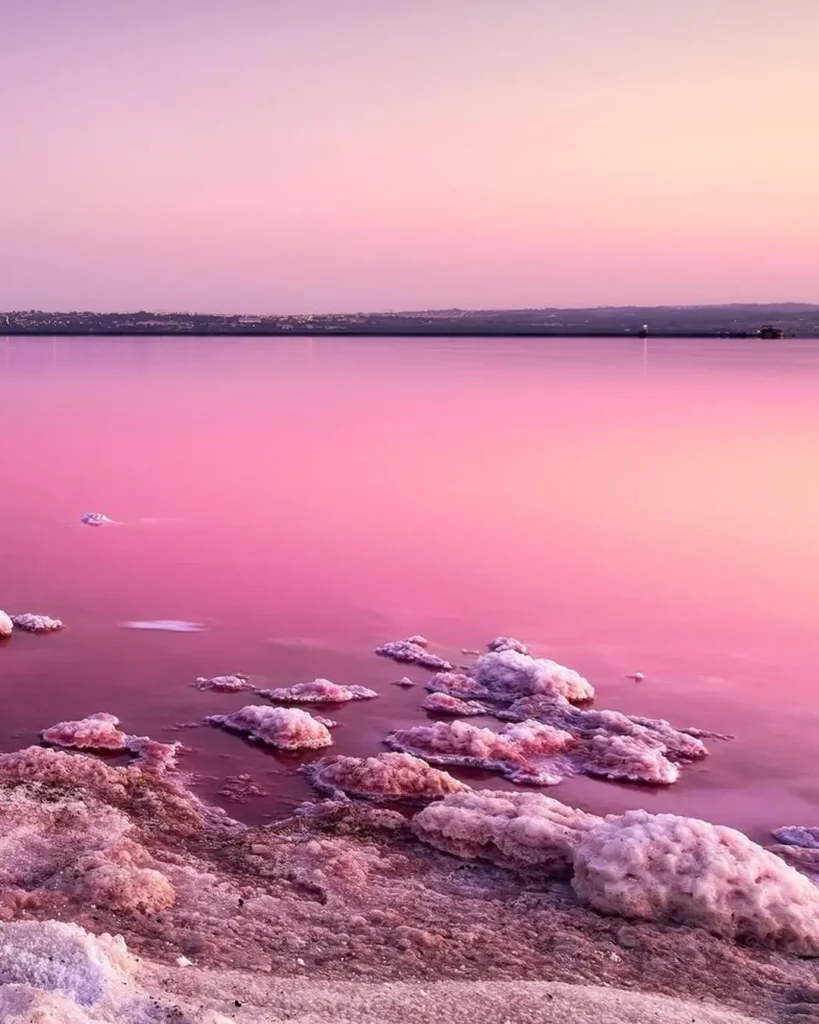
The Traditional Salt Boats
Torrevieja also has a curious craft tradition associated with salt.
Small model boats and other objects can be exposed to the highly saline water so that salt crystals gradually accumulate around them.
The finished pieces become covered in a white crystalline layer.
It is a small detail compared with the scale of the lagoon, but it reflects how deeply salt has entered local culture.
The salinas are not merely a landscape outside the town.
They are part of Torrevieja’s identity.
Can You Swim in the Pink Lagoon?
No.
Bathing in the Pink Lagoon is prohibited.
This is one of the most important practical points in the entire guide because online photographs and old social media posts can create the opposite impression.
You may find images of people standing in or floating in pink water.
That does not mean visitors are allowed to do it.
Why Swimming Is Prohibited
There are several reasons.
The lagoon is part of a protected natural environment.
Entering the water can disturb wildlife and damage sensitive areas around the shore.
The lagoon is also associated with active industrial salt production, which creates additional safety and access considerations.
Very high salinity is another factor.
Water with such extreme salt concentrations behaves differently from normal seawater and can be uncomfortable on skin, eyes or minor wounds.
But even if you personally considered the water safe enough, that would be irrelevant.
The issue is simple:
the activity is not permitted.
Do Not Copy What You See on Social Media
This is particularly important with destinations that become famous online.
One person enters a restricted area.
Someone takes an attractive photograph.
The image spreads.
Other visitors assume that the activity is normal.
Soon, an illegal or environmentally damaging behaviour starts looking like part of the destination.
The Pink Lagoon is exactly the kind of place where this happens.
Do not use social media photographs as evidence of what is allowed.
Use the official access arrangements.
Can You Walk Along the Shore?
Not freely.
Some sections of the wider natural park have authorised paths and viewpoints.
However, the Torrevieja lagoon itself contains restricted areas associated with both conservation and salt production.
You should stay on permitted routes and follow local signage.
If an organised visit takes you closer to the lagoon, remain within the route established by the guides.
The fact that a shoreline looks physically accessible does not mean public access is allowed.
Can You Collect Salt?
No.
Visitors should not remove salt, plants, stones or other natural material from the protected area.
The white deposits around the lagoon may look tempting as souvenirs, but they are part of the landscape and should remain there.
The same principle applies to plants and wildlife.
Take photographs.
Leave everything else where it is.
What About Wildlife?
Observe it from a distance.
Do not approach nesting birds or try to force wildlife closer for photographs.
The natural park is particularly important for birdlife, and disturbance can have consequences that are not immediately visible to visitors.
Binoculars and a zoom lens are far better tools than walking closer.
The Best Way to Think About the Pink Lagoon
The Pink Lagoon is not a recreational lake.
That single idea prevents most misunderstandings.
You are not going there to swim, sunbathe or improvise activities beside the water.
You are visiting a protected saline landscape and an active salt-production area.
Once you approach it that way, the restrictions feel much more logical.
And they do not reduce the experience.
In many ways, they improve it.
Instead of treating the lagoon as a backdrop for one photograph, you begin to understand why it exists, how it functions and why Torrevieja has developed around it.
That is what makes the Pink Lagoon worth more than a quick stop.
The next step is to explore the other half of the natural park.
Because while the Torrevieja lagoon provides the colour and the salt industry, La Mata offers the walking trails, birdwatching and more accessible natural environment that can turn the visit into a complete day out.

La Mata Lagoon: The Other Half of the Natural Park
The Pink Lagoon attracts most of the attention, but La Mata is the part of the natural park that gives visitors a much better opportunity to explore the landscape on foot.
This distinction matters because the two lagoons offer very different experiences. The Torrevieja lagoon is more visually unusual and more closely associated with salt production, while La Mata feels much more like a conventional wetland. It has marked paths, birdwatching areas and visitor infrastructure that make independent exploration easier.
For someone travelling from Benidorm, visiting both lagoons creates a much more complete excursion. The Pink Lagoon gives you the colour, the salinas and the industrial landscape. La Mata gives you walking, wildlife and a quieter natural environment.
Together, they explain why this area is more interesting than a single unusual photograph might suggest.
A More Accessible Natural Landscape
La Mata is particularly suitable for visitors who want to spend some time outdoors without joining a formal tour.
The surrounding paths allow you to move through several different types of landscape, including saline vegetation, open wetland and areas with more Mediterranean vegetation. The terrain is generally easy, so the experience is less about physical effort and more about observing how the environment changes around the lagoon.
This is one of the reasons La Mata works so well after visiting the Pink Lagoon.
The Torrevieja side can feel visually dramatic and industrial. La Mata is slower, quieter and more contemplative.
You are not moving between spectacular viewpoints. Instead, you follow the paths, stop occasionally and begin to notice details that are easy to miss at first: the texture of the vegetation, birds moving across the water, salt-tolerant plants and the vast amount of open sky.
That slower rhythm is part of the appeal.
The Visitor Centre and Walking Routes
The visitor centre at La Mata is a useful starting point because it helps explain the ecology of the park before you begin walking.
Depending on the current opening arrangements, it may provide information about the lagoons, birdlife, salt production and the conservation work carried out in the area.
Even a short visit can help you understand what you are looking at once you begin exploring the paths.
Wetlands can appear visually simple if you do not know much about them. At first glance, you may simply see water, low vegetation and open ground. Once you understand how salinity affects plant life, why birds use the lagoon and how the two lakes function differently, the landscape becomes much more interesting.
The walking routes themselves are not designed as challenging hikes. They are intended to help visitors explore the park at a relaxed pace.
That makes La Mata especially suitable for people who want a nature experience without needing hiking equipment or a high level of fitness.
Saline Vegetation and an Unusual Ecosystem
One of the most interesting aspects of La Mata is the vegetation growing around the lagoon.
The plants here have to survive conditions that would be extremely difficult for many ordinary species. The soil can contain high concentrations of salt, the summers are dry and hot, and some areas remain exposed to strong sunlight for much of the day.
As a result, the vegetation has developed specialised adaptations.
Some plants store water differently. Others tolerate or eliminate salt in ways that allow them to survive where many species could not.
This creates a landscape that may appear sparse at first but is actually highly specialised.
For visitors accustomed to forests or lush green nature reserves, La Mata can feel visually understated. But that is exactly what makes it interesting.
The environment is shaped by salt.
Why La Mata Complements the Pink Lagoon
The two lagoons answer different questions.
At the Pink Lagoon, you naturally wonder why the water is pink, how salt is produced and why access is controlled.
At La Mata, your attention shifts towards ecology.
Which birds use the lagoon?
How do plants survive in saline soil?
Why do wetlands like this matter?
That contrast is one of the strongest reasons to include both areas in the same trip.
If you only visit the Pink Lagoon, you understand the salt-production landscape.
If you only explore La Mata, you understand the wetland.
Seeing both gives you a much better idea of how the natural park functions as a whole.

Flamingos and Birdwatching
Flamingos are one of the main reasons many visitors become interested in the lagoons.
They are also one of the easiest sources of disappointment.
Online photographs can create the impression that huge groups of flamingos are permanently standing beside the pink water waiting to be photographed. In reality, wildlife is much less predictable.
Some days you may see impressive groups.
On others, only a few birds may be visible.
They may also be far from the paths and observation areas.
And occasionally, you may not see flamingos at all.
That does not mean the visit has failed. It simply means the birds are behaving like wild animals rather than tourist attractions.
Why Flamingos Use the Lagoons
Flamingos are particularly well adapted to shallow saline wetlands.
They feed by filtering small organisms from the water, including tiny crustaceans and other species that can thrive in these unusual environments.
The lagoons therefore provide useful feeding habitats at different times of year.
However, flamingos are highly mobile.
They move between wetlands according to water levels, food availability, weather and seasonal conditions. The Torrevieja and La Mata lagoons are part of a much larger network of Mediterranean wetlands, so birds may arrive, leave or change location depending on circumstances.
This is why numbers can vary so much.
La Mata Is the Better Place to Observe Birds
For independent visitors, La Mata is generally the more practical place for birdwatching.
Its paths and observation areas make it easier to stop, scan the water and spend time watching what is happening without disturbing the environment.
The experience is also much simpler than trying to approach restricted areas around the Torrevieja saltworks.
If you have binoculars, bring them.
They make a significant difference because many birds remain far from the paths.
A camera with a zoom lens is also useful, but even without specialist equipment, you can still enjoy the experience simply by taking your time.
The key is patience.
Wetlands rarely reveal everything immediately.
If you remain quiet at one observation point for several minutes, you often begin to notice far more activity than you saw when you first arrived.
Do Not Visit Only for Flamingos
This is probably the most useful advice for birdwatching at the park.
Flamingos should be treated as a possible highlight, not the only reason to visit.
The lagoons support a variety of birdlife throughout the year, including waterbirds, waders and species using the area during migration or winter.
The composition changes with the seasons, which means repeated visits can feel surprisingly different.
If you approach La Mata as a wetland rather than a flamingo attraction, the experience becomes much more rewarding.
You stop waiting for one particular bird and begin paying attention to the landscape as a whole.
Best Time to Visit
There is no single perfect month for visiting the Pink Lagoon and La Mata.
The best time depends on what you want from the day.
If your priority is seeing the strongest possible pink colour, warmer and drier conditions can be especially attractive because evaporation and high salinity often contribute to the visual effect.
If you are more interested in comfortable walking and birdwatching, spring and autumn are generally easier.
Winter can also be very rewarding for visitors who prefer quieter conditions and do not mind the possibility of a less intense pink colour.
Spring: Probably the Best All-Round Season
Spring is one of the strongest periods for a first visit.
Temperatures are usually comfortable enough for walking around La Mata without feeling rushed by heat, while the natural environment tends to feel active and varied.
Birdlife can be particularly interesting, and the longer daylight hours make it easy to combine several parts of the park with lunch or an afternoon in Torrevieja.
For visitors travelling from Benidorm, spring offers perhaps the best balance between weather, walking conditions and flexibility.
You can spend time outdoors without organising the entire day around avoiding the hottest hours.
Summer: Strong Colour, Strong Heat
Summer can produce some of the most striking visual conditions at the Pink Lagoon.
Bright sunlight and high salinity may make the pink tones appear stronger, which is why many of the most dramatic photographs are associated with warmer months.
However, summer also creates the main practical problem: heat.
La Mata contains exposed areas where shade is limited, and walking during the middle of the day can quickly become uncomfortable.
For that reason, an early start is particularly important.
A good summer strategy is to explore La Mata in the morning, visit the Pink Lagoon through an authorised experience and then move into Torrevieja for lunch during the hottest part of the day.
This makes the excursion much more comfortable.
Autumn: Excellent for Long-Stay Visitors
Autumn is another very strong period.
Temperatures begin to fall, visitor numbers usually decrease and walking becomes more pleasant again.
For digital nomads or long-stay residents, this may actually be one of the best times to visit because you can choose a calm weekday and explore the park without the intensity of the main summer season.
Bird activity can also remain interesting, making autumn a very balanced choice.
Winter: Quieter and More Atmospheric
Winter is often overlooked, but it can be a very good time to visit.
Clear days can produce excellent visibility and the open wetland landscape can feel especially atmospheric.
Walking conditions are usually comfortable, and birdwatching may be rewarding because some species use the lagoons during the colder months.
The main disadvantage is that the Pink Lagoon may not always display the strongest colour associated with summer photographs.
But if you are interested in the wider natural park rather than only the pink effect, winter can still provide an excellent experience.
What Time of Day Works Best?
For walking, morning is usually the safest and most comfortable option.
Temperatures are lower, the light is softer and you have more flexibility if you want to continue exploring Torrevieja afterwards.
Photography is more variable.
Strong midday light can intensify the pink colour but may also create glare and harsh reflections. Earlier or later light can produce softer tones and more interesting textures.
There is no universal perfect hour because the appearance of the lagoon depends on the sky, wind, reflections and water conditions.
That unpredictability is part of the experience.
Do Not Build the Entire Day Around the Colour
This is perhaps the most important planning advice.
The Pink Lagoon can look spectacular, but the exact intensity of the colour is impossible to guarantee.
If you organise the entire excursion around seeing one specific shade of pink, you risk judging the day unfairly.
A better approach is to treat the lagoon as the highlight of a broader experience.
Visit La Mata.
Spend time birdwatching.
Learn about the salt landscape.
Explore Torrevieja afterwards.
If the lagoon appears intensely pink, that becomes an excellent bonus.
If the colour is more subtle, the excursion still works.
That is the difference between chasing a photograph and actually visiting a place.
How to Get There from Benidorm
Travelling from Benidorm to Torrevieja is straightforward by car, although it is a noticeably longer excursion than many of the destinations closer to the Marina Baixa.
The journey takes you south along the Costa Blanca, away from the mountainous landscapes around Benidorm and towards a much flatter coastal environment. That change in geography is part of what makes the day interesting. By the time you reach Torrevieja, the scenery feels distinctly different: broad salt flats, low wetlands and an open horizon replace the cliffs and mountain silhouettes that dominate much of the northern Costa Blanca.
For most visitors, driving is by far the easiest option.
Torrevieja is well connected by both the AP-7 and the N-332, and having your own car makes it much simpler to move between La Mata, the Pink Lagoon and the town itself. These locations are related, but they are not concentrated around one pedestrian centre where you can simply park once and walk everywhere.
That is particularly important if you want to experience both lagoons properly.
Driving Is the Most Practical Choice
From Benidorm, I would treat this as a genuine day trip rather than a quick excursion.
Depending on traffic and your exact starting point, you should allow roughly an hour and fifteen minutes to an hour and a half each way. Summer traffic on the N-332 can increase journey times considerably, especially around busy coastal areas, so building some flexibility into the day is sensible.
The drive itself is uncomplicated.
Once you reach the Torrevieja area, your first destination should depend on the itinerary you have chosen. If you plan to explore La Mata on foot, going there first is usually the most logical approach. If you have booked an organised visit to the saltworks, then that reservation should determine the structure of your morning.
This is one of those destinations where planning the sequence beforehand saves unnecessary driving later.
Starting at La Mata Makes Sense
For most independent visitors, La Mata is the easiest place to begin.
The natural park visitor centre provides a clear reference point, and the surrounding trails give you an opportunity to stretch your legs after the drive from Benidorm.
Starting here also works particularly well in warm weather.
You can complete the walking section while the day is still relatively cool, then continue towards the Pink Lagoon or Torrevieja once temperatures rise.
It gives the excursion a natural progression.
You begin with the ecological side of the natural park.
Then you move towards the more unusual salt-production landscape.
Finally, you finish in Torrevieja itself.
That sequence feels much more coherent than driving randomly between viewpoints and trying to decide what to do next.
Visiting Without a Car
A car is not absolutely essential, but travelling without one makes the excursion significantly more complicated.
Torrevieja can be reached by public transport from other parts of the Costa Blanca, but there is no railway station in the city, and the journey from Benidorm generally involves bus connections rather than a simple direct rail trip.
Once you arrive, you still need to move between the urban area and the natural park.
For a visitor staying in Benidorm who wants to see both lagoons and spend some time in Torrevieja, public transport can therefore turn a relaxed day into a logistical exercise.
It is possible, but I would only choose this option if you are comfortable checking timetables carefully and leaving plenty of margin between connections.
For most people, hiring a car for the day or sharing the trip with someone who drives will produce a much better experience.
What Else Can You Do in Torrevieja?
The Pink Lagoon becomes far more worthwhile when it forms part of a broader day in Torrevieja.
This is important because the lagoon itself is not a conventional attraction that keeps visitors occupied for hours. Even with an organised saltworks experience, you are unlikely to spend the entire day around the pink water.
Fortunately, Torrevieja gives you several easy ways to extend the excursion without turning it into a frantic sightseeing schedule.
Torrevieja’s Waterfront
The simplest option is to finish the day near the sea.
Torrevieja has a long urban waterfront with promenades, harbour areas, restaurants and cafés. After spending the morning around saline wetlands and open landscapes, arriving at the coast creates a pleasant change of atmosphere.
The town has developed strongly around its relationship with both the sea and the salt industry, so moving from the lagoons to the waterfront also helps complete the story of the place.
You do not need a detailed sightseeing itinerary.
A walk along the seafront, followed by lunch or coffee, is enough to give the second half of the day a completely different character.
The renovated Paseo del Mar and the areas around the harbour are particularly convenient for this kind of relaxed stop.
La Mata Beach
If you are visiting during warmer months, La Mata Beach is one of the most natural additions to the itinerary.
It is a long sandy beach, quite different from the saline lagoon only a short distance inland.
That contrast is one of the enjoyable things about this part of Torrevieja.
Within the same day, you can walk beside a salt lagoon, observe wetland birds and later sit beside the Mediterranean.
The beach works particularly well if you have already explored the La Mata side of the natural park because you do not need to cross the entire city before taking a break.
There is also a pedestrian route along this stretch of coast, connecting La Mata with the Molino del Agua natural area. If you still feel like walking, this provides a completely different landscape from the wetland trails.
However, after several hours exploring the lagoons, simply stopping for lunch or spending some time by the sea may be the better choice.
The Town Centre and Promenade
Torrevieja itself is not a destination where you need to rush through a long checklist of monuments.
Its appeal is more relaxed.
The central promenades, harbour and urban beaches provide an easy environment for walking, eating and watching local life.
That makes the town particularly suitable as the final part of a nature-focused excursion.
You do not need another major attraction.
After the unusual colours and open landscapes of the lagoons, a straightforward walk along the Mediterranean can be exactly what the day needs.
The S-61 Delfín Submarine
If you want to add something genuinely different, Torrevieja has an unusual maritime attraction: the former Spanish Navy submarine S-61 Delfín.
It forms part of the town’s floating museum collection and provides a completely different experience from the natural park.
This is the type of attraction I would consider only if you are particularly interested in maritime history or if the weather makes an outdoor afternoon less appealing.
It is not necessary to justify the journey.
The lagoons and waterfront already provide enough for a satisfying day.
But it does demonstrate that Torrevieja has more variety than its reputation as a beach and residential destination might initially suggest.

Common Mistakes and Practical Tips
The biggest mistake with the Pink Lagoon is arriving without understanding what kind of place it is.
Many disappointing visits begin with unrealistic expectations rather than an actual problem with the destination.
Someone sees an intensely edited photograph, drives directly towards the lagoon and expects unrestricted access to bright pink water.
The reality is more complex.
And, in many ways, more interesting.
Treating the Lagoon Like a Roadside Attraction
The Pink Lagoon is not something you should approach by searching for the closest possible point on a map and following whatever track appears to reach the shore.
That approach ignores both the protected status of the natural park and the active saltworks.
It also risks producing a poor experience because unofficial access points may offer little more than a partial view through fencing or vegetation.
Use the authorised visitor options instead.
They exist precisely because the lagoon is not designed for unrestricted public access.
Expecting Neon Pink Water
The second major mistake is expecting the lagoon to look exactly like the most saturated photographs online.
Sometimes the colour can be extraordinary.
At other times, it is more subtle.
Light, water levels, salinity and biological conditions all influence what you see.
If the entire success of your day depends on reproducing one particular Instagram photograph, you are putting too much pressure on a natural phenomenon.
It is far better to arrive curious about the landscape as a whole.
Ignoring La Mata
Another mistake is driving from Benidorm, seeing the Pink Lagoon and immediately leaving.
La Mata is what gives the natural park depth.
The walking routes, visitor centre and birdwatching opportunities allow you to spend proper time in the environment rather than merely photographing it.
For someone making a relatively long journey from Benidorm, skipping La Mata means missing one of the strongest reasons to come.
Visiting at the Wrong Time in Summer
The wetland landscape looks open and easy, which can make visitors underestimate the heat.
There is limited shade in exposed sections, and summer temperatures can turn a gentle walk into an unpleasant experience surprisingly quickly.
Start early.
Carry water.
Use sun protection.
Then move towards the coast or into Torrevieja during the hottest part of the day.
The same excursion becomes much more enjoyable with that simple adjustment.
Forgetting to Check Organised Visit Availability
If seeing the Pink Lagoon from within the saltworks is a priority, check what visitor programme is operating before leaving Benidorm.
Do not assume that every type of visit runs continuously throughout the year or at every hour of the day.
A little preparation can make the difference between a properly organised saltworks experience and simply arriving nearby without knowing where you are allowed to go.
Trying to Do Too Much
Torrevieja has beaches, promenades, museums, natural areas and plenty of restaurants.
That does not mean you need to include all of them.
The strongest version of this excursion remains relatively simple.
Explore La Mata.
Experience the Pink Lagoon.
Then choose one relaxed activity in Torrevieja.
That is enough.

Suggested Half-Day and Full-Day Itineraries
Because of the distance from Benidorm, I think the full-day option makes much more sense for most visitors.
A half-day is possible, but only if you already know exactly what you want to see and are comfortable spending a significant proportion of the excursion driving.
Half-Day: Focus on the Lagoons
If time is limited, leave Benidorm early and travel directly to the natural park.
Begin at La Mata and spend around an hour exploring the easiest trails and viewpoints rather than attempting a long walk.
This gives you some understanding of the wetland before moving towards the Pink Lagoon.
Ideally, coordinate the visit with an authorised saltworks experience or another official viewing option. That ensures you actually see the landscape you travelled for instead of improvising from the outskirts.
Once you have finished, stop for lunch in La Mata or Torrevieja before returning to Benidorm.
This itinerary works, but it is relatively compressed.
You will probably spend almost as much time travelling as exploring.
For that reason, I would only choose it if your schedule genuinely prevents a longer visit.
Full Day: La Mata, Pink Lagoon and Torrevieja
The full-day itinerary is much better balanced.
Leave Benidorm in the morning and begin at La Mata.
Spend enough time walking to experience the wetland properly rather than treating it as a brief stop. Depending on your interests, this might mean following part of the marked trail, spending time at birdwatching points or beginning with the visitor centre.
Afterwards, move towards the Pink Lagoon.
If you have booked an organised saltworks visit, allow that reservation to determine the precise timing. The important thing is not to rush between the two lagoons.
They are different enough that each deserves its own pace.
Once you have finished exploring the salt landscape, continue into Torrevieja for lunch.
By this point, the urban waterfront provides a welcome contrast with the flat, open wetlands.
Spend the afternoon walking around the harbour and promenade, or head towards La Mata Beach if the weather makes swimming more appealing.
There is no need to add another major attraction unless something specifically interests you.
The purpose of the afternoon is to relax.
That creates a day with a very natural rhythm.
You begin with nature.
Move into the strange industrial landscape of the salinas.
Then finish beside the Mediterranean.
The Version I Would Choose
For a first visit from Benidorm, I would definitely choose the full-day itinerary.
The journey south is long enough that it makes sense to experience more than the Pink Lagoon alone.
La Mata gives the natural park context.
The salinas provide the unusual visual highlight.
Torrevieja gives you somewhere comfortable to eat and relax afterwards.
None of the individual elements needs to be rushed, and the day still remains relatively simple.
That is exactly what makes the excursion work.
The Pink Lagoon may be the reason you first decide to go.
But if the day is planned well, it probably will not be the only part you remember.
Is the Pink Lagoon Worth It for Digital Nomads?
For digital nomads and long-stay residents in Benidorm, the Pink Lagoon works best as part of a broader day rather than as a single photographic stop.
That distinction is important because Torrevieja is far enough from Benidorm that the excursion needs a little more substance to feel worthwhile. Driving south simply to see a patch of pink water and immediately returning would probably feel underwhelming.
Combine the Pink Lagoon with La Mata, however, and the experience changes completely.
You get a morning outdoors, a chance to explore a protected wetland, the unusual visual landscape of the salinas and a relaxed afternoon in Torrevieja. That combination gives the day enough variety to justify the journey.
For someone who spends much of the week working online, this kind of excursion can be particularly useful because it offers a genuine change of environment without requiring a physically demanding hike.
A Good Break from Screen-Based Work
The lagoons are visually very different from Benidorm.
The landscape is flatter.
The horizon is wider.
The pace is slower.
And there is very little urban stimulation once you enter the natural park.
That makes the excursion surprisingly effective as a mental reset.
You are not moving between busy attractions or spending the day surrounded by shops and traffic. Much of the experience involves walking, observing the landscape and paying attention to details that have nothing to do with work.
The Pink Lagoon itself also has that strange visual quality that immediately pulls your attention away from routine.
Even when the colour is not at its strongest, the combination of salt, sky, industrial structures and open water creates an environment that feels completely different from the resort landscape around Benidorm.
Can You Work During the Day?
Technically, yes.
Torrevieja has plenty of cafés and urban areas where you could open a laptop if necessary.
But that is not how I would organise the excursion.
The natural park itself is not a remote-work destination, and carrying a laptop around La Mata or the salinas would add nothing to the experience.
If you genuinely need to work, a better strategy would be to complete the natural part of the day first and leave an hour or two for work in Torrevieja afterwards.
Otherwise, treat the excursion as proper time off.
The whole point is to change environment.
The Advantage of a Flexible Schedule
Long-stay residents have one significant advantage over short-term tourists: they do not need to visit on the busiest Saturday of the month.
If your work schedule is flexible, choose a weekday.
Check the weather.
Avoid extreme heat.
And, if you want an organised saltworks visit, select a day when the timing fits naturally with the rest of your itinerary.
This flexibility can make the experience considerably better.
A calm weekday morning at La Mata feels very different from arriving during a busy holiday period.
The same is true of Torrevieja itself.
For digital nomads, the ability to choose the right day is one of the strongest reasons to treat destinations like this differently from conventional tourists.
Who Will Enjoy the Pink Lagoon Most?
The excursion works particularly well for people who enjoy unusual landscapes, photography, wetlands and destinations that have a clear sense of place.
It is also a good option for visitors who want to spend time outdoors without committing to a demanding hike.
Photographers will appreciate the contrast between pink water, white salt and open sky.
Nature lovers will probably spend more time at La Mata than at the salinas.
And anyone interested in how human activity and natural processes interact will find the salt-production landscape surprisingly engaging.
The day also suits couples or small groups with different interests because it offers a combination of nature, light walking, photography and a more relaxed urban finish.
Who Might Find It Disappointing?
Anyone expecting a neon-pink lake that can be freely explored may leave disappointed.
The strongest online photographs do not represent every day.
Access is controlled.
Swimming is prohibited.
And the Pink Lagoon is not a conventional recreational lake.
Visitors who want dramatic mountains, cliffs or challenging hiking will also find other Costa Blanca destinations more exciting.
This is a quieter experience.
Its appeal comes from the unusual environment, not from physical adventure.
That is why expectations matter so much.
If you arrive looking for a strange, beautiful and historically important salt landscape, the excursion can be excellent.
If you arrive looking for an Instagram backdrop and nothing else, it may feel short.
BenidormNomads Verdict
The Pink Lagoon is one of the Costa Blanca’s most unusual landscapes, but the strongest version of the excursion includes much more than the pink water itself.
Uniqueness: 9.5/10
Very few places in the region offer a comparable combination of hypersaline water, working salt production and protected wetland.
Visual Impact: 9/10
Under good conditions, the colour can be genuinely striking. Even when the pink is more subdued, the wider salt landscape remains memorable.
Photography: 9.5/10
The combination of pink tones, white salt, open sky and birdlife creates excellent photographic possibilities.
The only reason this is not a perfect score is that light and water conditions can change the appearance considerably.
Nature Experience: 8.5/10
La Mata adds real ecological depth to the visit and prevents the day from becoming purely photographic.
Birdwatching: 8.5/10
The wetlands can be very rewarding, although sightings vary and flamingos should never be treated as guaranteed.
Walking Experience: 7.5/10
The routes are easy and pleasant rather than adventurous.
This is ideal for a relaxed nature day, but hikers looking for a challenge should choose another destination.
Accessibility from Benidorm: 7/10
The drive is straightforward, but the distance is significant enough that the excursion works much better as a full day.
Accessibility Without a Car: 5.5/10
Possible, but much less convenient if you want to combine both lagoons and Torrevieja efficiently.
Value for Money: 9/10
Much of the natural park can be enjoyed without significant cost, although organised saltworks experiences and transport may add to the budget.
Relaxation: 9/10
The open landscape, gentle walking and lack of intense activity make this a very easy place to slow down.
Digital Detox Value: 9/10
An excellent change of environment for anyone spending most of the week working online.
Overall Rating: 8.8/10
The Pink Lagoon is not the most spectacular day trip from Benidorm in a conventional sense, but it is one of the most distinctive.
Its strength lies in originality rather than intensity.
Is the Pink Lagoon Worth the Trip from Benidorm?
Yes, but I would not travel from Benidorm solely to take a photograph of the pink water.
That would reduce an interesting destination to its most superficial feature.
The real value of the excursion appears when you combine the different sides of the landscape.
La Mata introduces you to the natural park.
The Pink Lagoon shows you the extraordinary saline environment.
The saltworks explain Torrevieja’s historical relationship with the landscape.
And the town itself gives you an easy place to finish the day beside the Mediterranean.
Together, these experiences create a much stronger excursion than the Pink Lagoon could provide on its own.
The drive from Benidorm is long enough that this matters.
If Torrevieja were twenty minutes away, a quick visit to the lagoon might be enough.
From Benidorm, it makes more sense to give the destination a full day.
Start early.
Walk through La Mata.
Take time to observe the birds and vegetation.
Visit the Pink Lagoon through an authorised option.
Then stop for lunch and spend the afternoon by the sea.
That version of the day feels complete.
It also solves the biggest problem with visiting a natural phenomenon: you are no longer dependent on nature producing exactly the appearance you expected.
If the lagoon is intensely pink, you will probably remember it as one of the most unusual sights on the Costa Blanca.
If the colour is softer, the day still works because there is much more around it.
That is ultimately why the Pink Lagoon is worth the journey.
Not because it always looks exactly like the photographs.
But because it offers a landscape that feels genuinely different from almost anywhere else you can visit from Benidorm.