

If you’ve walked along Levante Beach toward the Serra Gelada Natural Park, you may have noticed a solitary stone tower standing on the rocky coastline. It looks modest compared to Benidorm’s skyscrapers, but historically it tells a far older story.
The Tower of Caletes (Torre de les Caletes) is one of the few remaining coastal watchtowers in the area — a reminder that long before tourism, high-rise hotels, and digital nomads, this coastline had to defend itself from pirate raids.
For anyone living or staying in Benidorm long-term, understanding this tower adds depth to daily walks and connects the modern city to its Mediterranean past.
Where Is the Tower of Caletes?
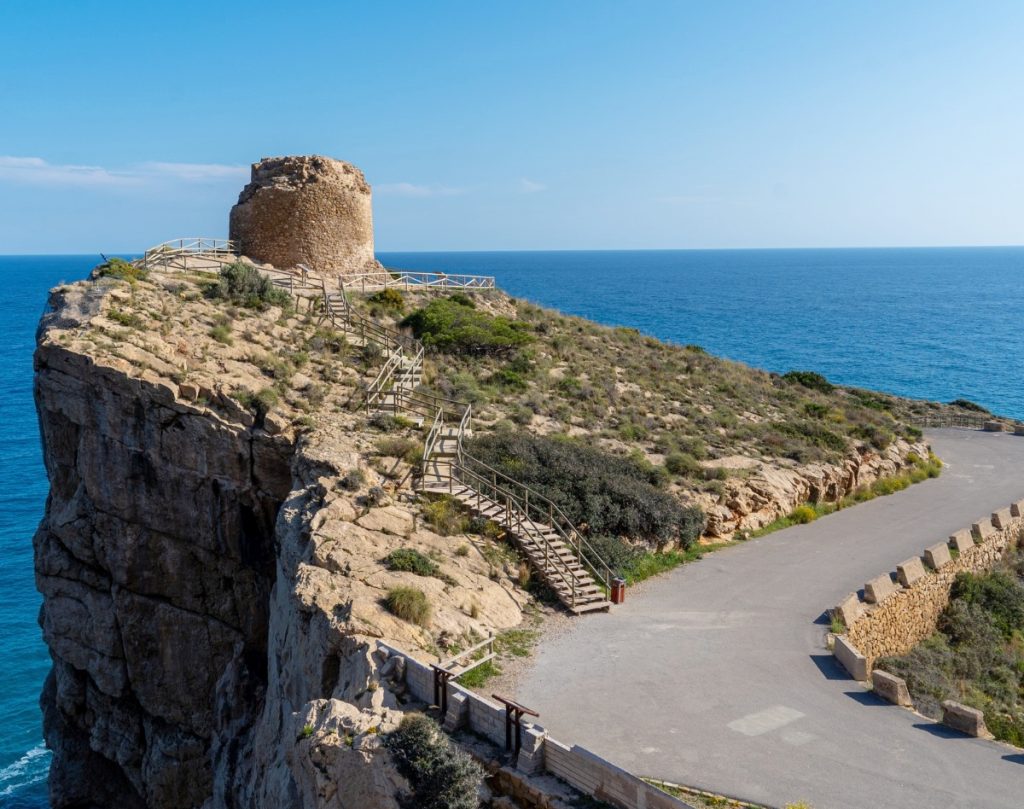
The tower sits at the eastern end of Levante Beach, at the entrance to the Serra Gelada Natural Park. It’s positioned on a rocky outcrop overlooking the sea, between Levante and the coves that lead toward Cala Almadrava and Cala Tío Ximo.
From central Levante, it’s about a 20–30 minute walk along the promenade and then up a short, slightly inclined path.
The location is strategic. From this elevated point, you can see far along the coastline — which was precisely the point centuries ago.
Why Was It Built?
The Tower of Caletes dates back to the 16th century. At that time, the Mediterranean coast of Spain was vulnerable to pirate attacks, particularly from North African corsairs.
Benidorm was a small fishing settlement. Coastal watchtowers like this one were part of a defensive network:
- They monitored the sea for approaching ships.
- Guards would signal nearby towns if danger was spotted.
- Smoke by day and fire by night were used as communication signals.
The tower was never meant to be a fortress. It was an early warning system — a visual alarm in stone.

Why Is It Also Called “Torre Punta del Cavall”?
You may hear locals refer to it by different names. The tower is sometimes called:
- Torre de les Caletes
- Torre Punta del Cavall
Both refer to its coastal position near small rocky coves (“caletes”) and the Punta del Cavall headland.
The naming reflects geography rather than different structures — it’s the same historic tower.
What Is It Like Today?
Today, the tower is partially ruined but still structurally recognizable. You can’t enter it, but you can walk around it and enjoy panoramic views over:
- Levante Beach
- The Mediterranean coastline
- Serra Gelada cliffs
- Benidorm’s skyline
It’s one of the few places in Benidorm where the natural landscape clearly dominates the urban one.
Unlike the busy promenade below, the area around the tower feels quieter and more exposed to wind and sea.
Is It Worth Visiting?
For short-term tourists, it may be a quick photo stop.
For long-stay residents or digital nomads, it becomes something different:
- A regular walking destination.
- A quiet thinking spot.
- A place to disconnect after screen-heavy days.
- A reminder that Benidorm is more than tourism.
If you work remotely, incorporating walks toward the tower into your routine can help break up sedentary days.

Best Time to Visit
Early morning and late afternoon are ideal.
- Midday can be hot and exposed.
- Summer afternoons bring more visitors.
- Winter mornings are especially peaceful.
There is little shade, so bring water in warmer months.
How It Fits Into Modern Benidorm
The contrast between the 16th-century watchtower and the skyscrapers behind Levante is striking.
It shows two versions of Benidorm:
- A small coastal village defending itself.
- A global tourism hub reinventing its skyline.
For digital nomads living here, that contrast is part of the appeal. You can work from a high-speed fiber connection in a high-rise apartment — then walk to a stone tower built to fight pirates.
Few cities offer that kind of layered history in such a compact space.
Practical Tips
- Wear comfortable shoes (the path is uneven near the tower).
- Avoid windy days if you dislike exposed cliffs.
- Combine the visit with a walk into Serra Gelada Natural Park.
- Don’t expect facilities — there are no cafés or services at the tower itself.
It’s more about atmosphere than infrastructure.
A Small Landmark With a Big Story
The Tower of Caletes isn’t large or ornate. It doesn’t have ticket booths or guided tours. But it connects Benidorm to its pre-tourism identity.
If you’re staying in the city for weeks or months, visiting it at least once adds perspective. It’s easy to see Benidorm only through beaches, nightlife, and remote work routines.
The tower reminds you that the coastline has been lived on, defended, and watched over for centuries.
And sometimes, stepping away from Wi-Fi and walking toward stone is exactly what long-term balance requires.