
Benidorm is known for sunshine.
For most of the year, the city offers exactly what people expect from the Costa Blanca:
- dry weather
- blue skies
- outdoor living
- beach-friendly temperatures even outside summer
That’s why many visitors are genuinely shocked the first time they experience a strong Mediterranean storm here.
Within minutes:
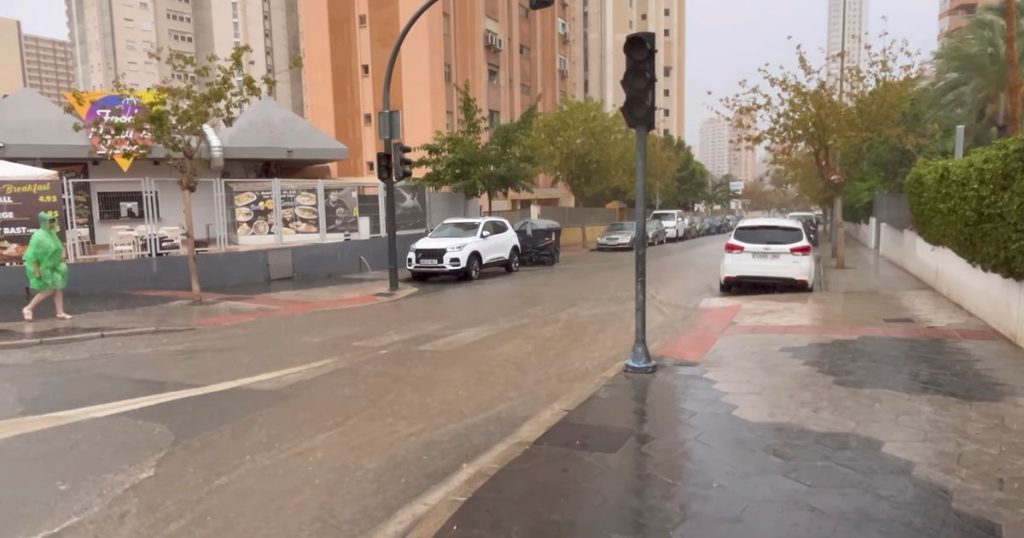
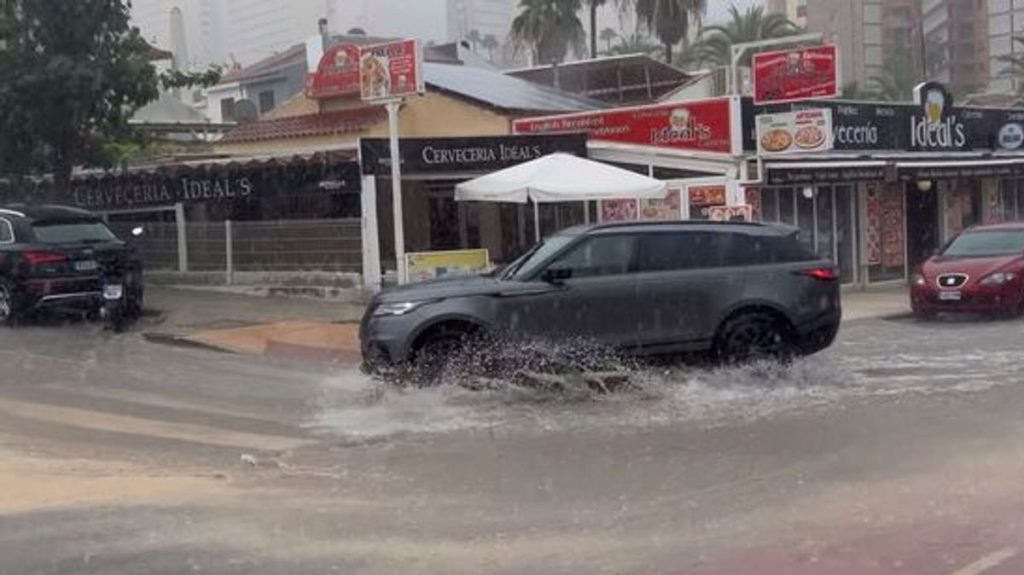
- streets can turn into rivers
- water rushes downhill toward the sea
- traffic slows dramatically
- and areas that looked completely normal an hour earlier suddenly feel overwhelmed by rain
To people unfamiliar with Mediterranean climates, it can seem contradictory:
👉 How can one of Spain’s sunniest destinations flood so quickly?
The answer lies in a combination of:
- geography
- urban design
- and the unique nature of Mediterranean storms.
And understanding those factors helps explain why Benidorm reacts so intensely when heavy rain finally arrives.
Mediterranean Storms Work Differently Than Northern European Rain
One of the biggest misconceptions visitors have is assuming that rainfall works the same way everywhere in Europe.
In many northern climates, rain tends to be:
- lighter
- longer-lasting
- and spread across several days
Mediterranean weather systems behave very differently.
In Benidorm and much of the eastern Spanish coast, storms are often:
- short
- highly concentrated
- and extremely intense
Instead of raining moderately for an entire day, a Mediterranean storm may release a huge amount of water in:
- 20 minutes
- one hour
- or a single afternoon
This phenomenon is commonly associated with:
- DANA systems
- or the traditional term gota fría
These weather patterns form when:
- warm Mediterranean sea temperatures
meet - unstable cold air in the upper atmosphere
The result is explosive rainfall intensity.
So while Benidorm does not receive constant rain throughout the year, the rain it does receive can arrive with enormous force in a very short period of time.
That distinction is extremely important.

Benidorm’s Geography Makes Water Move Fast
The second major factor is the city’s physical layout.
Benidorm is not flat in the way many visitors imagine.
Although the beachfront areas feel relatively level, large parts of the city are built on terrain that slopes downward toward the Mediterranean Sea. This means that during heavy rain:
- water accelerates quickly downhill
- runoff gathers speed
- and drainage systems become overwhelmed very fast
The effect is especially visible in:
- side streets descending toward Levante Beach
- intersections near lower elevations
- roads connecting upper residential zones with the beachfront
Unlike slower-moving flood situations seen near rivers, Benidorm’s flooding is often:
👉 rapid surface runoff
The water isn’t usually “rising slowly.”
It’s moving quickly through the urban landscape.
This is why streets can appear normal one moment and heavily flooded shortly afterward.
Urban Density Amplifies the Problem
Benidorm’s vertical skyline plays an indirect role too.
The city is heavily urbanized, meaning there are:
- roads
- pavements
- buildings
- parking areas
- concrete surfaces
These surfaces absorb very little water.
In more rural environments, rainfall can partially soak into the ground. In dense urban zones like Benidorm, much of the water instead becomes surface runoff almost immediately.
That creates two important effects:
- drainage systems receive huge pressure very quickly
- water concentrates into lower streets and intersections
This is one reason why even relatively short storms can temporarily overwhelm parts of the city.
Why Flooding Often Looks Worse Than It Actually Is
Another important point is perception.
Because Benidorm is associated with sunshine and tourism, storms feel visually dramatic.
A city designed around:
- terraces
- beaches
- outdoor walking
- open promenades
changes completely during heavy rain.
The contrast is extreme.
Visitors who spend days seeing:
- clear skies
- dry streets
- crowded beaches
suddenly witness:
- torrents of water
- empty promenades
- flooded intersections
- dark skies over the skyline
Psychologically, this makes storms feel more severe than they might in cities where rain is common and expected.

Which Areas Tend to Flood More Easily?
Certain parts of Benidorm are more vulnerable during intense rain episodes.
Typically, the most affected areas include:
- lower streets near the beachfront
- underpasses
- roads with steep downhill gradients
- intersections where runoff naturally accumulates
Temporary flooding is especially common in:
- Levante-area streets
- lower road sections near beaches
- older drainage zones during peak rainfall intensity
However, it’s important to understand:
👉 most flooding episodes are temporary
In many cases:
- water levels fall quickly after the rain stops
- traffic gradually returns
- and the city recovers surprisingly fast
This is very different from long-term flood disasters seen in other regions.
Autumn Is Usually the Most Unstable Period
Although storms can happen at different times of year, the highest probability of intense rainfall usually occurs during:
- September
- October
- and sometimes November
This happens because:
- the Mediterranean Sea remains very warm after summer
- atmospheric instability increases in autumn
That combination creates ideal conditions for sudden storms.
Interestingly, these periods can still include:
- sunny mornings
- warm temperatures
- and normal beach weather before storms develop later in the day
This unpredictability is part of what makes Mediterranean weather unique.
How Locals Adapt to Heavy Rain in Benidorm
People who live in Benidorm long-term tend to treat heavy rain very pragmatically.
Locals understand that:
- storms are usually intense but brief
- certain streets should be avoided temporarily
- waiting 30–60 minutes often changes everything
Common local habits include:
- checking weather alerts more seriously in autumn
- avoiding underground parking during severe rain warnings
- postponing short car trips during peak downpours
- simply waiting inside cafés until the storm weakens
Over time, residents learn that Mediterranean storms are less about duration and more about intensity.
Is Flooding in Benidorm Dangerous?
This is where balance is important.
Most rainfall events in Benidorm are:
- inconvenient
- disruptive
- visually dramatic
…but not catastrophic.
The city is highly experienced in dealing with seasonal storms, and infrastructure usually returns to normal relatively quickly after heavy rainfall ends.
That said, extreme weather should still be taken seriously.
The main risks usually involve:
- driving through flooded roads
- slipping on steep wet surfaces
- entering underground areas during severe storms
- underestimating fast-moving water
For visitors, the best approach is simple:
👉 respect weather warnings and avoid unnecessary movement during intense downpours.
Climate Change May Increase Extreme Weather Episodes
One reason this topic has become more discussed in recent years is climate instability across the Mediterranean region.
Scientists increasingly point toward:
- more frequent extreme rainfall events
- stronger short-duration storms
- and greater pressure on urban drainage systems
For cities like Benidorm, this creates a difficult balance:
- maintaining tourism infrastructure
while - adapting to more volatile weather patterns
Even though the city remains overwhelmingly sunny most of the year, extreme weather episodes may become more noticeable over time.
What Visitors Should Actually Take Away From This
The most important thing to understand is that flooding does not define Benidorm’s climate.
The city still enjoys:
- hundreds of sunny days per year
- mild winters
- and one of the most stable climates in Europe overall
But Mediterranean weather works in extremes.
Long dry periods are occasionally interrupted by:
- short
- intense
- highly concentrated storms
And because Benidorm’s geography and urban structure channel water so efficiently, the visual impact becomes dramatic very quickly.
That’s not a contradiction.
It’s simply how Mediterranean coastal cities function.
Benidorm is a city built around sunshine, outdoor life, and the sea.
But when storms arrive, the same characteristics that make the city attractive:
- steep coastal layout
- dense urban design
- beachfront infrastructure
also make rainfall feel fast and intense.
The result is a place where:
- dry weather dominates most of the year
yet - sudden flooding can still happen surprisingly quickly during major storms.
Understanding that contrast gives a much more realistic picture of Benidorm:
not just as a tourist destination, but as a real Mediterranean city shaped by both sun and extreme weather.