
At some point, almost every digital nomad ends up comparing places that, on the surface, don’t even seem comparable. Benidorm and Bali are a perfect example of that.
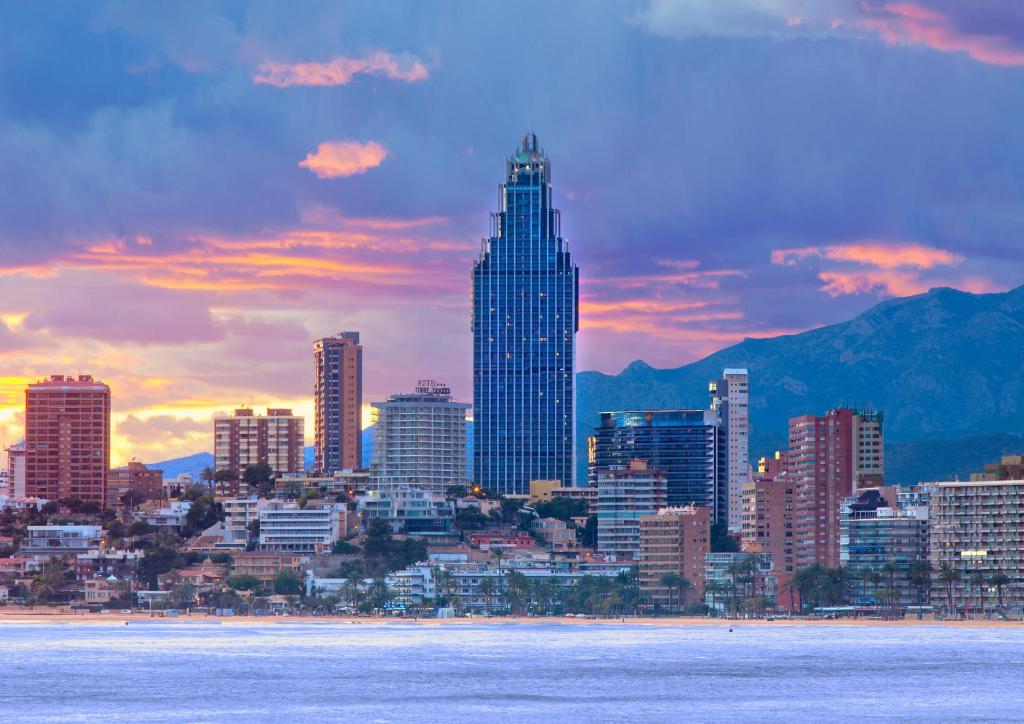
One is a compact Mediterranean city on Spain’s Costa Blanca, known for beaches, high-rises, and accessibility. The other is a tropical island in Indonesia, globally associated with remote work culture, coworking hubs, and a strong nomad identity.
And yet, both attract the same type of person:
👉 someone trying to build a lifestyle around work, freedom, and environment.
The difference is not just geographical.
It’s structural, psychological, and deeply practical.
🌍 First Impressions vs Daily Reality
At first glance, Bali seems like the obvious winner for digital nomads. It has a global reputation, a visible community, and an ecosystem designed around remote work. Benidorm, on the other hand, feels like an unconventional choice—more associated with tourism than productivity.
But that perception changes once you actually live in both places.
Bali is designed to feel like a digital nomad destination. Benidorm, by contrast, is simply a functional city where digital nomads happen to live.
And that distinction becomes more important over time.
🧠 Productivity: Structure vs Environment
One of the biggest differences between Benidorm and Bali is how productivity is supported.
In Bali, productivity is often externally structured. You have:
- coworking spaces
- networking events
- visible routines
- other people working around you
There’s a sense of collective momentum. You sit down in a coworking space, and the environment pushes you into focus almost automatically.
Benidorm works in the opposite way.
There’s no strong coworking culture, no visible “work scene,” and very little external pressure to be productive. The environment doesn’t guide you—it leaves you alone.
For some people, this is liberating. For others, it’s destabilizing.
Because in Benidorm:
👉 productivity depends almost entirely on your own structure
While in Bali:
👉 productivity is partially outsourced to the environment

🌴 Lifestyle: Tropical Escape vs Mediterranean Routine
The lifestyle in Bali is immersive. It feels like a full reset from your previous life. Everything—from the climate to the culture—reminds you that you’re somewhere completely different.
That has a strong psychological effect. Days feel slower, more intentional, sometimes even detached from time.
Benidorm is less immersive, but more stable.
It’s not a “reset.” It’s an extension of European life, just with better weather and more accessibility. You still have:
- supermarkets that feel familiar
- healthcare systems you understand
- infrastructure that works predictably
This creates a different type of lifestyle.
In Bali, you feel like you’ve stepped out of your normal life.
In Benidorm, you feel like you’ve optimized it.
💸 Cost of Living: Cheap vs Predictable
Bali is often seen as a low-cost paradise, and in many ways it is. Accommodation, food, and services can be significantly cheaper than in Europe—especially if you adapt to local standards.
But that affordability often comes with variability:
- quality can differ widely
- infrastructure is inconsistent
- what looks cheap can become expensive depending on lifestyle choices
Benidorm, on the other hand, is not “cheap” in the global sense—but it is predictable.
You know what you’re paying for:
- rent
- groceries
- transport
- services
There are fewer surprises, and the baseline quality is more consistent.
For short stays, Bali often wins financially.
For long-term stability, Benidorm becomes more comfortable.
🏠 Infrastructure: Adaptation vs Reliability
This is where the difference becomes very practical.
In Bali, you adapt constantly:
- internet quality can vary
- traffic can be unpredictable
- basic services don’t always work the same way
None of these are deal-breakers—but they require energy.
Benidorm removes most of that friction.
Everything is:
- walkable
- reliable
- easy to access
You don’t spend mental energy solving daily logistics. That energy can go directly into work—or into enjoying your time.
Over weeks and months, this difference adds up more than people expect.
🧍♂️ Social Life: Community vs Spontaneity
Bali has a strong, visible digital nomad community. It’s easy to meet people, attend events, and become part of a network quickly.
This is ideal if you:
- want connection
- enjoy structured social environments
- are new to remote work
Benidorm is more subtle.
There’s no obvious “nomad scene,” but there is constant social opportunity. Conversations happen naturally, often without planning. You meet people through routine rather than events.
The result is different:
- Bali = fast connections, community-driven
- Benidorm = slower connections, environment-driven
Neither is better. It depends on what you’re looking for.
⏳ Work-Life Balance: Designed vs Self-Created
Bali often feels balanced by design. You work, you go to a yoga class, you eat healthy food, you meet people. The lifestyle is almost pre-built.
Benidorm doesn’t give you that structure.
You can have an excellent work-life balance—but you have to create it yourself. If you don’t, the city can easily pull you toward either extreme:
- too much leisure
or - too much isolation
This makes Benidorm more demanding in a subtle way.
Not physically—but mentally.

⚖️ Which One Is Better?
That’s the wrong question.
A better question is:
👉 what kind of environment do you need right now?
Bali is ideal if you:
- want a strong nomad ecosystem
- prefer external structure
- enjoy immersive, culturally different environments
- are in an exploratory phase
Benidorm works better if you:
- value stability and simplicity
- want reliable infrastructure
- prefer independence over community
- are focused on consistency and long-term routine
🧭 The Real Difference
The core difference between Benidorm and Bali is not about beaches, weather, or cost.
It’s about how much the environment does for you.
Bali actively supports a digital nomad lifestyle.
Benidorm doesn’t—it simply allows it.
And that changes everything.
In Bali, it’s easier to start.
In Benidorm, it’s easier to sustain—if you have the discipline.
Both places can work exceptionally well for remote work, but they serve different stages of the same journey.
Bali is often where people discover the lifestyle.
Benidorm is where some people refine it.
One gives you structure.
The other forces you to build your own.
And depending on where you are personally and professionally, that difference can either help you grow—or expose what you’re missing.