Best Areas to Buy Property in Benidorm: A Guide for Foreign Buyers
Last Updated: August 2026
Choosing where to buy in Benidorm is not simply a question of deciding which beach you prefer.
The city is compact enough that many areas are relatively close to one another, yet the experience of living in them can be surprisingly different.
An apartment overlooking Poniente can offer a very different daily routine from one in the busiest part of Levante. A property in the Old Town may put almost everything within walking distance but offer none of the large communal facilities found in many residential towers. Rincón de Loix can mean a flat walk close to Levante Beach in one location and a steep hillside home with panoramic views in another.
Even within the same neighbourhood, two streets — or two buildings on the same street — can produce very different ownership experiences.
That is why there is no useful answer to the question:
“What is the best area to buy property in Benidorm?”
without first asking:
“Best for what kind of buyer and what kind of life?”
Someone moving permanently to Benidorm may prioritise supermarkets, healthcare, public transport and year-round neighbourhood life.
A retiree living without a car may care enormously about gradients and walking distances.
A remote worker may need a quiet apartment, reliable fibre internet, air conditioning and enough space for a proper workspace.
A second-home buyer may prefer a secure residential complex with a pool and low-maintenance communal areas.
An investment buyer will have a different set of questions again and should never assume that a popular tourist location automatically makes a property suitable — or legally available — for the type of rental they intend to operate.
This guide compares the main areas of Benidorm from that practical perspective.
Rather than declaring one neighbourhood the winner, we will look at what each area offers, what compromises come with it and what foreign buyers should check before making a decision.
Benidorm’s relatively small geographical size can create the impression that location does not matter very much.
After all, Levante and Poniente are not different towns. The Old Town sits between the two principal beaches, public transport connects much of the city, and many everyday journeys are relatively short.
But property buying happens at a much smaller scale than city maps suggest.
Would you prefer a large residential development or a smaller traditional building?
Do you want a swimming pool badly enough to pay the community costs associated with maintaining one?
Will you spend winter in the apartment?
Do you work from home?
How much noise can you realistically tolerate?
These questions can eliminate entire types of property before you begin comparing individual listings.
Someone who wants a quieter year-round home with modern communal facilities might naturally begin around Poniente.
Someone who wants immediate access to entertainment and Levante Beach might accept a much busier environment.
Someone who wants to live entirely on foot may find central Benidorm more practical than a spectacular apartment on a steep hillside.
None of those choices is inherently better.
They simply reflect different priorities.
The same neighbourhood can change street by street
Neighbourhood labels are useful for beginning a search, but they can become misleading if taken too literally.
This is particularly true in Benidorm.
A property advertised as being in Levante may be close to nightlife or several streets removed from it.
A Rincón de Loix apartment may sit on relatively flat ground or high enough above the coast that walking home becomes a serious consideration.
Poniente includes established apartment buildings, modern high-rise developments, busy beachfront sections and locations that feel considerably more residential.
The Old Town contains some intensely active streets and others that become much calmer once the main visitor routes are left behind.
For this reason, once you identify a promising neighbourhood, the next unit of analysis should be:
the street → the building → the apartment.
Not simply the district.
A good rule for foreign buyers is:
Choose the area first, but buy the micro-location.
The Main Areas of Benidorm Compared
Before looking at each area in detail, the following overview gives a useful starting point.
Area
General character
Particularly worth considering for
Main things to check
Poniente
Coastal, spacious and generally calmer than the busiest parts of Levante
Year-round living, second homes, buyers looking at newer developments
Exact location, building costs, price premium, distance to everyday services
Levante
Lively, highly walkable and strongly tourism-oriented in parts
Buyers prioritising beach access, entertainment and central convenience
Noise, nightlife, visitor activity and building profile
Rincón de Loix
International, varied and heavily apartment-based
Expats, long stays, Levante access, high-rise buyers
Gradients, exact micro-location, lifts and building age
Old Town
Compact, traditional and urban
Car-free living, restaurants, walking access to both beaches
Parking, older buildings, noise and fewer communal facilities
Central Benidorm
Practical urban living with extensive everyday services
Permanent residents and buyers prioritising convenience
Building condition, street environment and less resort-style housing
These descriptions should be treated as starting points rather than rules.
Benidorm contains too much variation within each district for a simple table to decide where you should buy.
Poniente
Poniente has become one of the most obvious starting points for foreign buyers who want Benidorm as a place to live rather than simply as a holiday destination.
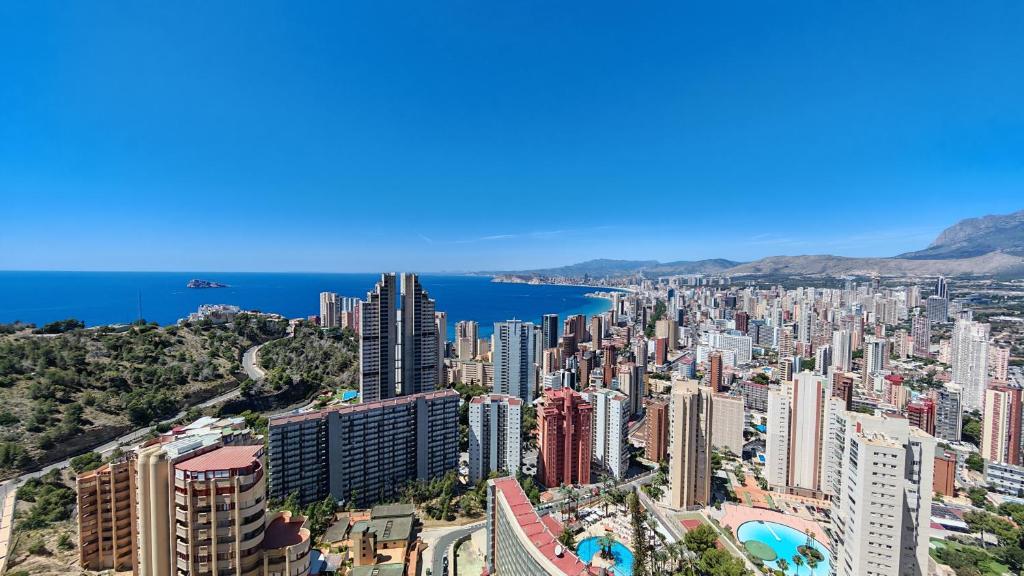
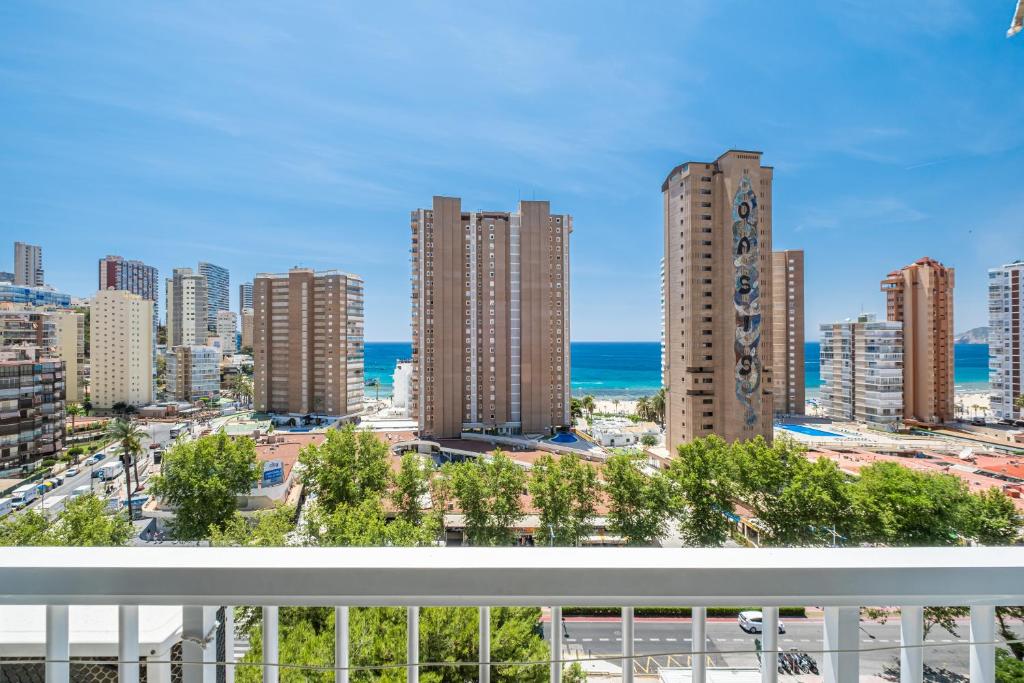
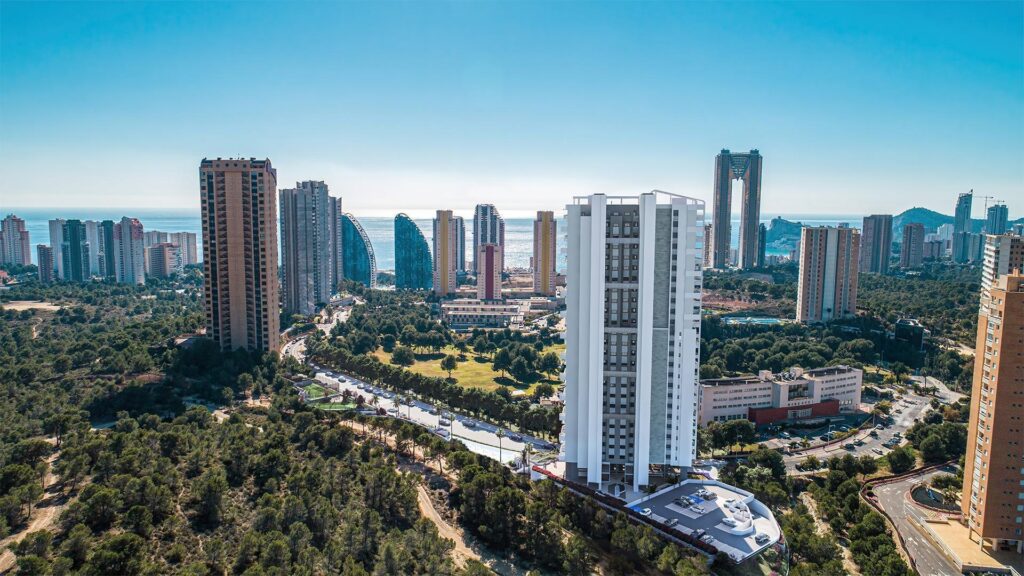
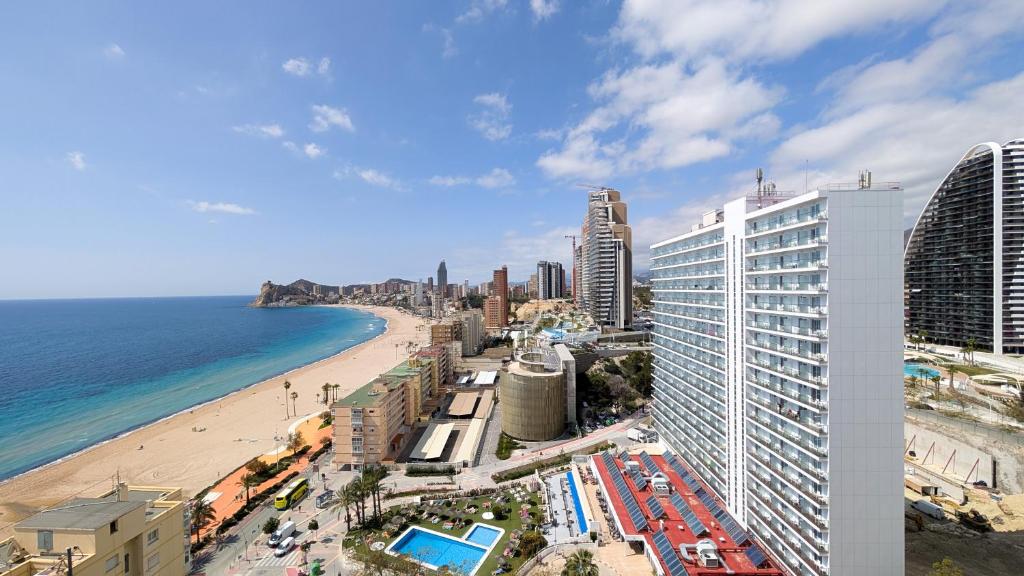
The area stretches along Benidorm’s long western beach and contains a mixture of established residential buildings, traditional apartments and some of the city’s most distinctive newer high-rise developments.
Its atmosphere is generally more open and less concentrated around nightlife than the busiest sections of Levante, although describing the whole area as “quiet” would be misleading.
Poniente is still a major urban beach.
It becomes busy in summer, attracts visitors throughout the year and includes restaurants, cafés, traffic and considerable residential activity.
The difference is one of degree and location.
For someone who wants easy beach access while retaining a somewhat more residential feel, Poniente can be very attractive.
The wide promenade also creates an environment that works well for walking, exercise and spending time outdoors throughout much of the year.
But Poniente is not one uniform property market.
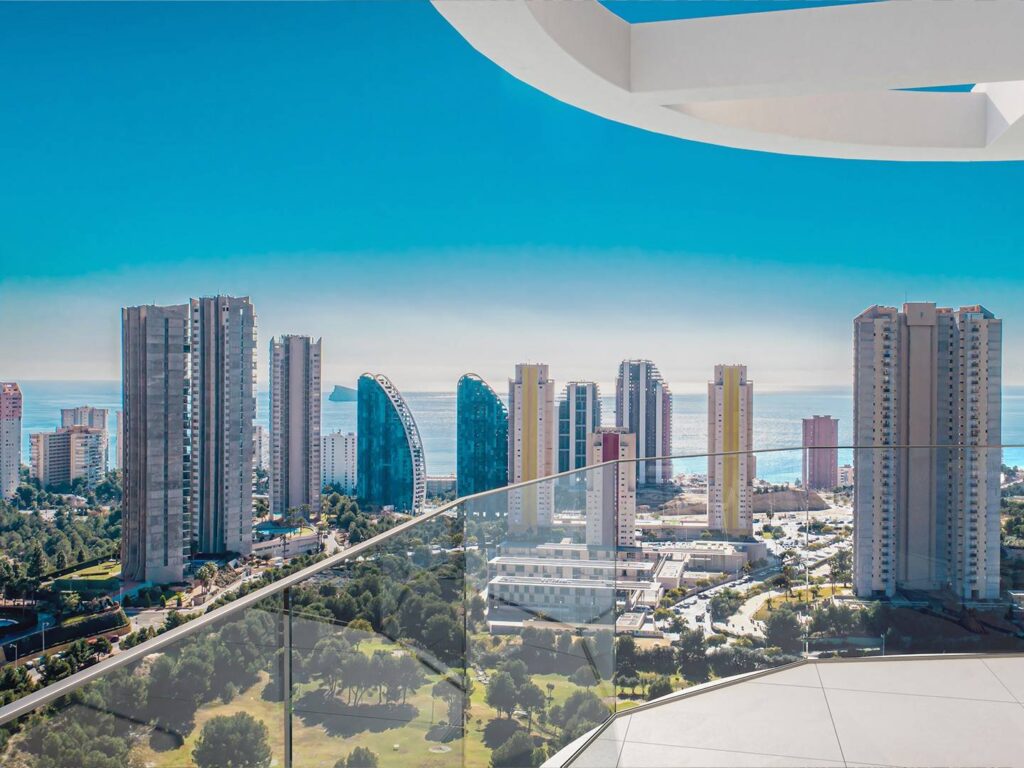
A modern tower near the seafront can offer:
large terraces;
sea views;
contemporary communal areas;
swimming pools;
parking;
security;
and newer building standards.
An older apartment several streets inland may offer:
more internal space for the money;
lower purchase price;
an established residential community;
and easier access to some everyday services.
Those are very different propositions even though both may appear under “Poniente” in property searches.
Who may like Poniente
Poniente is particularly worth investigating if you are:
planning to live in Benidorm year-round;
looking for a second home that feels somewhat removed from the busiest nightlife;
attracted to modern residential developments;
looking for strong beach access without necessarily living in the most intensely tourist-oriented environment;
or hoping for a balance between Mediterranean lifestyle and practical residential use.
It may also appeal to remote workers who want a coastal environment but do not need to be surrounded by entertainment.
Again, the exact building matters enormously.
A quiet high-floor apartment can provide a very different working environment from a lower property overlooking a busy road, pool or restaurant terrace.
What to check before buying in Poniente
One of the first things to check is how far west the property actually is.
The western end of the urban area can place you farther from central Benidorm than an initial map glance suggests.
That may not matter at all if you have a car or prefer that part of the city.
For someone expecting to walk into the centre regularly, it deserves testing in real life.
Do the walk rather than relying on an estate-agent description.
You should also check:
Everyday services. A beachfront property may be excellent for walking along the sea but not necessarily the most convenient location for the supermarket, pharmacy or other services you will use every week.
Community costs. Many modern developments offer extensive facilities. Pools, gardens, gyms, security and multiple lifts add value, but they also require ongoing maintenance.
The new-build premium. Some buyers are willing to pay substantially more for modern design, energy efficiency, communal facilities and sea views. Others may find better practical value in established buildings nearby.
Orientation. Open views and large terraces can mean significant sun and wind exposure depending on the apartment.
Parking. If you own a car, a private space can make a substantial difference, particularly during busy periods.
There is also a geographic issue worth understanding.
At the western side of Benidorm, marketing descriptions can begin to blur the distinction between Benidorm and neighbouring Finestrat.
A property may be advertised using phrases such as “Benidorm area”, “La Cala” or references to Poniente while legally being located in another municipality.
That is not necessarily a disadvantage, but the distinction matters for municipal taxes, administration and local rules.
Always check the exact municipality rather than relying on the property headline.
Levante
If Poniente represents one face of Benidorm, Levante represents another.
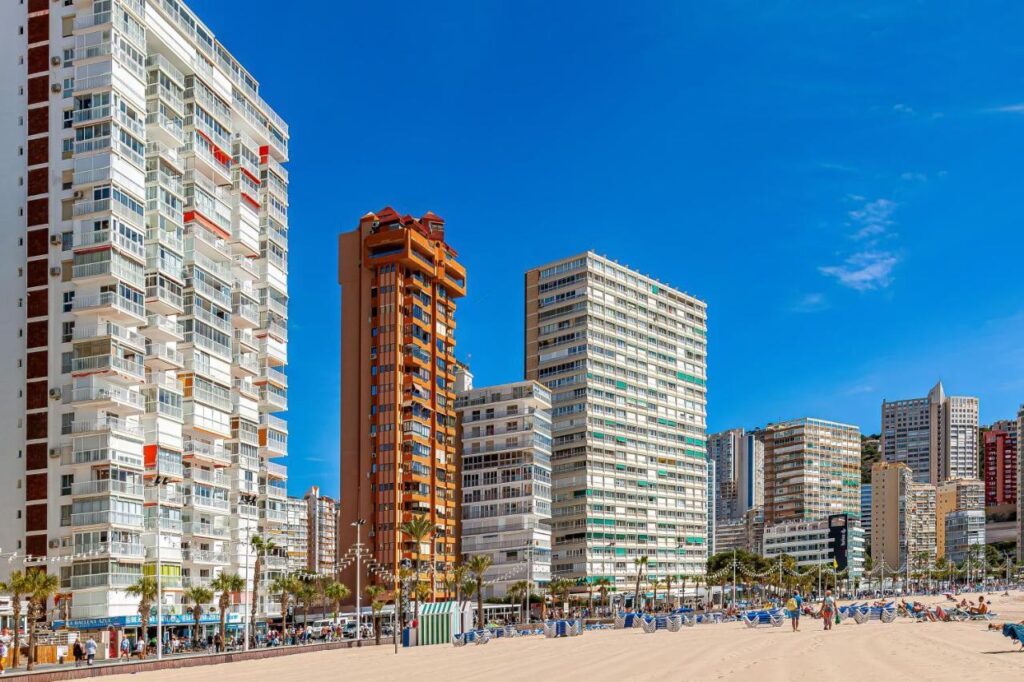
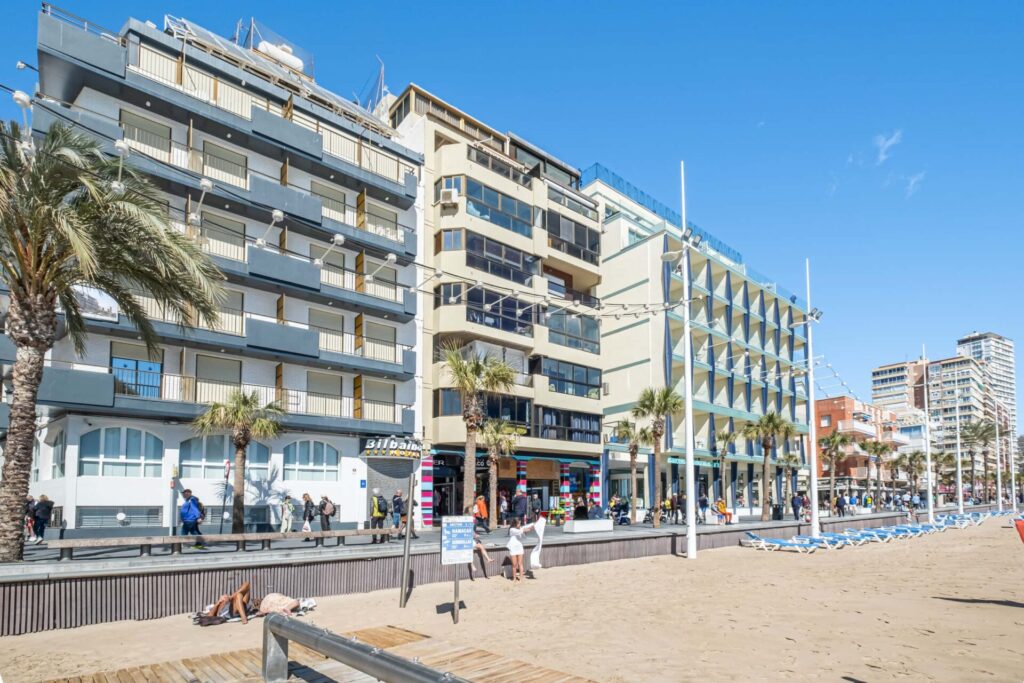
Levante Beach and its surrounding streets contain much of the activity that international visitors most strongly associate with the city: beach life, hotels, restaurants, entertainment, nightlife and a constant flow of people.
For some buyers, that is precisely the attraction.
You can live in an environment where much of what you need is within walking distance and where there is very little risk of feeling isolated outside the summer season.
For others, the intensity is exactly why they would prefer to buy elsewhere.
The mistake is treating all of Levante as equally busy.
It is not.
The beachfront, nightlife areas, large hotel zones and more residential streets can produce very different living conditions.
Two apartments marketed as “Levante” can therefore suit completely different buyers.
Who may like Levante
Levante deserves serious consideration if your priorities include:
immediate or very easy beach access;
restaurants and entertainment;
being able to walk almost everywhere;
a lively atmosphere throughout much of the year;
extensive services aimed at international residents and visitors;
and having a large selection of apartments and high-rise buildings to choose from.
It can work particularly well for a buyer who actively wants the energy of Benidorm rather than trying to escape it.
A second-home owner may enjoy being able to arrive and immediately have shops, restaurants and entertainment nearby without depending on a car.
A permanent resident can also find Levante highly practical, provided the specific micro-location matches their tolerance for activity and noise.
What to check before buying in Levante
The first thing to investigate is noise.
Do not ask only:
“Is this a quiet apartment?”
That question is subjective.
Instead, visit the street yourself in the evening.
If possible, return at the weekend.
Look at what is directly below and around the building:
bars;
restaurants;
hotel entrances;
delivery areas;
entertainment venues;
taxi activity;
major traffic routes;
and other apartment buildings with large numbers of short-stay occupants.
Windows and a high floor can reduce some noise, but they do not automatically make the surrounding environment irrelevant.
The second issue is the profile of the building.
A building primarily occupied by permanent residents may feel very different from one with heavy holiday use, even when both occupy excellent locations.
Ask about the community and review its rules and recent minutes as part of your due diligence.
Parking is another consideration.
If your apartment includes a private space, this may be straightforward.
If not, test parking under realistic conditions rather than assuming that because you found a space during a Tuesday-morning viewing, the same will happen in August.
Finally, think carefully about why you are paying for the location.
First-line or near-beach property may command a premium because of the view and access.
That premium can be completely worthwhile if those things are central to why you want to own in Benidorm.
But if your priority is space, quiet or parking, moving only a few streets inland may sometimes produce a much better lifestyle for the same overall budget.
The most useful rule for Levante is therefore:
Do not buy “Levante” based on the neighbourhood name. Buy a particular street, building and apartment after seeing how that exact location behaves in real life.
Rincón de Loix
Rincón de Loix is one of the most varied parts of Benidorm.
That is precisely why buyers should be careful with broad descriptions of the area.
The lower parts of Rincón connect closely with the eastern end of Levante and offer easy access to the beach, restaurants, supermarkets, cafés, international businesses and a large concentration of apartment buildings.
Move farther inland or uphill, however, and the experience can change significantly.
Some locations feel much more residential.
Others offer elevated views over the city and coastline.
The trade-off is that gradients become more important, and a distance that looks short on a map can feel very different when walked repeatedly.
For foreign buyers, Rincón can be attractive because it combines:
a strong international presence;
extensive everyday services;
proximity to Levante;
a large stock of apartments;
high-rise living;
and a wide range of building ages and price points.
But there is no single “Rincón lifestyle”.
The micro-location matters enormously.
Lower Rincón vs higher areas
The lower part of Rincón is generally easier for someone who wants to live on foot.
You may have shops, restaurants, public transport and Levante Beach within relatively easy reach.
Higher areas can offer more open views and a more residential atmosphere, but the walk back home may involve substantial uphill sections.
This is particularly important for:
retirees;
people with reduced mobility;
anyone planning to live without a car;
and buyers who expect to walk to the beach or supermarket every day.
A property listing may say:
“Ten minutes from Levante Beach.”
That statement tells you very little unless you know the gradient.
Always test the route yourself.
Who may like Rincón de Loix
Rincón is particularly worth considering if you want:
an international environment;
easy access to Levante without necessarily living directly in the busiest nightlife areas;
a large choice of apartments;
high-rise options;
plenty of nearby services;
or a location that works well for long stays.
It may also suit buyers who want to remain close to the eastern side of Benidorm while finding a more residential street or building than some of the busiest Levante locations.
What to check before buying in Rincón
Gradients. This is one of the most important factors in the area. Do not rely only on distance measurements.
Building age. Rincón contains many established towers and apartment blocks. Check lifts, façades, communal areas and planned major works.
Lift dependence. If you are buying on a high floor, ask about the number, capacity and condition of the lifts.
Noise and tourist activity. Some parts are heavily influenced by visitor accommodation and nightlife, while others are much more residential.
Parking. Private parking can be especially valuable if the property is uphill or you expect to use a car regularly.
Orientation and views. Elevated properties can be very attractive, but sun and wind exposure should be checked carefully.
Old Town
Benidorm’s Old Town offers a completely different property experience from the city’s large residential developments.
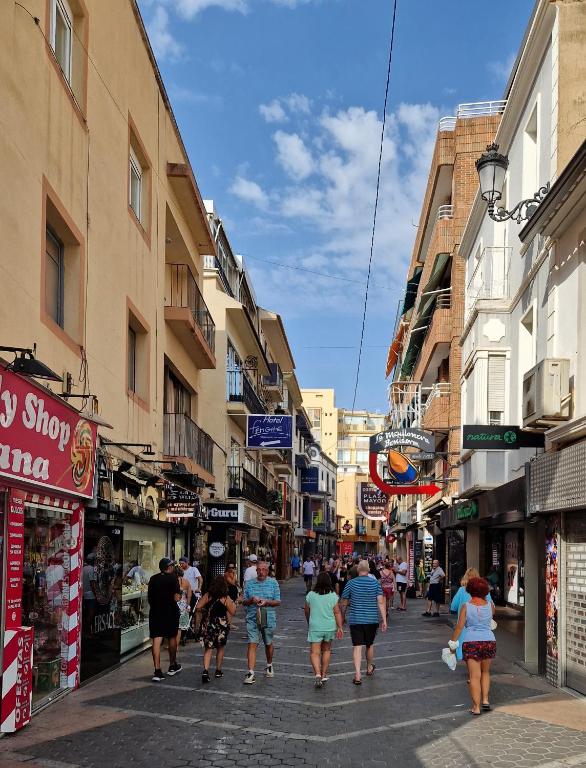
It sits between Levante and Poniente and has a compact urban layout with narrow streets, traditional buildings, restaurants, cafés, shops and easy access to both beaches.
For buyers who want to live on foot, this can be extremely attractive.
You can be close to:
supermarkets;
restaurants;
municipal services;
shops;
public transport;
beaches;
and many of the places that form part of everyday life.
The trade-off is that property here is often less “resort-style”.
You are more likely to find:
older buildings;
smaller communal areas;
limited private parking;
fewer swimming pools;
fewer gardens;
and less of the modern high-rise infrastructure found elsewhere.
That is not a disadvantage if those features are not important to you.
For some buyers, the ability to leave the apartment and immediately be part of the city is worth much more than having a communal pool.
Who may like the Old Town
The Old Town may suit buyers who:
want to live without a car;
value restaurants, cafés and street life;
want easy access to both Levante and Poniente;
prefer a more traditional urban atmosphere;
or do not need large communal facilities.
It can work especially well for people who see Benidorm as a city rather than simply as a beach resort.
A buyer who enjoys walking, eating out and having everything close by may find the Old Town more practical than a larger apartment farther from the centre.
What to check before buying in the Old Town
Building condition. Older buildings can occupy excellent locations but may require more attention to lifts, roofs, façades, plumbing, accessibility and communal maintenance.
Lift availability. Do not assume every building has one.
This becomes particularly important if the apartment is on an upper floor.
Parking. Private parking is less common than in many modern residential complexes.
If you own a car, investigate realistic parking options before buying.
Street noise. Some streets are very active, especially around restaurants, bars and visitor routes.
A charming pedestrian location during the day can be much busier late at night.
Accessibility. Narrow streets, steps and older building entrances can matter if mobility is a concern.
Communal facilities. If a pool, garden or large terrace is essential, the Old Town may offer fewer options than Poniente, Levante or Rincón.
Central Benidorm
Central Benidorm is often overlooked by foreign buyers because it does not always fit the postcard image of the city.
That can be a mistake.
The areas immediately around the commercial and civic centre can be extremely practical for permanent living.
Here, the priority is less about sea views and resort facilities and more about:
supermarkets;
markets;
banks;
pharmacies;
local shops;
transport;
municipal services;
schools;
healthcare access;
and everyday walkability.
For someone buying to live year-round, these factors can be more important than being directly on the beachfront.
Central Benidorm also provides relatively easy access to both the eastern and western sides of the city.
Depending on the exact location, you may be able to walk to Levante, Poniente and the Old Town without needing a car.
The property stock is generally more urban and established.
You may find fewer spectacular terraces and resort-style communal areas, but potentially more practical layouts and locations for ordinary daily life.
Who may like Central Benidorm
Central areas are particularly worth considering if you:
intend to live in Benidorm permanently;
want maximum access to everyday services;
do not want to depend heavily on a car;
prefer a practical city environment;
or care more about convenience than sea views.
This can also be a strong option for remote workers who want cafés, services, transport and daily errands close by.
What to check before buying in Central Benidorm
Traffic and street activity. Central streets can be busy for different reasons than Levante.
Instead of nightlife, the issue may be traffic, deliveries or daytime commercial activity.
Building age and condition. As in the Old Town, established buildings may require careful review of communal maintenance.
Parking. If you have a car, check whether the property includes a space and what nearby alternatives exist.
Natural light. Dense urban streets can mean less open exposure than high-rise beachfront developments.
Noise from commercial premises. Ground-floor shops, restaurants or loading areas can affect apartments above them.
Community profile. Some central buildings may have a stronger permanent-resident character, which can appeal to buyers looking for year-round stability.
What About La Cala de Finestrat and Areas Just Outside Benidorm?
Property searches do not always respect municipal boundaries.
This is especially noticeable on the western side of Benidorm.
You may see listings described using terms such as:
Benidorm;
La Cala;
Benidorm area;
Poniente;
or Cala de Finestrat.
These labels can make properties appear to belong to one continuous neighbourhood.
Geographically, the urban area does indeed feel highly connected.
Administratively, however, Benidorm and Finestrat are different municipalities.
That distinction matters.
Why municipal boundaries matter
If the property is legally in Finestrat rather than Benidorm, local administrative matters can differ.
These may include:
municipal taxes;
planning procedures;
local regulations;
public services;
parking rules;
and other council-level matters.
This does not make a Finestrat property less attractive.
It simply means the buyer should know exactly what they are purchasing.
Do not rely on the marketing title.
Check the legal address and municipality.
When looking outside Benidorm can make sense
For some buyers, the areas immediately outside Benidorm may be highly relevant.
You may find:
newer developments;
quieter residential environments;
different property types;
more parking;
larger communal areas;
or easier road access.
This can be especially attractive if you want the services and beaches of Benidorm nearby without necessarily living inside the municipality itself.
But once you begin comparing Finestrat, La Cala, Sierra Cortina or other nearby areas, the question changes slightly.
You are no longer only asking:
“Where should I buy in Benidorm?”
You are asking:
“Should I buy in Benidorm or in the wider area around it?”
That is a useful comparison, but it deserves to remain conceptually separate from a guide focused specifically on Benidorm neighbourhoods.
Beachfront vs a Few Streets Inland
For many foreign buyers, the search begins with one instinct:
get as close to the sea as possible.
That is understandable.
A beachfront apartment can offer:
direct access to the promenade;
uninterrupted or partial sea views;
a strong Mediterranean lifestyle;
convenience for beach use;
and emotional value that can be difficult to reproduce elsewhere.
But first-line property often comes with trade-offs.
What you may be paying a premium for
The price premium can reflect:
view;
location;
prestige;
terrace;
direct beach access;
scarcity;
and higher demand.
If those things are central to why you want to own property in Benidorm, paying more may be completely reasonable.
But the premium should be conscious.
A more expensive first-line apartment may offer less internal space than another property only a few streets back.
It may also involve:
greater wind exposure;
stronger summer sun;
more pedestrian activity;
more traffic;
more difficult parking;
and increased noise depending on the exact location.
When a few streets inland can be more practical
Moving slightly away from the seafront can change the buying equation considerably.
You may gain:
more square metres;
easier parking;
quieter surroundings;
more practical access by car;
lower purchase price;
or a more residential building.
And you may still be only five or ten minutes from the beach on foot.
For a buyer living in Benidorm permanently, that can be a very attractive compromise.
The correct choice depends on what you value.
If waking up to a Mediterranean view is one of the main reasons you are buying, the premium may be worth it.
If your priorities are space, quiet, parking and everyday convenience, being several streets inland can sometimes produce a better overall property.
The key is not to assume that closer to the beach automatically means better.
It means different.
Choosing an Area to Live in Benidorm Year-Round
Buying to live in Benidorm permanently changes the way you should compare neighbourhoods.
A holiday visitor can tolerate inconvenience for a week.
A permanent resident notices it every day.
The beach may still matter, but so do supermarkets, healthcare, public transport, parking, winter sunlight, community costs and the amount of noise you experience outside the holiday season.
Retirees
For retirees, walkability and gradients can become more important than buyers initially expect.
A property may look close to the beach on a map but require a steep return walk.
That is particularly relevant in parts of Rincón de Loix and other elevated locations.
If you expect to live without a car, test the routes you would use most often:
supermarket;
pharmacy;
health centre;
bus stops;
beach;
restaurants;
and everyday services.
Poniente, central Benidorm and flatter parts of Rincón can all work well depending on the exact location.
The Old Town can also be highly practical for someone who enjoys urban life and wants everything close by, although older buildings and limited parking may be trade-offs.
For a retiree, the best neighbourhood is often not the one with the best view.
It is the one that makes ordinary daily life easiest.
Remote workers
Remote workers have a different set of priorities.
Internet availability matters, but so do:
noise;
natural light;
air conditioning;
workspace;
building atmosphere;
and whether the surrounding area supports daily life without constant driving.
Poniente can be attractive for buyers seeking a somewhat calmer coastal environment.
Central Benidorm can be practical because services and cafés are close.
Rincón can offer a large choice of apartments and strong international infrastructure.
Levante can also work extremely well if the buyer actively wants a lively environment and chooses the micro-location carefully.
The critical point is to test the apartment itself.
A quiet street does not guarantee a quiet building.
A high-rise property with a beautiful view may still have noise from lifts, communal pools or neighbouring holiday apartments.
If you plan to work from home for several hours every day, treat the workspace as seriously as the kitchen or terrace.
Living without a car
Benidorm is relatively compact and many areas are highly walkable.
That makes car-free living realistic for many residents.
But the experience varies by location.
The Old Town and central areas can be especially convenient because everyday services are close together.
Levante also offers dense commercial infrastructure.
Poniente works well in many locations, although the western end may place you farther from the centre.
Rincón can be excellent on flatter streets but more demanding higher up.
If living without a car is part of your plan, do not rely only on Google Maps distances.
Walk the routes yourself.
The difference between a flat 900-metre walk and an uphill 900-metre walk can be substantial when repeated several times a week.
Second-home owners
Second-home buyers often value different things from permanent residents.
A secure residential complex with:
controlled access;
concierge or porter service;
communal pool;
easy maintenance;
and private parking
may be more attractive than a larger apartment in a traditional central building.
If the property will remain empty for long periods, management and access become important.
Who can enter if there is a leak?
Can the administrator contact you easily?
Is there someone locally who can hold a key?
Does the building feel secure when occupancy drops?
For this profile, newer developments in Poniente or well-managed complexes in Rincón and Levante can be particularly appealing.
Again, the building itself matters more than the district label.
Choosing an Area If Investment Is Part of Your Plan
Buying for investment requires another shift in perspective.
The most popular tourist area is not automatically the best investment location.
A property can have excellent visitor appeal and still be unsuitable for the rental model you intend to operate.
Start with the intended rental use
Before choosing the neighbourhood, define the type of rental you are considering.
Long-term residential rental, seasonal letting and tourist accommodation are not the same thing.
They may involve different:
tenant profiles;
management requirements;
legal frameworks;
operating costs;
and seasonality.
If you want long-term tenants, proximity to everyday services and year-round liveability may matter more than being directly on the beachfront.
If you are considering short stays, visitor demand may matter more — but so do the legal and building-level restrictions affecting that specific property.
Tourist demand is not permission to operate a tourist rental
This distinction is essential.
Levante may have strong visitor demand.
Poniente may attract holidaymakers.
Rincón has a large international tourism presence.
None of that proves that a particular apartment can legally be used as tourist accommodation.
Regulations in the Valencian Community have changed repeatedly, and community restrictions or property-specific requirements may also matter.
If tourist rental is central to the economics of the purchase, verify the current legal position before buying.
Do not purchase first and investigate afterwards.
Long-term usability still matters
Even if investment is the primary objective, properties that function well as real homes can have advantages.
Good natural light, practical layouts, lifts, parking, nearby supermarkets, public transport and manageable community fees can all matter to long-term tenants.
A highly seasonal location may produce a very different ownership experience from one with stable year-round residential demand.
This is why investment buyers should evaluate Benidorm not only as a tourist destination, but as a functioning city.
The Building Can Matter More Than the Neighbourhood
Once you narrow down the area, the building itself can become the most important part of the decision.
Two apartments on the same street can produce completely different ownership experiences because they belong to different communities.
Residential vs holiday-oriented buildings
Some buildings have a strong permanent-resident character.
Others may contain a much larger proportion of short-stay or seasonal occupants.
Neither profile is automatically better.
A holiday-oriented building may feel lively and flexible.
A residential building may feel calmer and more predictable.
The important thing is to know which environment you are buying into.
If you want a quiet permanent home, a heavily transient building may frustrate you.
If you are buying a second home and enjoy activity, it may not matter.
Lift systems
In Benidorm, lifts deserve serious attention.
A high-rise building may depend entirely on several lifts working efficiently.
Check:
how many lifts there are;
whether one is a service lift;
their condition;
waiting times;
recent modernisation;
and whether major replacement work is expected.
On the 25th floor, lift reliability is not a small detail.
Community facilities
Pools, gardens, gyms, sports areas, security and concierge services can add real value.
They also increase maintenance obligations.
A complex with extensive facilities may have higher community fees than a simpler building.
That is not necessarily a problem.
The question is whether you actually value what you are paying for.
Community fees and future works
Do not evaluate a building only by the current monthly fee.
Ask about:
extraordinary charges;
planned works;
façade repairs;
lift replacement;
roof work;
garage repairs;
and other major projects.
A low monthly fee can look attractive until a large extraordinary assessment appears.
Reviewing recent community minutes can help reveal what is being discussed.
Parking
Parking can strongly affect daily convenience.
In some buildings, a private space is included.
In others, parking is separate.
In central and older areas, it may be difficult to obtain at all.
If you own a car, this can be one of the most important property features.
Orientation and views
A sea view can be spectacular.
But also consider:
direct summer sun;
winter light;
wind exposure;
terrace usability;
and whether nearby development could affect the view.
A view should never be treated as the only reason to overlook practical disadvantages.
Noise
Noise can come from outside or inside the building.
External sources include:
nightlife;
roads;
restaurants;
hotel activity;
deliveries;
and construction.
Internal sources include:
lifts;
communal pools;
corridors;
neighbouring apartments;
and short-stay occupants.
Visit the property more than once if possible.
A building that seems peaceful during a mid-morning viewing may feel completely different in the evening.
How to Test an Area Before You Buy
Choosing a neighbourhood should involve more than reading property listings.
The best research is often very simple.
Spend time there.
Visit in the morning and evening
Neighbourhood character changes throughout the day.
Morning traffic, afternoon beach activity and late-night entertainment can create completely different environments.
If a property interests you, return without the agent.
Visit in different seasons
If possible, experience Benidorm outside your usual holiday period.
August and January can reveal very different things about:
noise;
parking;
sunlight;
visitor density;
and how residential the area really feels.
Walk your daily routes
Do not imagine them.
Test them.
Walk from the building to:
the supermarket;
pharmacy;
beach;
bus stop;
gym;
cafés;
and any place you expect to use regularly.
Test parking
If the property has no private space, visit during a busy period.
Do not assume street parking will always be as easy as it was during the viewing.
Spend a week working remotely if relevant
For remote workers, renting temporarily in the area can be extremely informative.
You can test:
internet;
noise;
cafés;
transport;
daily errands;
and how the area feels after several ordinary working days.
Talk to residents
If you have the opportunity, ask people who already live in the building or area about their experience.
One opinion is not evidence.
But several consistent comments about lifts, noise, management or seasonal activity can be valuable context.
The objective is not to find a perfect neighbourhood.
It is to understand the trade-offs before you commit.
Quick Buyer Profiles: Where Should You Start Looking?
There is no neighbourhood that automatically fits every buyer, but your priorities can help narrow the search.
The following profiles are not recommendations to buy in a particular area. They are starting points for deciding where to spend your time when viewing property.
I want a quieter coastal lifestyle
Start by exploring Poniente.
It generally offers a more relaxed environment than the busiest parts of Levante while retaining excellent beach access and a large choice of apartments.
It can be particularly attractive for:
permanent residents;
retirees;
second-home owners;
and remote workers looking for a coastal setting without being directly surrounded by nightlife.
Look beyond first-line developments as well.
Moving a few streets inland may provide more space, easier parking or better everyday value while keeping the beach within walking distance.
I want restaurants, entertainment and the beach on my doorstep
Levante is the obvious area to investigate.
Its greatest advantage is convenience.
Large parts of the district allow you to walk between the beach, restaurants, shops, entertainment and other services with very little need for a car.
The trade-off is activity.
If you are sensitive to noise or want a calm residential environment, the exact street and building become critical.
Do not reject Levante because of its reputation, but do not buy there based only on daytime impressions either.
I want an international environment with plenty of apartment choice
Rincón de Loix deserves serious attention.
It combines strong international infrastructure, easy access to Levante and one of Benidorm’s largest selections of apartment buildings and towers.
The main question is exactly where within Rincón you are looking.
Lower areas can be extremely practical for walking.
Higher areas may offer excellent views and a quieter atmosphere but can make everyday journeys considerably more demanding.
Test the gradients before deciding.
I want to live without a car
Begin with Central Benidorm, the Old Town and flatter parts of Levante or Rincón.
The centre and Old Town provide particularly strong access to everyday services on foot.
The choice between them may depend on whether you prefer:
traditional urban streets;
more modern apartment buildings;
beach proximity;
or quieter residential surroundings.
A car-free buyer should prioritise the routes used every week rather than simply measuring the distance to the beach.
I want a traditional urban atmosphere
The Old Town is the natural place to explore.
It offers something quite different from Benidorm’s high-rise developments.
Restaurants, cafés, shops, both main beaches and much of the city centre can be reached easily on foot.
In return, you may need to compromise on:
private parking;
swimming pools;
large terraces;
newer construction;
and other resort-style facilities.
For the right buyer, that is not a compromise at all.
It is precisely the appeal.
I want newer residential developments
Poniente should be high on the viewing list.
The western side of Benidorm contains some of the city’s most prominent modern residential developments.
However, newness carries its own considerations.
Compare:
purchase-price premium;
community fees;
facilities;
orientation;
parking;
and how practical the location is outside the development itself.
If you expand the search farther west, you may also encounter newer properties in Finestrat.
Just remember that this is another municipality, even where the urban environment feels continuous with Benidorm.
I want a high-rise apartment with views
Benidorm offers possibilities in Poniente, Levante and Rincón de Loix.
At this point, the building may matter more than the neighbourhood.
Compare:
floor level;
lift system;
terrace exposure;
orientation;
community fees;
parking;
communal facilities;
and building maintenance.
A spectacular high-floor view can be a genuine lifestyle benefit, but it should not distract from how the tower actually functions.
Depending on personal preferences, this could lead you towards Poniente, central Benidorm, the Old Town or parts of Rincón.
Test the daily routine rather than choosing according to the neighbourhood’s reputation.
I am buying primarily as an investment
Do not start with:
“Which part of Benidorm gives the best return?”
Start with:
“What legal and practical rental use am I actually planning?”
The answer may lead to very different properties.
A long-term rental should work as a real home.
A property intended for another rental format must be checked against the regulations applying at the time and any restrictions affecting the particular property or community.
Tourist popularity alone does not make an apartment a suitable investment.
Frequently Asked Questions
What is the best area of Benidorm to buy property?
There is no universally best area.
Poniente, Levante, Rincón de Loix, the Old Town and central Benidorm offer different combinations of beach access, nightlife, walkability, residential atmosphere, building types and everyday services.
The best area depends on how you intend to use the property.
Is Poniente better than Levante for buying property?
Not automatically.
Poniente generally appeals more to buyers seeking a somewhat calmer coastal environment, while Levante can be more attractive to those who value activity, entertainment and extremely convenient beach access.
But individual streets and buildings can differ enormously.
A quiet Levante apartment may suit you better than a busy Poniente property, depending on the micro-location.
Is Poniente quiet all year?
It is generally calmer than the busiest parts of Levante, but Poniente is still part of Benidorm.
It is a popular urban beach area with residents, visitors, restaurants, traffic and substantial summer activity.
Buyers looking for genuine tranquillity should assess the specific street and building rather than assuming the whole district is quiet.
Is Levante too noisy for permanent living?
Not necessarily.
Levante contains some highly active nightlife and tourist areas, but it also includes streets and residential buildings that provide a very different environment.
If you are considering permanent living there, visit the specific property and surrounding streets at different times of day and ideally during busy periods.
Is Rincón de Loix good for retirees?
It can be.
Rincón offers extensive services, an international environment and easy access to Levante from many locations.
However, gradients vary significantly.
Anyone concerned about mobility should personally walk the routes between a potential property and the beach, shops and transport before buying.
Is the Old Town a good place to live permanently?
For buyers who enjoy urban living and want to walk almost everywhere, it can be an excellent option.
The main trade-offs are likely to involve older buildings, parking and fewer communal facilities such as pools and gardens.
Building condition should be checked carefully.
Do I need a car if I live in Benidorm?
Many residents can live comfortably without one, particularly in central areas, the Old Town, Levante and other well-served locations.
Whether you personally need a car depends on your work, mobility, shopping habits and how often you travel outside the city.
If car-free living is important, test your regular walking and public-transport routes before purchasing.
Is it better to buy directly on the beachfront?
Only if the benefits justify the premium for you.
First-line property may offer outstanding views and beach access, but it can also mean higher prices, greater activity, wind exposure or less space for the same budget.
A property several streets inland may offer better value while remaining within easy walking distance of the sea.
Should I buy in Benidorm or Finestrat?
They should be treated as separate property decisions.
Finestrat borders Benidorm and some developments feel physically connected to the city, but it is a different municipality with its own local administration.
Buyers should compare the property, lifestyle and location while also being clear about which municipality they are actually buying in.
Which area is best for remote workers?
There is no single answer.
Poniente may suit someone seeking a calmer coastal environment.
Central Benidorm can provide excellent access to services.
Rincón offers a large international community and extensive apartment choice.
Levante can work well for someone who enjoys activity and chooses a quieter micro-location.
For remote work, the apartment itself — internet availability, noise, air conditioning, workspace and natural light — may matter more than the neighbourhood name.
Choose the Life Before the Address
Benidorm is compact enough that you do not need to find a perfect neighbourhood isolated from the rest of the city.
But location still matters enormously.
Poniente, Levante, Rincón de Loix, the Old Town and central Benidorm each offer a different version of everyday life.
The best approach is to begin with your own priorities.
Do you want quiet or activity?
Sea views or more internal space?
A pool or lower community costs?
A traditional urban building or a modern residential tower?
Do you want to walk everywhere?
Will you work from home?
Do you plan to live here permanently, visit several months a year or rent the property?
Once those questions are clear, the search becomes much easier.