
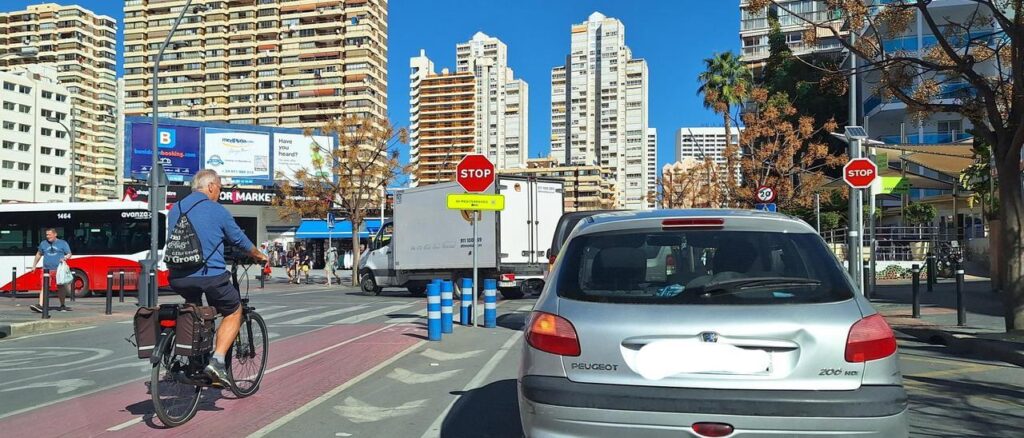
Traffic Jams in Benidorm: Where, When and How to Avoid Them
Benidorm is famous for its beaches, high-rise buildings, lively atmosphere and compact urban layout. For many visitors, getting around the city is relatively straightforward, particularly when staying close to Levante Beach, Poniente Beach or the town centre. However, travelling by car can be a different experience, especially when the city becomes busier during the main holiday periods.
Traffic congestion in Benidorm is not simply a question of too many cars on the roads. The city’s popularity as a tourist destination, its concentration of hotels and apartment buildings, the movement of residents between neighbourhoods and the number of people arriving from surrounding towns all contribute to the way traffic behaves.
For digital nomads, remote workers and people considering a longer stay, understanding these conditions can make a significant difference to everyday life. Choosing accommodation in the right location, knowing which journeys genuinely require a car and planning trips outside the city can help reduce unnecessary driving.
The important point is that traffic conditions vary considerably depending on the season, the part of Benidorm you are visiting and the type of journey you need to make. A short trip across the city is not necessarily difficult, but driving into a busy central area and finding somewhere to park may be less convenient than expected.
This guide examines the main factors behind traffic congestion in Benidorm, the roads used to reach the city and the practical choices that can make travelling around the area easier.
Is Traffic Congestion a Serious Problem in Benidorm?
Traffic congestion is a genuine consideration in Benidorm, although it would be misleading to describe the entire city as permanently gridlocked. Conditions can differ substantially between residential neighbourhoods, major access roads and streets close to the busiest tourist areas.
Benidorm has an unusual urban character. Its relatively compact layout and concentration of residential and tourist accommodation mean that many everyday destinations are within walking distance. This is convenient for people living near shops, supermarkets, cafés and essential services, but it does not eliminate the need for road transport.
Residents still use cars to reach workplaces, shopping centres, medical appointments and neighbouring municipalities. Hotels and holiday apartments generate additional vehicle movements through guest arrivals, departures, taxis, transfers and deliveries. Service vehicles must also reach businesses throughout the city.
These different journeys share a road network that has to accommodate both the permanent population and a substantial number of temporary visitors.
Why traffic can feel worse than expected
One reason driving in Benidorm can be frustrating is that congestion is not always caused by a long queue of vehicles.
A driver may reach the general area of their destination without difficulty, only to encounter slower-moving traffic while searching for parking, navigating one-way streets or approaching a busy commercial district.
The difference between reaching a neighbourhood and reaching a particular building can therefore be significant.
This is especially relevant for newcomers who rely heavily on navigation applications. A route that looks simple on a map may involve several turns, restricted streets or an inconvenient approach to the destination. In central areas, the shortest geographical route is not always the most practical driving route.
Another factor is the concentration of activity around particular destinations. A relatively small area containing hotels, restaurants, shops and apartment buildings can generate a considerable amount of vehicle movement, even when the surrounding roads are flowing reasonably well.
For someone visiting Benidorm for a few days, these inconveniences may be relatively minor. For a remote worker who expects to drive across town regularly, however, they can become part of the daily routine.
The difference between visiting and living in Benidorm
Tourists and long-term residents do not necessarily experience the same traffic problems.
A visitor staying near Levante Beach might leave the car parked for most of the holiday, walking to restaurants and the seafront. Someone living in Benidorm while working remotely may also manage comfortably without daily driving, particularly if their accommodation is close to supermarkets and other essential services.
By contrast, a resident whose work, family commitments or regular appointments require travelling to other municipalities will have different transport needs.
The location of a property therefore matters more than a general description of Benidorm’s traffic.
An apartment in a walkable neighbourhood with convenient services may offer a relatively car-independent lifestyle. A property farther from everyday amenities could create more frequent driving requirements, even if the surrounding streets are quieter.
For people considering moving to Benidorm, the most useful question is not whether the city has traffic jams. It is how often they would personally need to drive through the areas where congestion is more likely.
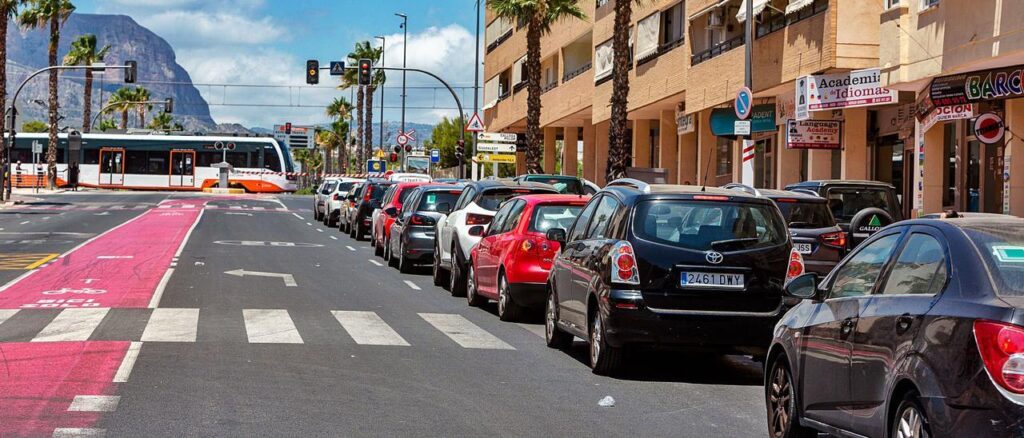
Why Traffic Gets Heavier During the Summer
Benidorm’s seasonal character is one of the most important factors influencing road traffic.
The city attracts visitors throughout the year, but the summer holiday period brings additional demand for accommodation, beaches, restaurants and leisure activities. This increased activity also generates more vehicle movements, both within Benidorm and along the roads connecting it to the rest of the Costa Blanca.
Not every visitor arrives by car. Many travel through Alicante-Elche Airport and continue by coach, transfer or taxi, while others use public transport. Nevertheless, private vehicles remain an important part of holiday travel, particularly for Spanish visitors, families and people staying in apartments or second homes.
The result is a changing balance between the number of people using the city and the capacity of its roads, parking facilities and access routes.
Holiday arrivals and departures
One of the distinctive features of traffic in a tourist destination is that journeys are not distributed evenly throughout the week.
Hotel check-ins and check-outs, apartment changeovers and weekend visits can produce periods of increased movement. Drivers may be arriving with luggage, searching for accommodation or attempting to reach parking facilities they have never used before.
At the same time, other visitors may be leaving Benidorm and heading towards the motorway or nearby towns.
These overlapping movements can create pressure around access roads and accommodation areas, even when there is no particular incident affecting the road network.
Summer travel patterns also extend beyond Benidorm itself. The Costa Blanca attracts visitors to numerous coastal municipalities, meaning that regional roads serve people travelling to several destinations rather than Benidorm alone.
Consequently, a journey that involves entering or leaving the city can be affected by wider holiday traffic conditions.
The impact of day visitors
Not everyone who spends time in Benidorm stays overnight.
The city also attracts people from neighbouring towns and other parts of Alicante province who visit for shopping, restaurants, beaches, entertainment or appointments.
Some arrive by public transport, but others drive, particularly when travelling with family members or combining several activities in one trip.
Day visitors create a different type of traffic demand from hotel guests. Instead of arriving once and leaving several days later, they may enter and exit the city within the same day.
This matters because a driver visiting a popular area needs not only a route into Benidorm but also somewhere to leave the vehicle.
When parking close to the intended destination is difficult, drivers may spend additional time circulating through nearby streets. This can contribute to local congestion without necessarily producing a major traffic jam on the principal access roads.
Is winter traffic significantly easier?
For many drivers, travelling around Benidorm outside the main summer season can be more convenient because the additional demand associated with peak holiday periods is reduced.
However, winter should not automatically be treated as a traffic-free season.
Benidorm remains an active city throughout the year, with permanent residents, businesses, public services and a substantial tourism sector. International visitors, long-stay residents and people spending part of the winter on the Costa Blanca continue to generate demand for transport.
Everyday journeys also follow their own patterns. School-related traffic, commuting, shopping and appointments do not disappear when the summer holidays end.
For long-term residents, this distinction is important. Summer conditions may represent the most demanding period for certain journeys, but the road network still has to accommodate normal urban activity during the rest of the year.
Anyone considering moving to Benidorm would benefit from experiencing the city in more than one season rather than judging its transport conditions exclusively during a summer holiday.
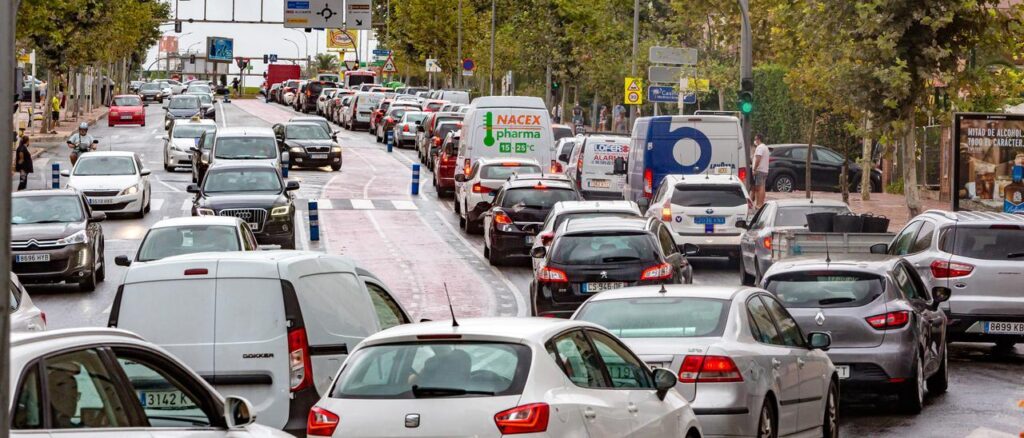
The Main Roads and Access Routes into Benidorm
Understanding Benidorm’s road connections is useful because not all traffic problems originate within the city.
Some journeys involve the regional road network, while others take place entirely on urban streets. The route used to enter Benidorm, the final destination and the availability of parking can all influence the overall driving experience.
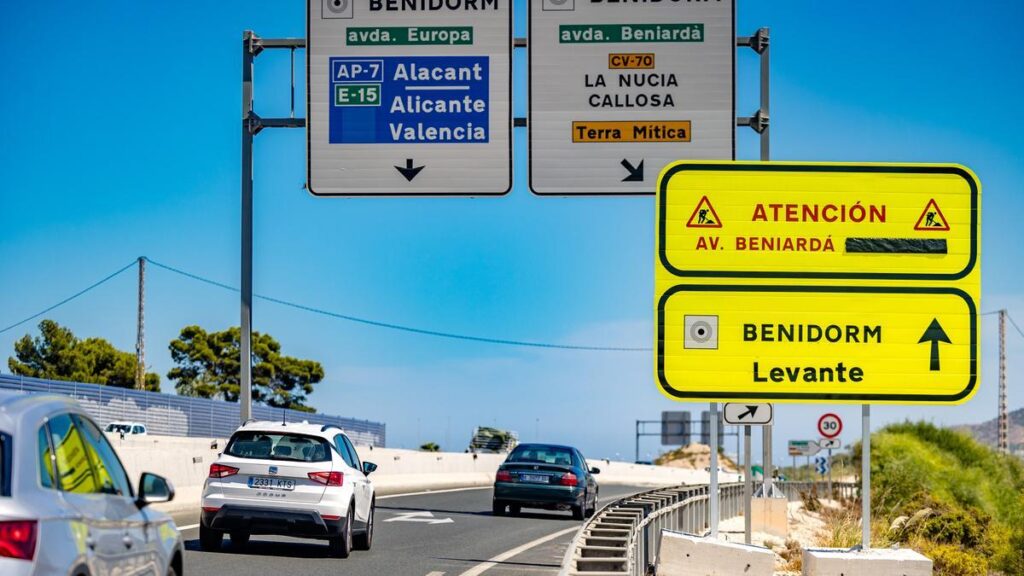
Three important roads to understand are the AP-7, the N-332 and the CV-70. Each serves a different purpose within the wider transport network.
AP-7: The main motorway connection
The AP-7 is one of the principal motorway routes serving the Costa Blanca. It connects Benidorm with destinations farther north and south, making it particularly relevant for drivers travelling between municipalities or arriving from other parts of Spain.
For people coming from Alicante, Valencia or more distant locations, the motorway can provide a practical route towards Benidorm without requiring them to drive through every coastal town along the way.
However, using the motorway does not necessarily eliminate congestion at the destination.
After leaving the AP-7, drivers must still use connecting roads to reach their accommodation, workplace or parking facility. Traffic conditions on these final sections can be quite different from those experienced on the motorway itself.
This is an important consideration when planning a journey. A navigation application may estimate a relatively straightforward motorway trip, but the final approach into an urban neighbourhood can introduce additional delays.
For residents who frequently travel beyond Benidorm, proximity to a convenient motorway connection may be valuable. Nevertheless, living near an access route should be weighed against other factors, including noise, local services and the need to drive for everyday activities.
N-332: The coastal alternative
The N-332 is another important road along the Costa Blanca, linking coastal communities and providing an alternative to motorway travel for certain journeys.
It is particularly relevant for people moving between Benidorm and nearby destinations such as Altea, Alfaz del Pi’s coastal surroundings and Villajoyosa, depending on their starting point and destination.
Unlike a motorway journey designed primarily for longer-distance travel, using the N-332 can involve a greater interaction with local traffic and connections serving nearby urban areas.
This means its usefulness depends heavily on the particular journey.
For example, someone travelling between neighbouring coastal towns may find the N-332 convenient because it provides access to destinations along the coast. Another driver making a longer journey may prefer the motorway, depending on traffic conditions and the route available.
During busy holiday periods, the N-332 can also be affected by the wider increase in traffic travelling through the Costa Blanca.
It is therefore worth comparing routes before departure rather than assuming that the coastal road will always be quicker or slower than the motorway.
For people who live in Benidorm and regularly visit nearby towns, becoming familiar with both options can make regional travel more flexible.
CV-70: Connections towards inland towns
The CV-70 provides an important connection between Benidorm and inland areas, including La Nucía.
This route is particularly relevant for residents who live outside Benidorm but travel into the city for work, shopping, services or leisure.
It also matters for people considering accommodation in surrounding municipalities while maintaining a regular connection with Benidorm.
Living outside the city can offer advantages such as a different residential environment, but it may also increase dependence on a private vehicle.
A property that appears to be only a short distance from Benidorm may still require regular travel along an access road before reaching the desired urban destination.
The practical impact depends on the exact location, the frequency of journeys and the time spent navigating the final section within Benidorm.
For remote workers, this deserves particular attention. Someone who works mainly from home and visits Benidorm occasionally may find an inland location perfectly convenient. A person who expects to drive into the city several times every day could have a different experience.
Why the final part of the journey matters
When comparing routes into Benidorm, it is easy to focus entirely on the main roads.
Yet the final part of a journey may be just as important.
Reaching the outskirts of Benidorm is not the same as reaching a particular apartment, hotel or business in Levante, Poniente or the town centre. The last section may involve local streets, junctions, pedestrian-priority areas and parking arrangements that are not obvious when looking at a regional road map.
For drivers unfamiliar with the city, planning where to park before departure can be more useful than simply choosing the fastest road into Benidorm.
This becomes especially important during the summer, when an apparently convenient destination may attract many other drivers with similar plans.
The most effective approach is to consider the complete journey: the road into Benidorm, the urban route to the destination and the parking options available on arrival.
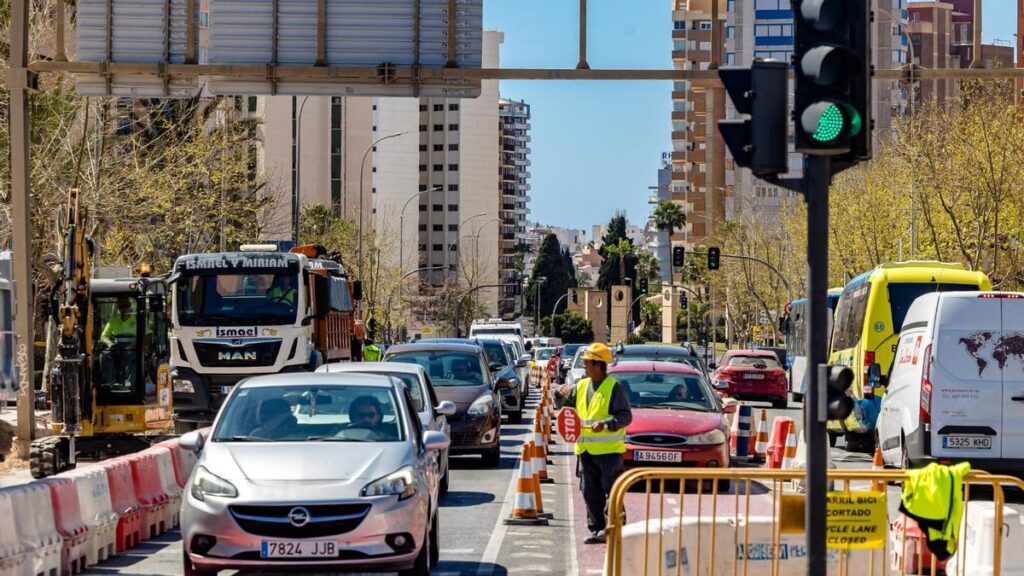
Getting Around Levante, Poniente and the Town Centre
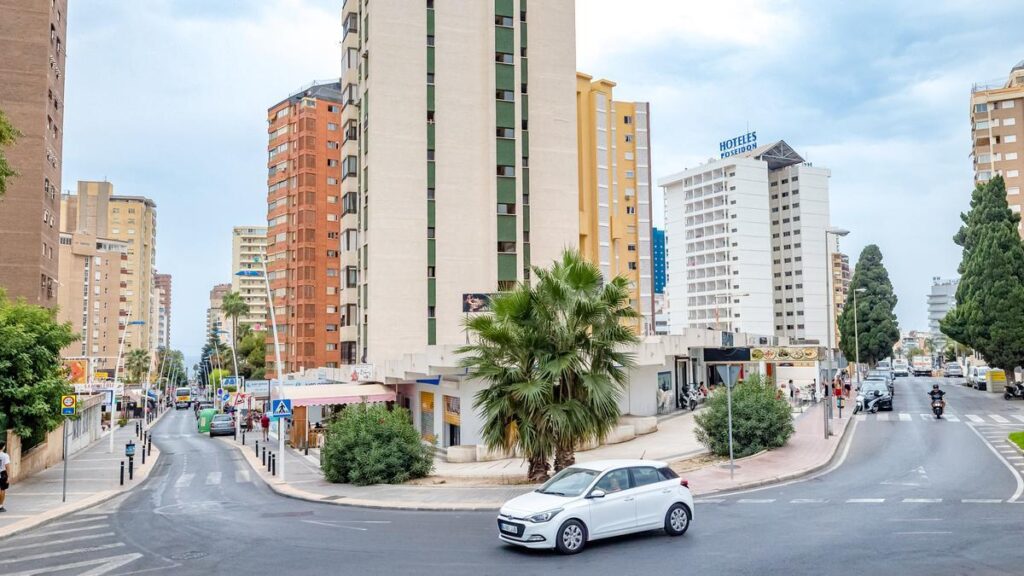
Although Benidorm is a relatively compact city, driving conditions can vary considerably between its main neighbourhoods. The experience of travelling through Levante is not necessarily the same as navigating Poniente or attempting to reach an address in the historic centre.
These differences are not simply a matter of traffic volume. Street layout, pedestrian activity, parking availability and the concentration of hotels, shops and restaurants all influence how convenient it is to travel by car.
For people planning a longer stay, understanding the character of each area can be more useful than looking at the distance between two points on a map.
Driving around Levante
Levante is one of Benidorm’s best-known areas, with a substantial concentration of hotels, apartment buildings, restaurants, entertainment venues and tourist services.
The neighbourhood attracts both visitors staying locally and people arriving from other parts of the city. This creates a mixture of vehicle movements, including taxis, delivery vehicles, private cars and transport associated with hotels and holiday accommodation.
However, Levante is not a single uniform district. The streets closest to the beachfront, the main commercial avenues and the residential areas farther inland have different characteristics.
Some parts of the seafront are designed primarily for pedestrians rather than through traffic. Drivers therefore need to pay attention to permitted access and avoid assuming that every road shown near the beach can be used as a convenient shortcut.
For visitors arriving by car, one of the most important decisions is where to park. Repeatedly driving around the same streets looking for a convenient space can be frustrating, particularly when unfamiliar with local restrictions.
Residents who live in Levante may experience the area differently. If their apartment is close to supermarkets, pharmacies, restaurants and everyday services, they may be able to complete many routine activities without using a vehicle.
This is one of the advantages of living in a relatively dense neighbourhood. Although traffic can be inconvenient when driving, the concentration of amenities can reduce the need to drive in the first place.
For digital nomads who work from home, that distinction can be particularly valuable.
Driving around Poniente
Poniente offers a somewhat different urban environment, although it would be inaccurate to describe the entire area as quiet or free from traffic.
The neighbourhood extends across a substantial part of western Benidorm and includes beachfront accommodation, established residential buildings, newer developments and streets with different levels of commercial activity.
Its geography also matters. Some residential properties are located above the beachfront, meaning that walking routes may involve slopes or longer distances than expected.
For drivers, the convenience of Poniente depends on the precise location of the property and the destinations they visit regularly.
Someone living close to shops and services may rarely need to use a car for local errands. Another resident in a more elevated or less central part of the neighbourhood might find a vehicle more useful.
Poniente also attracts beach visitors, restaurant customers and people staying in tourist accommodation. As a result, parking demand and local vehicle movements can increase around popular destinations, particularly during busy holiday periods.
The important point for prospective residents is to distinguish between the atmosphere of a neighbourhood and the practicalities of travelling through it.
An apartment overlooking a peaceful stretch of coastline does not automatically guarantee convenient parking or easy vehicle access. Equally, a property on a busier road may offer better connections to supermarkets, public transport and routes out of the city.
When assessing accommodation in Poniente, it is worth examining both the immediate street and the route normally used to reach other parts of Benidorm.
The Old Town and central Benidorm
Benidorm’s Old Town presents a different set of considerations.
Its traditional street layout, pedestrian areas and concentration of shops, restaurants and local businesses make it particularly attractive for walking. However, these same characteristics can make driving directly to a particular address less convenient.
Some streets have restricted vehicle access, while others are narrow or form part of a one-way system. Drivers unfamiliar with the area may find that a destination appearing close on a map cannot be approached directly by car.
This does not mean the Old Town is inaccessible. It means that reaching the general area and reaching the entrance of a particular building may require different arrangements.
For people staying in accommodation without private parking, identifying a suitable parking facility before arrival is especially important.
The Old Town also illustrates one of Benidorm’s main advantages for long-term living: a central location can reduce dependence on private transport.
Residents within comfortable walking distance of shops, markets, cafés and other services may find that a car is more useful for occasional journeys outside the city than for everyday activities.
For someone considering buying or renting an apartment in central Benidorms, it is therefore worth asking whether convenient pedestrian access compensates for the limitations of driving and parking.
Why choosing the right neighbourhood matters
The differences between Levante, Poniente and central Benidorm highlight a broader point: traffic conditions should be considered alongside everyday lifestyle requirements.
A person who regularly travels to neighbouring municipalities may prioritise convenient road connections and private parking. Someone who works remotely and spends most of their time within Benidorm might place greater value on walkability and access to local services.
Neither approach is automatically better.
The key is to avoid choosing accommodation based exclusively on its distance from the beach or the appearance of the surrounding streets.
Before committing to a long-term rental or property purchase, it is useful to consider how frequently you would need to drive, which routes you would normally use and whether parking arrangements are practical throughout the year.
When Are Traffic Jams More Likely?
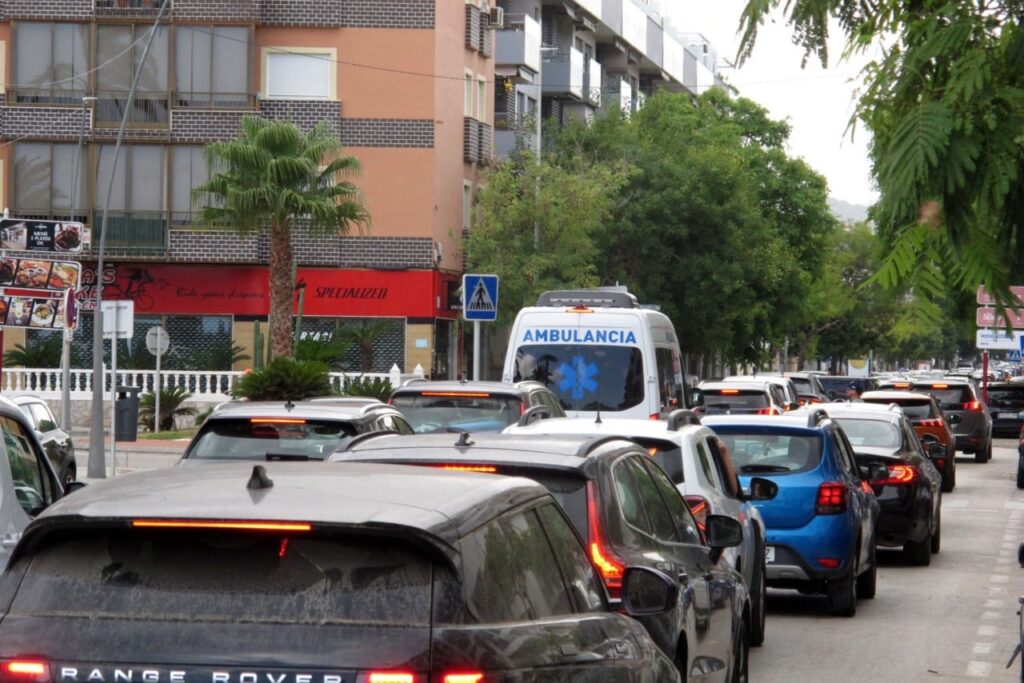
Traffic conditions in Benidorm are influenced by several overlapping factors, including seasonal tourism, everyday commuting, commercial activity and the movement of visitors between nearby destinations.
Although certain situations are more likely to generate additional traffic, it is important not to confuse general patterns with guaranteed congestion.
A road may be busy on one particular day and relatively straightforward on another. Weather, local activity, school calendars and the distribution of holiday arrivals can all affect traffic conditions.
For this reason, identifying the circumstances that increase demand is more useful than presenting a rigid timetable of supposedly congested hours.
Summer weekends and holiday changeovers
Summer weekends can bring additional vehicle movements as visitors arrive, leave or travel between accommodation and leisure destinations.
This is particularly relevant in a tourist city where hotels, holiday apartments and second homes accommodate people with different travel schedules.
Some visitors arrive for a short weekend, while others begin or end longer holidays. Families travelling by car may also make stops for shopping, meals or other activities before reaching their accommodation.
These movements can increase pressure on access routes and streets serving popular accommodation areas.
However, it would be misleading to assume that every summer weekend produces the same traffic conditions.
The practical recommendation is to allow some flexibility when travelling during busy holiday periods, especially if the journey involves reaching accommodation at a specific time.
For people arriving from Alicante-Elche Airport, for example, the motorway journey is only one part of the trip. Additional time may be needed to reach the final address, unload luggage or locate parking.
Public holidays and long weekends
Spanish public holidays and long weekends can also influence traffic in Benidorm.
The city is accessible from several major population centres, making it a destination for shorter breaks as well as longer holidays.
When a public holiday creates an extended weekend, additional visitors may travel to the Costa Blanca for a few days.
This can affect both the regional road network and the movement of vehicles around accommodation and leisure areas.
Nevertheless, the impact depends on the particular holiday, the time of year and the number of people travelling.
A long weekend outside the main summer season may create additional activity without necessarily producing the same overall demand as the busiest holiday periods.
For residents, checking the national and Valencian public holiday calendars can be useful when planning journeys that require a fixed arrival time.
Everyday commuting and school-related traffic
Tourism is not the only factor affecting Benidorm’s roads.
The city has a permanent population, workplaces, schools, healthcare facilities and businesses that generate regular journeys throughout the year.
Some people live in Benidorm and work elsewhere, while others travel into the city from neighbouring municipalities.
These movements form part of the normal functioning of the local economy.
School-related journeys can also increase activity around educational facilities during arrival and departure periods. The effect is generally localised rather than a reason to assume that the entire city experiences congestion.
For someone who works remotely, this can be an advantage. Without a fixed daily commute, it may be possible to organise shopping, appointments and other journeys more flexibly.
Residents who must travel at particular times have fewer options, making the location of their home and the reliability of their regular routes more important.
How to check traffic before leaving
Rather than relying on general assumptions, drivers can use current traffic information to make better decisions.
Navigation applications such as Google Maps and Waze can help compare available routes and identify reported delays. Their estimates are useful for planning, although they cannot guarantee how conditions will develop during a journey.
For travel involving major roads, Spain’s Dirección General de Tráfico (DGT) also provides information about traffic conditions and road restrictions.
These resources are particularly helpful before longer journeys, airport transfers or trips with appointments that cannot easily be rescheduled.
For short journeys within Benidorm, however, checking the driving time is only part of the calculation. Parking availability and the distance between the parking location and the final destination may have an equally important influence on the total time required.
Parking and Its Impact on Traffic
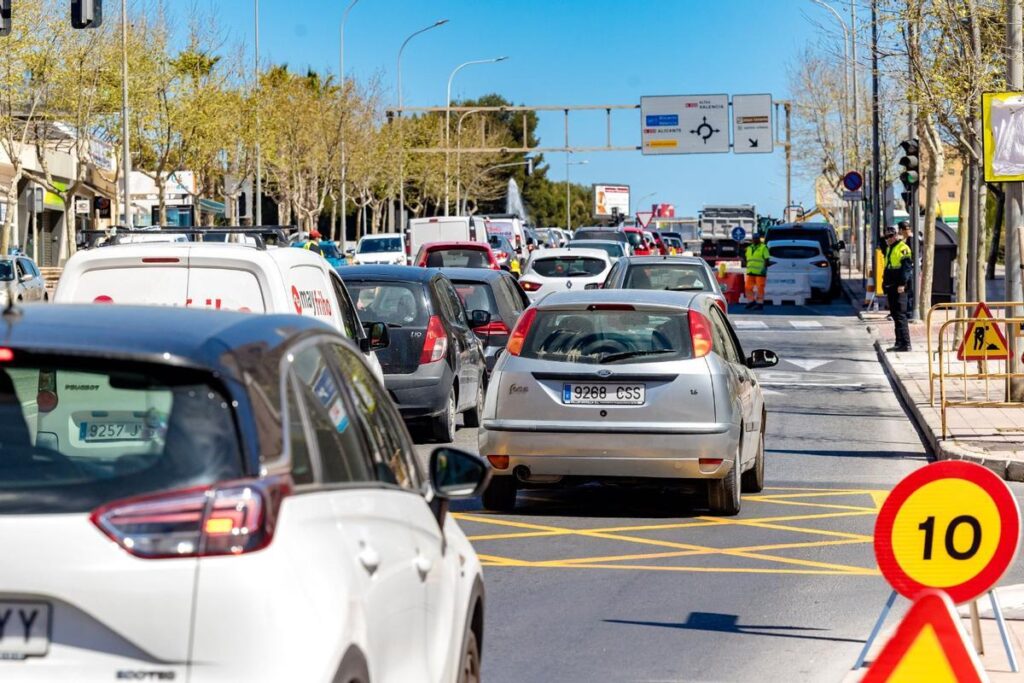
Parking is one of the most important practical considerations when driving in Benidorm.
A journey can be relatively straightforward until the driver reaches the destination and begins looking for somewhere to leave the vehicle.
This distinction is particularly relevant in a city with a large concentration of hotels, apartment buildings, restaurants, shops and beachfront attractions.
Parking demand is not evenly distributed throughout Benidorm. It varies according to the neighbourhood, the type of accommodation, the availability of private spaces and the number of people visiting nearby facilities.
Understanding these differences can help drivers avoid unnecessary circulation through busy streets.
Why searching for parking creates additional traffic
When a driver reaches a destination without knowing where to park, they may begin circulating around nearby streets.
If a suitable space is not available, the search may involve repeated turns, alternative routes and additional time on the road.
Multiply that behaviour across numerous vehicles and the result can be extra traffic that serves no purpose beyond finding somewhere to stop.
This is one reason congestion in tourist areas cannot always be understood simply by examining the number of vehicles travelling between two destinations.
Some traffic consists of drivers who have already arrived but have not yet completed their journey.
For visitors unfamiliar with Benidorm, the problem can be compounded by one-way streets, pedestrian restrictions and uncertainty about parking regulations.
Choosing a parking facility before departure can therefore make a significant difference, even when it involves walking a little farther to the final destination.
Street parking versus public car parks
Benidorm offers different parking arrangements, including regulated on-street spaces and public or privately operated car parks.
Each option has advantages and limitations.
On-street parking may be convenient when a suitable space is available near the destination. However, drivers need to check the applicable signs, permitted duration and payment conditions.
Regulated parking arrangements can vary by location, and visitors should not assume that the same rules apply throughout the city.
Off-street car parks provide an alternative for people who prefer to drive directly to a known facility rather than search for a space.
For longer visits to busy areas, this may offer a more predictable experience, even when parking charges apply.
The best choice depends on the purpose of the journey.
Someone stopping briefly to collect an item may have different requirements from a family spending several hours at the beach or a remote worker attending meetings in the town centre.
It is worth comparing convenience, cost and walking distance rather than focusing exclusively on finding the nearest possible parking space.
The importance of private parking for long-term residents
For people considering a long-term rental or buying an apartment in Benidorm, parking deserves particular attention.
A property with a private parking space may offer a substantial practical advantage to someone who uses a car regularly.
However, not all parking arrangements are equivalent.
A space may be included in the property, rented separately or available through another arrangement. In apartment buildings, access may involve ramps, narrow entrances or manoeuvring areas that are less convenient for larger vehicles.
Prospective residents should verify the exact conditions rather than assuming that an advertised parking space will suit their needs.
It is also important to consider whether the space is legally associated with the property and whether any additional community charges apply.
For people who rarely drive, paying more for accommodation with parking may be unnecessary. For someone who commutes regularly or travels frequently around the Costa Blanca, the convenience could justify the additional cost.
The decision should reflect actual transport requirements rather than the assumption that every household needs a car.
When walking may be faster than driving
One of Benidorm’s advantages is that many everyday destinations are relatively close together.
For people living in central neighbourhoods, walking can be a practical alternative to short car journeys.
A trip that appears faster by car may involve reaching the vehicle, navigating local streets, finding parking and walking from the parking space to the destination.
When these additional steps are considered, the difference between driving and walking may be smaller than expected.
This does not mean walking is always preferable. Distance, slopes, mobility requirements, weather and the need to carry shopping all influence the decision.
Nevertheless, residents who choose accommodation near essential services can often reduce the number of journeys for which a car is necessary.
For digital nomads, this can be especially attractive. Working from home and having supermarkets, cafés, restaurants and other facilities within walking distance can make daily life simpler while reducing exposure to traffic and parking difficulties.
Benidorm’s Low Emission Zone and Traffic Restrictions
Like other Spanish cities introducing measures to improve urban air quality and encourage more sustainable transport, Benidorm has been developing a Low Emission Zone, commonly known in Spain as a Zona de Bajas Emisiones or ZBE.
The purpose of these schemes is to manage vehicle access in designated urban areas, reduce pollution and encourage alternatives to unnecessary car journeys. However, a Low Emission Zone should not be confused with a general ban on driving throughout the city.
For residents, visitors and people considering moving to Benidorm, the important question is how the regulations affect the specific streets they intend to use.
What drivers should understand about the Low Emission Zone
A Low Emission Zone is a designated area where vehicle access, circulation or parking may be subject to environmental and administrative requirements.
The precise rules depend on the municipality and the regulations in force. They may distinguish between vehicle categories, authorised users and particular types of access.
Benidorm’s Low Emission Zone framework covers designated parts of the city rather than every road within the municipality.
Drivers should therefore avoid assuming that the same conditions apply to all neighbourhoods.
It is also important to distinguish between environmental restrictions and existing pedestrian or access-controlled streets. A vehicle may be permitted under environmental rules but still be unable to enter a particular street because of separate traffic regulations.
For people unfamiliar with Benidorm, this distinction matters when using navigation applications. A suggested route should not replace checking local signs and current access requirements.
What about foreign-registered vehicles?
Foreign visitors who bring their own vehicles to Spain should pay particular attention to local access regulations.
Spain uses an environmental classification system administered by the Dirección General de Tráfico, but foreign-registered vehicles may require different procedures when entering certain regulated urban areas.
The applicable requirements can depend on the municipality, the vehicle and the rules in force at the time of travel.
For that reason, drivers should consult Benidorm City Council’s current information before entering a restricted area rather than assuming that a foreign environmental sticker or classification will automatically be recognised.
This is particularly relevant for long-stay visitors arriving from other European countries who intend to use their own cars throughout their stay.
Why these restrictions matter when choosing accommodation
Traffic restrictions are worth considering before booking long-term accommodation or purchasing a property.
Someone who expects to use a car every day should establish whether the building has convenient vehicle access, whether parking is available and whether any restrictions affect their normal journeys.
For residents who rarely drive, the same restrictions may have relatively little impact on everyday life.
Indeed, accommodation in a pedestrian-friendly neighbourhood can offer advantages for people who prefer walking to shops, cafés and local services.
The key is to understand the practical implications before committing to a particular location.
For anyone considering a property in a regulated area, it is sensible to verify the current access rules directly with the municipality and obtain clarification about any resident authorisations that may be relevant.
How to Avoid Unnecessary Driving in Benidorm
One of the most effective ways to reduce exposure to traffic congestion is to organise daily life around journeys that do not require a car.
Benidorm’s compact urban form makes this a realistic possibility for many residents, particularly those living in established neighbourhoods with convenient access to shops and essential services.
However, the feasibility of living with fewer car journeys depends on individual circumstances. Someone who works remotely and spends most weekdays within the city will have different requirements from a resident who commutes to another municipality.
The objective is not necessarily to eliminate car use, but to avoid relying on it for journeys where another option is more convenient.
Walking for everyday activities
Walking is often one of the simplest ways to move around central Benidorm.
The concentration of supermarkets, pharmacies, cafés, restaurants and other businesses means that many residents can complete routine errands without travelling far.
For digital nomads, choosing accommodation within walking distance of essential services can make daily life significantly easier.
Instead of driving to buy groceries or visit a café, they can incorporate these activities into their normal routine.
This approach also removes the need to search for parking every time they leave home.
Nevertheless, walking conditions vary across the city. Some areas have slopes, while longer distances can become uncomfortable during periods of intense summer heat.
Prospective residents should therefore assess walking routes in person rather than relying exclusively on distances shown on a map.
A supermarket located one kilometre away may be perfectly convenient along a level pedestrian route but less attractive if the journey involves steep streets or difficult crossings.
Using local buses
Benidorm has an urban and interurban bus network connecting different parts of the city and neighbouring municipalities.
For residents who do not need a car every day, buses can provide an alternative for journeys that are too long to complete comfortably on foot.
Their usefulness depends on the location of the nearest stop, the destination, service frequency and the time of travel.
Someone living near a convenient bus route may find public transport practical for shopping, appointments or occasional journeys across the city.
However, a route that works well for leisure travel may be less suitable for someone who needs to reach a workplace at a fixed time.
For longer stays, it is worth checking actual timetables and connections before choosing accommodation.
A bus stop close to an apartment is useful, but the destinations served and the frequency of departures matter just as much.
TRAM connections along the Costa Blanca
The TRAM d’Alacant network provides another alternative to driving for certain journeys outside Benidorm.
Benidorm is connected to the wider coastal rail network, making the TRAM relevant for people travelling towards destinations such as Altea and Alicante, subject to the routes and services operating at the time.
For residents who occasionally visit other Costa Blanca towns, this can reduce the need to use a private vehicle.
However, the TRAM is not a substitute for every regional car journey.
Some destinations require transfers, additional walking or connections with other transport services. Journey times and frequencies also differ from those of direct car travel.
Its practical value therefore depends on where someone lives and how frequently they need to travel.
For remote workers with flexible schedules, public transport can be particularly appealing because journeys do not always have to fit around fixed commuting hours.
Combining different transport options
Many long-term residents may find that a combination of walking, public transport and occasional car use works better than relying exclusively on one method.
For example, someone might walk to local shops during the week, use a bus for occasional journeys across Benidorm and drive when visiting destinations that are less convenient to reach by public transport.
Taxis can also be useful for occasional journeys when carrying luggage, travelling with shopping or returning home at a time when public transport is less convenient.
The advantage of this approach is flexibility.
Rather than treating car ownership as a requirement for living in Benidorm, residents can evaluate which journeys genuinely benefit from having a vehicle.
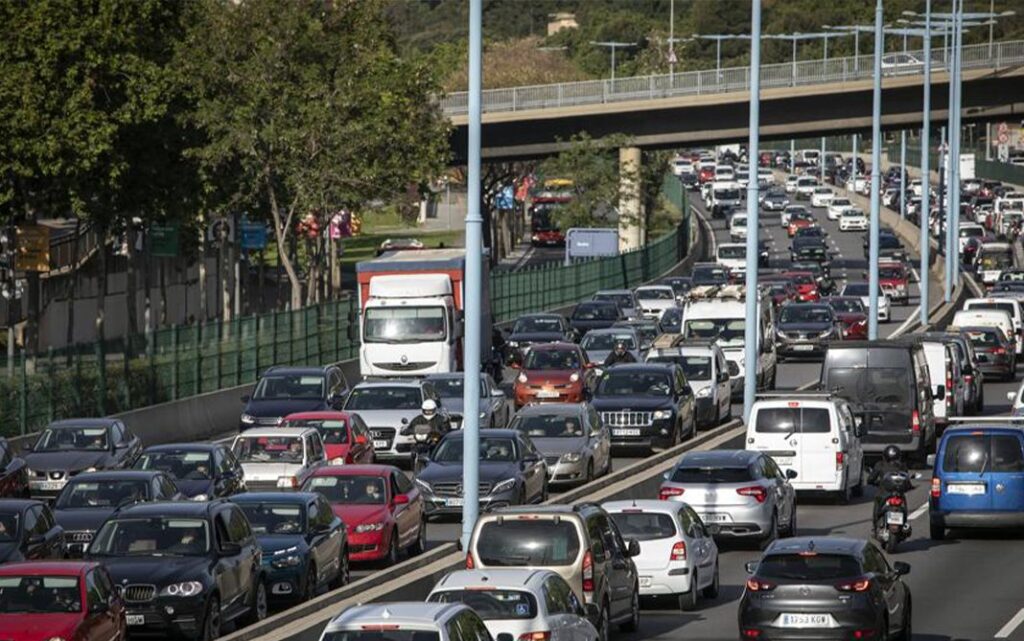
Living in Benidorm With a Car: What Residents Should Know
Owning a car in Benidorm can be convenient, particularly for people who regularly travel beyond the city or need to reach destinations that are poorly served by public transport.
A vehicle can provide flexibility for shopping, family commitments, medical appointments and visits to inland towns or more remote coastal locations.
However, car ownership also introduces practical considerations that may not be obvious to someone who has previously lived in a less densely populated area.
Parking, accommodation location and the frequency of journeys can all influence whether owning a vehicle makes everyday life easier or more complicated.
Choosing a home with practical vehicle access
For residents who expect to drive regularly, the location of their home deserves careful consideration.
An apartment may be attractive because of its views, proximity to the beach or surrounding amenities, but these qualities do not necessarily guarantee convenient access by car.
Before renting or buying, it is worth examining the route into and out of the neighbourhood.
Does reaching the main road require navigating several narrow streets? Is the building entrance convenient for loading shopping or luggage? Is the parking space easy to access?
These details can become important when repeated throughout the year.
For someone who drives only occasionally, they may be minor inconveniences. For a resident making several car journeys every day, they can have a much greater effect on comfort and convenience.
The difference between occasional driving and commuting
Not all car owners use their vehicles in the same way.
A remote worker who drives once or twice a week may experience very few traffic-related inconveniences. They can often choose when to travel and avoid making unnecessary journeys during particularly busy periods.
A resident who commutes daily has less flexibility.
Regular journeys to workplaces in surrounding municipalities create greater dependence on road conditions and reliable travel times.
For this reason, someone planning to live in Benidorm while working elsewhere should test the actual journey before committing to accommodation.
A route that seems manageable during a quiet afternoon may feel different when it must be completed regularly at a particular time.
The same principle applies to people who frequently travel to Alicante, Altea, Villajoyosa or other nearby destinations.
Is living outside Benidorm better for drivers?
Some people considering a move to the Costa Blanca explore residential areas outside Benidorm because they prefer a quieter environment or different types of housing.
Neighbouring municipalities may offer attractive alternatives, but living outside the city does not automatically eliminate traffic problems.
In some cases, it simply changes where the driving takes place.
A person living in La Nucía, Alfaz del Pi or another nearby municipality may need to travel into Benidorm for work, appointments, shopping or entertainment.
If these journeys are frequent, the additional distance can offset some of the advantages of living outside the urban centre.
Conversely, someone who works from home and visits Benidorm occasionally may find a surrounding town perfectly convenient.
The decision should be based on actual travel patterns rather than the assumption that living farther from the city always makes driving easier.
Practical Tips for Drivers Visiting Benidorm
Visitors arriving by car can make their journeys more convenient with a little preparation.
The most useful approach is to consider the entire journey, including the final destination and parking arrangements, rather than concentrating exclusively on the fastest route into the city.
This is especially important for first-time visitors who may be unfamiliar with Benidorm’s street layout.
Plan parking before arrival
If you are travelling to a hotel, apartment or restaurant in a busy part of Benidorm, identify your parking options before setting off.
Accommodation providers may offer private parking, arrangements with nearby facilities or recommendations for public car parks.
When parking is not included, checking the location of suitable alternatives can help avoid unnecessary driving around unfamiliar streets.
It is also worth considering whether a slightly more distant car park offers easier access than attempting to park directly beside the destination.
For a short visit, a predictable parking arrangement may be more valuable than finding the closest possible space.
Check the complete route
Navigation applications can help identify available routes and reported traffic delays, but drivers should also consider the characteristics of the destination.
A journey involving the AP-7 or N-332 may be straightforward until the final approach into Benidorm.
Before departure, check whether the destination is within a pedestrian-priority area, whether access restrictions apply and where vehicles are permitted to stop.
Drivers arriving at holiday accommodation should also confirm arrangements for unloading luggage.
These simple checks can reduce confusion and prevent unnecessary circulation through central streets.
Allow flexibility during busy periods
When travelling during summer holidays, public holidays or popular weekends, allowing some additional time can reduce the pressure of reaching a destination at an exact moment.
This is particularly useful for airport transfers, appointments and journeys involving accommodation check-in.
It is not necessary to assume that every journey will involve a serious delay.
However, planning without any flexibility can make minor traffic or parking difficulties more frustrating than they need to be.
For people with fixed travel commitments, checking current road conditions shortly before departure is more reliable than depending on general assumptions about when Benidorm is busy.
Consider whether the car is necessary
Not every visit to Benidorm requires driving directly to the intended destination.
If you are staying in the city and travelling to a nearby beach, restaurant or shopping area, walking may be simpler.
For longer journeys, local buses or other public transport services may provide practical alternatives.
This is particularly relevant for visitors staying several days in accommodation close to the main urban areas.
Leaving the car parked for part of the stay can reduce both parking expenses and the inconvenience of navigating unfamiliar streets.

Is Benidorm’s Traffic a Reason to Live Somewhere Else?
Traffic congestion is one factor to consider when deciding whether Benidorm is suitable for long-term living, but it should not be assessed in isolation.
The city offers a combination of urban services, beaches, restaurants, shopping facilities and transport connections within a relatively compact area.
For people who prefer walking and do not need to commute by car, this concentration of amenities can make everyday life convenient.
Someone working remotely from an apartment near essential services may find that traffic has relatively little influence on their daily routine.
On the other hand, residents who need to drive frequently may place greater importance on road access, private parking and the location of their home.
The same city can therefore provide very different experiences depending on personal circumstances.
When traffic may become a genuine disadvantage
Traffic and parking difficulties deserve particular attention if you expect to drive across Benidorm several times a day, commute regularly to another municipality or depend on your car for most routine activities.
In these situations, small inconveniences can accumulate.
A property without convenient parking may become frustrating, while a location requiring regular journeys through busy urban streets could be less practical than expected.
People with these requirements may benefit from comparing several neighbourhoods and considering properties with straightforward access to the roads they use most often.
However, moving to a quieter municipality is not necessarily the solution if it creates additional commuting.
The relevant comparison is between complete daily routines, not simply between the traffic levels of two locations.
Why Benidorm can still work well without daily driving
For digital nomads and long-term visitors, Benidorm’s compact layout is an important advantage.
Choosing accommodation close to supermarkets, cafés, restaurants and other everyday services can substantially reduce the need for private transport.
Public transport connections also provide alternatives for certain journeys within the city and along the Costa Blanca.
This means that traffic congestion does not necessarily have the same impact on someone working remotely as it does on a person with a fixed daily commute.
The ability to choose when and how to travel can make living in Benidorm considerably more flexible.
Making the decision based on your own routine
Before deciding whether to live in Benidorm, it is worth spending time in the neighbourhoods you are considering.
Visit the area during different parts of the day, examine the parking arrangements and try the routes you would use regularly.
If you intend to commute, test the journey at the times that matter to you. If you plan to work from home, assess how easily you can reach essential services without driving.
These observations will provide a more useful picture than general claims about whether Benidorm has too much traffic.
Ultimately, traffic jams are part of the practical reality of living in a popular coastal city, particularly during busy holiday periods. But their effect on everyday life depends heavily on where you live, how frequently you drive and the transport alternatives available.
For many remote workers and long-term residents, choosing the right neighbourhood and reducing unnecessary car journeys can make Benidorm a convenient place to live despite the additional traffic associated with its popularity.