Buying Property in Benidorm as a Foreigner: Complete Guide
Last Updated: August 2026
Buying a property in Benidorm can mean very different things depending on who you are.
For some foreign buyers, it is the final step after years of holidays or longer stays on the Costa Blanca: a permanent home, a retirement base or somewhere to spend several months each year. For others, Benidorm is attractive because it is a busy Mediterranean city with year-round services, a large international population and a property market that includes everything from compact apartments to high-rise homes with extensive communal facilities.
There are also buyers looking at property from an investment perspective, whether they are considering long-term rental, occasional personal use combined with renting, or another form of property ownership.
Whatever your reason, buying successfully involves much more than finding an apartment you like and agreeing a price.
Foreign buyers need to understand the basic Spanish purchasing process, the costs that sit on top of the advertised price, the role of the notary and Land Registry, the importance of independent legal checks and, where necessary, the practicalities of obtaining a mortgage in Spain.
There is another side that is just as important.
A property can look excellent during a short viewing and still be completely wrong for the way you intend to live. Benidorm can feel very different according to the neighbourhood, season, time of day and even the orientation of an apartment. Noise, sunlight, parking, lifts, community facilities, summer crowds, walking distances and the atmosphere of the building can matter just as much as the number of bedrooms.
This guide is designed to give foreign buyers a clear overview of both sides of the decision: how buying property in Spain works and how to think about buying the right property in Benidorm for your circumstances.
It is an educational guide rather than personal legal, tax, mortgage or investment advice. Property rules, tax rates and administrative procedures can change, so important decisions should always be checked against current official information and, where appropriate, with a qualified professional.
Yes. Foreign nationals can buy property in Benidorm, whether they are resident in Spain or live abroad.
Foreign buyers are a significant part of the Spanish residential property market, particularly in Mediterranean coastal regions such as the Valencian Community. The more important question is therefore usually not whether you are allowed to buy, but what your personal circumstances mean for the purchase process, financing, taxation and your ability to live in Spain afterwards.
These issues should not be confused with one another.
EU and non-EU buyers
Both EU and non-EU nationals can own residential property in Spain.
Nationality can nevertheless matter in other areas, particularly when considering immigration and residence rights.
An EU citizen, for example, operates under a different residence framework from a British, American or Canadian citizen who wants to spend substantial periods living in Spain.
That difference does not normally prevent either person from buying a home. It affects what happens around the ownership of that home.
This distinction is particularly important for someone thinking:
“If I buy an apartment in Benidorm, can I simply move to Spain and live there?”
Property ownership and immigration status are separate questions.
Resident and non-resident buyers
You also do not need to become a Spanish resident before buying a home.
A non-resident can own property in Spain while remaining legally and fiscally based in another country. Equally, someone who already lives in Spain can buy a property as their main home, second residence or for another purpose.
However, being resident or non-resident can affect areas such as taxation, mortgage lending and ongoing obligations after the purchase.
For that reason, it is useful to know your position before beginning the transaction rather than treating residence status as something to investigate after you have found a property.
Several concepts can apply at the same time:
owning property in Spain;
having immigration residence rights in Spain;
being registered as living in Spain;
being considered tax resident in Spain.
They are not interchangeable.
If your move to Benidorm would involve changing the country in which you live or pay tax, that question deserves separate professional consideration alongside the property purchase itself.
Buying property does not give you Spanish residency
This is one of the most important points for non-EU buyers to understand.
Purchasing a property in Benidorm does not automatically give you the right to live permanently in Spain.
Spain previously operated an investor residence system commonly known as the Golden Visa, under which certain qualifying investments, including qualifying real-estate investments, could form the basis of a residence application.
That route was abolished for new applicants with effect from 3 April 2025. Transitional arrangements remain relevant to certain applications and permits originating under the previous system, but buying property is no longer a new route into that programme.
For a new buyer in 2026, the practical principle is straightforward:
buying a €150,000 apartment, a €500,000 penthouse or a more expensive property does not in itself create a right of residence.
If you are entitled to live in Spain through EU free-movement rules or hold another suitable residence or visa status, you may of course be able to live in the property. But the right to reside comes from that separate legal status, not from ownership of the apartment.
This matters particularly for buyers planning retirement or a permanent move. Property and residency planning should ideally be considered together, rather than buying first and discovering later that the intended pattern of living in Spain requires a separate immigration solution.
What Do You Need Before Buying Property in Spain?
You do not need to arrive in Benidorm with every administrative step completed before you begin researching areas or viewing apartments.
However, once you become serious about buying, there are several practical matters worth organising early. Doing so can make the eventual transaction considerably smoother and reduce the pressure to solve administrative problems after you have already negotiated a property.
The exact documentation required can vary according to nationality, residence position, financing and the circumstances of the transaction, but the following issues are among the most important.
Getting a NIE
One of the first Spanish administrative terms most foreign buyers encounter is NIE, or Número de Identidad de Extranjero.
The NIE is a personal identification number assigned to foreign nationals who have economic, professional or social dealings with Spain. Spain’s Ministry of the Interior describes it as a personal, unique and exclusive number used for identification in these dealings.
Foreign property buyers will normally need a NIE to complete the tax, notarial and administrative procedures involved in purchasing property in Spain.
The NIE should not be confused with a residence permit. Having a NIE does not mean that you are resident in Spain, just as owning a Spanish property does not create residence rights.
The Ministry of the Interior currently lists the official EX-15 form as part of the NIE application process, together with identity documentation and justification of the economic, professional or social reason for requesting the number.
If buying property is a serious possibility rather than a distant idea, it is generally sensible to investigate the NIE process well before the planned completion date. Administrative delays are much easier to deal with before you are working towards a contractual deadline.
Do you need a Spanish bank account?
A Spanish bank account is commonly used by property owners and can make many aspects of purchasing and subsequently running a home considerably easier.
It may be useful for paying purchase-related expenses and later for direct debits connected with electricity, water, community charges, insurance and other ongoing costs.
However, it is better not to turn common practice into an absolute legal statement.
Banking and payment arrangements can depend on the transaction, the institutions involved and whether the buyer is obtaining Spanish finance. European banking rules have also made cross-border euro payments much easier than they once were.
The useful question is therefore not simply “Is a Spanish bank account legally mandatory?”, but:
Will I need or benefit from one for the way my particular purchase and future ownership will be managed?
Your lawyer, bank or other professional handling the transaction can clarify this once the structure of the purchase is known.
For many foreign owners, having a Spanish account remains a practical choice even where another payment arrangement might technically be possible.
Identity, funds and financial documentation
Foreign buyers should also expect the origin and movement of purchase funds to be documented.
Spanish property transactions take place within anti-money-laundering rules, and banks, notaries and other regulated professionals may require information establishing the buyer’s identity and the legitimate origin of the funds being used.
Exactly what is requested will depend on the circumstances.
A salaried buyer, business owner, retiree and someone purchasing with proceeds from another property sale may each have different documentation available. Large transfers from overseas can also take more preparation than buyers initially expect.
This is another good reason not to wait until the day before completion to organise the financial side of the purchase.
If your money needs to be transferred between currencies, there is an additional consideration: the exchange rate can materially affect your real purchase cost.
A property that costs €250,000 still costs €250,000 in Spain, but the amount required in pounds, dollars or another currency can move while you are searching, negotiating and waiting to complete.
That does not mean trying to predict currency markets. It simply means recognising exchange-rate exposure as part of the budget when your savings and purchase price are denominated in different currencies.
If you need a mortgage, prepare before making serious offers
Foreign buyers can obtain mortgages in Spain, including buyers who are not Spanish residents, but lending criteria vary significantly between banks and individual applicants.
Your income, existing debt, residence status, age, employment situation, currency of earnings, property valuation and the proportion of the price you want to borrow may all affect what is available.
For that reason, someone who cannot complete the purchase without financing should ideally establish their realistic borrowing position before becoming emotionally or contractually committed to a particular apartment.
There is an important difference between:
“A bank may lend to foreign buyers”
and:
“A bank will lend me enough money to buy this particular property on terms I can comfortably afford.”
Only the second matters when you are about to make an offer.
Mortgage lending deserves its own detailed discussion, so we cover it separately in our guide to getting a mortgage in Spain to buy property in Benidorm. At this stage, the important principle is simply to make financing part of your initial preparation rather than a problem to solve after agreeing the purchase.
Foreign buyers can also consult consumer mortgage information provided by the Banco de España.
Prepare First, Search Second
It is tempting to begin a Benidorm property search with photos, terraces and sea views.
There is nothing wrong with browsing the market early. In fact, doing so is one of the best ways to understand what different budgets can realistically buy.
But there is a useful distinction between exploring property and being ready to purchase property.
Before moving into serious negotiations, a foreign buyer should ideally have a reasonable understanding of:
why they are buying;
how much they can genuinely spend;
whether financing is required;
their NIE position;
their residence situation if they intend to live in Spain;
how the purchase funds will be transferred;
and which professionals will represent their interests.
Once those foundations are in place, the search becomes much more useful.
The next question is no longer simply “Which apartment looks best?”
It becomes:
Which property actually fits what I want to do in Benidorm?
Decide Why You Are Buying Before You Choose the Property
One of the easiest mistakes to make when buying in Benidorm is to begin with the property rather than the purpose.
A bright apartment with a large terrace, sea views and a communal pool may immediately feel attractive. But whether it is actually a good purchase depends on what you intend to do with it.
Someone planning to retire permanently in Benidorm may value quiet surroundings, year-round services, easy walking routes and winter sunlight. A remote worker may care much more about reliable internet, a separate workspace, air conditioning and whether the building becomes noisy during the summer. A buyer looking for rental potential will need to think about an entirely different set of issues, including the type of tenant they are targeting and whether the intended rental use is permitted.
Before comparing individual properties, it is worth being very clear about the role the home is supposed to play in your life.
Buying to live in Benidorm
If Benidorm will become your main home, the property needs to work on an ordinary Tuesday in January just as well as it does during a sunny week in July.
That changes the way you should evaluate an apartment.
Beach distance may still matter, but so may the distance to a supermarket, pharmacy, health centre, bus stop or gym. A spectacular hillside view may be less appealing if every daily errand requires a steep climb. A central apartment can be wonderfully convenient but may also expose you to traffic or nightlife noise that was barely noticeable during a daytime viewing.
The building itself matters as well.
Benidorm has a large stock of apartments in residential complexes and high-rise buildings. Lifts, communal swimming pools, gardens, concierge services, parking areas and other facilities can significantly improve daily life, but they also affect community fees and maintenance responsibilities.
If you intend to live in the property permanently, it makes sense to evaluate it as a home rather than simply as Mediterranean real estate.
Ask yourself practical questions:
Would you still choose this location without the beach?
Can you comfortably walk to the places you use every week?
How much direct sun enters the apartment in winter?
Will you need air conditioning for several months of the year?
These considerations may sound less exciting than a sea view, but over several years they can have a much greater effect on whether you enjoy the property.
Buying a second home
A second home creates a different set of priorities.
Perhaps you plan to spend several weeks in Benidorm during winter, return for part of the summer and leave the property empty for the rest of the year. In that case, ease of maintenance, security and the ability to manage the home while you are abroad may become particularly important.
A large house with extensive outdoor space may be attractive when you are there, but it can also require considerably more attention during long absences than an apartment in a well-managed residential complex.
Think about what will happen when the property is empty.
Who can access it if there is a water leak?
How will you deal with maintenance?
Will someone periodically check the apartment?
Does the community have a porter or concierge?
Can you manage utilities and community payments remotely?
Would you need a local property-management service?
The best second home is not necessarily the property with the most impressive specification. It is often the one that remains easy to own when you are hundreds or thousands of kilometres away.
Buying as an investment
Benidorm’s popularity naturally attracts buyers who are interested in rental property.
But this is where it becomes especially important to separate property appeal from investment suitability.
An apartment that would make an excellent personal holiday home is not automatically a good rental property. Likewise, a property in a busy location may have obvious visitor demand but create more management work, greater wear and potentially more regulatory complexity.
Before buying for investment, define what you actually mean by investment.
Are you considering:
long-term residential rental;
medium-term accommodation;
seasonal rental;
holiday accommodation;
or a property you will use yourself and rent only when you are away?
These are different strategies.
They can involve different tenants, management requirements, occupancy patterns, regulatory considerations and costs.
Most importantly, never buy a property assuming that you will automatically be able to operate it as tourist accommodation.
Rules governing tourist rentals in the Valencian Community have changed repeatedly, and building-level restrictions can also matter. If short-term letting is central to your buying decision, its legal feasibility should be checked before you commit to the property, not after completion.
We examine this area separately in our guides to buying property in Benidorm as an investment and holiday rental property in Benidorm.
For the purposes of an initial property search, the key principle is simple:
Buy according to the use you can realistically make of the property, not the most optimistic use you can imagine.
Choosing Where to Buy in Benidorm
Benidorm is geographically compact, but different parts of the city can offer surprisingly different day-to-day experiences.
This is another reason why simply searching for “apartments for sale in Benidorm” is not enough.
A buyer who spends most of their time around Levante may have a very different impression of the city from someone living near Poniente. Rincón de Loix has its own character, while the Old Town and central streets create another type of urban lifestyle again.
There is no universally “best” part of Benidorm.
The right area depends on what you want from the city.
Poniente
Poniente is often attractive to buyers who want the benefits of Benidorm without necessarily being at the centre of its busiest tourist atmosphere.
Its long beach, extensive promenade and mixture of residential developments make it particularly interesting for people considering longer-term living.
There are both older apartments and newer developments, including some of the more visually distinctive modern buildings constructed around the western side of Benidorm.
For a buyer planning to live year-round, it is worth looking beyond the distance to the beach.
Some properties may be extremely convenient for the seafront but less convenient for other everyday needs. Others may sit slightly inland but offer easier access to supermarkets, local services or roads leading out of Benidorm.
The western side of the city can also extend into areas where municipal boundaries and marketing descriptions become confusing. Properties advertised as being “Benidorm” or “Benidorm area” may actually fall within neighbouring municipalities.
That distinction matters because local taxes, planning rules and administrative procedures can depend on the municipality in which the property is legally located.
Always check the actual address and municipality rather than relying only on how an advert describes the location.
Levante
Levante is the image many international visitors associate most strongly with Benidorm.
It offers immediate access to one of the city’s best-known beaches, a large concentration of restaurants and entertainment, and a highly walkable environment in many parts of the district.
For some buyers, that energy is exactly the attraction.
For others, it may be too intense.
The character of individual streets can vary considerably. A property can be close to Levante Beach while still feeling relatively residential, whereas another only a short distance away may experience much more nightlife or visitor traffic.
This is why location should be assessed at street level, not simply by neighbourhood name.
If you are considering buying in Levante for permanent residence, it is particularly sensible to visit the immediate surroundings:
during the day;
in the evening;
at the weekend;
and, if possible, during both high and low season.
A quiet viewing at 11:00 on a weekday may tell you very little about what the same street feels like at midnight in August.
Rincón de Loix
Rincón de Loix occupies a large area at the eastern end of Benidorm and includes everything from busy streets near the tourism zone to much quieter residential locations further uphill.
That variety makes it difficult to generalise.
Some parts provide easy access to Levante Beach and a large range of services. Others offer elevated views and a more residential atmosphere but can involve considerably steeper walking.
Topography is therefore particularly important here.
A listing may describe a property as being only a short distance from the beach, but the return walk can feel very different if it involves a significant uphill climb.
For someone who drives everywhere this may be irrelevant. For someone retiring without a car, it could become one of the most important aspects of daily life.
Old Town and central Benidorm
Benidorm’s Old Town and central districts offer a very different experience from the city’s large residential complexes.
Living here can mean having restaurants, cafés, shops, municipal services, markets and both major beaches within walking distance.
The trade-offs may include smaller properties, older buildings, limited private parking and fewer communal facilities.
Some buildings may not have the type of large swimming pool, landscaped gardens or parking areas found in more modern developments.
Street noise can also vary considerably.
Again, the correct choice depends on lifestyle. A buyer who values walking everywhere may happily sacrifice a communal pool. Someone expecting a quieter resort-style residential environment may prefer another part of the city.
Do not judge an area from a single holiday
Living somewhere is different from visiting it.
A neighbourhood you love during a summer holiday may feel completely different in January. Conversely, an area that seems relatively quiet outside summer might become much busier during peak season.
If possible, spend meaningful time in the areas you are considering before purchasing.
Walk to the supermarket.
Try the bus routes.
See what parking is like in the evening.
Work remotely from the area for several days.
Walk home after dark.
Notice where you actually spend your time.
BenidormNomads already covers individual parts of the city in greater detail, and those neighbourhood guides can be particularly useful when comparing Poniente, Levante, Rincón de Loix and central Benidorm from a lifestyle perspective.
We also cover this question in much greater depth in our dedicated guide to the best areas to buy property in Benidorm.
What Type of Property Fits Your Benidorm Lifestyle?
Once you have narrowed down the area, the next question is the property itself.
Benidorm’s housing stock is diverse enough that two homes with similar prices and floor areas can offer completely different ownership experiences.
Building age, height, community facilities, parking, orientation and maintenance can all affect both daily life and long-term costs.
Resale property vs new build
A resale apartment may offer an established location, a mature residential community and the opportunity to see exactly how the building has aged.
It may also require renovation.
Kitchens, bathrooms, windows, electrical systems, plumbing and air-conditioning installations can all influence the real cost of an older property.
A lower asking price does not necessarily mean a lower total cost if significant work is required after completion.
New-build property offers a different proposition.
Modern energy standards, insulation, lifts, terraces, communal facilities and contemporary layouts can be attractive, particularly to buyers looking for low-maintenance living.
However, new-build and resale purchases can also be taxed differently, which is one of the reasons the headline property price should never be treated as the complete budget.
We cover those differences more carefully later in this guide and in our dedicated article on the real cost of buying property in Benidorm.
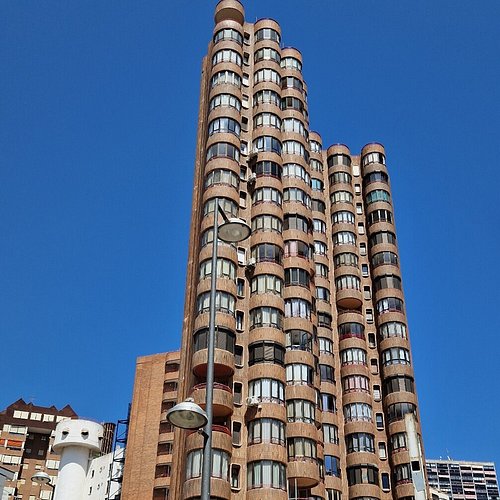
High-rise living
High-rise apartments are part of Benidorm’s identity.
For the right buyer, they can offer spectacular views, excellent natural light, large communal areas and a lifestyle that would be much more expensive to reproduce in a low-density coastal development.
But living on the 20th or 30th floor is not simply living in a normal apartment with a better view.
Before buying, think about:
the number and capacity of lifts;
maintenance and modernisation of those lifts;
how dependent everyday access is on them;
wind exposure on terraces;
emergency access;
moving furniture into the property;
communal maintenance costs;
and how comfortable you personally feel living at height.
The experience can vary enormously between a well-maintained modern tower and an older high-rise where major communal improvements may eventually be required.
We explore these questions separately in High-Rise Living in Benidorm: What to Know Before Buying an Apartment.
Older buildings can offer excellent locations — but investigate carefully
Some older Benidorm buildings occupy locations that would be extremely difficult to reproduce today.
They may offer larger internal layouts, established communities and exceptionally convenient positions near the beach or town centre.
Age alone should not make a property unattractive.
What matters is condition.
Pay attention not only to the apartment but to the entire building:
entrance halls, façades, lifts, roofs, garages, pipework, communal areas and accessibility.
A beautifully renovated apartment inside a building facing expensive structural or communal work can become a very different financial proposition.
This is one reason why community documentation and planned major works form an important part of due diligence.
Parking can matter more than you expect
Benidorm is very walkable in many areas, but buyers with a car should think seriously about parking.
Street parking that appears easy during a viewing may become far more difficult at other times of year.
A private parking space or secure communal parking can therefore add significant practical value, particularly if the property will be your main residence.
On the other hand, if you intend to live centrally without a car, paying a large premium for parking may make much less sense.
Swimming pools, gardens and communal facilities
Large residential complexes can offer impressive shared facilities.
Pools, children’s areas, sports courts, gardens, gyms, security and concierge services can all make a development more enjoyable.
But communal facilities are not free.
They need to be maintained, staffed, repaired and eventually replaced.
A spectacular complex may therefore have higher community fees than a simpler building.
That does not make it a bad purchase.
The important question is whether you value the facilities enough to justify the ongoing cost.
Sea views: emotional value versus practical value
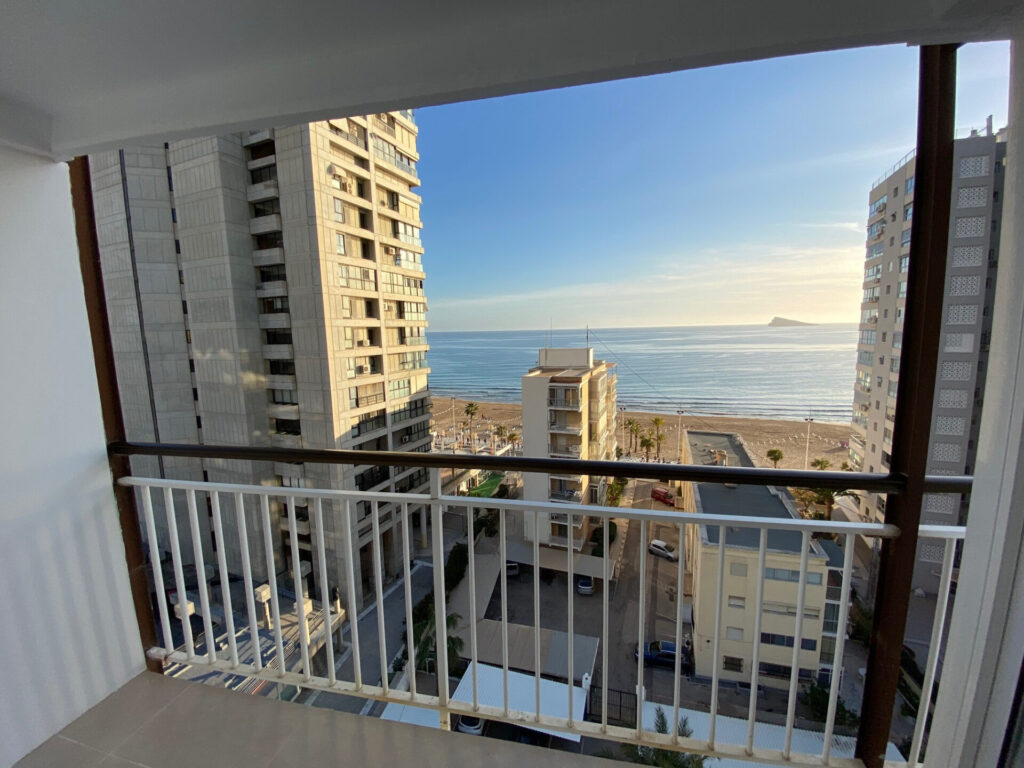
Sea views are one of the most marketable features in Benidorm property.
They can also be genuinely enjoyable.
Watching the Mediterranean from your terrace every morning may be precisely why you want to live here.
But buyers should distinguish between what they are willing to pay emotionally for a view and what the property offers in practical terms.
A more expensive sea-view apartment may have less internal space, no parking, higher community fees or a less convenient location for daily life.
Meanwhile, another apartment a few streets inland might offer more space, quieter surroundings and easier everyday living for the same budget.
There is no correct answer.
If a sea view is one of the main reasons you are buying in Benidorm, paying more for it may be completely rational.
Just make sure you understand what else you are giving up to obtain it.
Orientation deserves more attention than many buyers give it
Orientation can have a major effect on a Mediterranean apartment.
It influences daylight, heat, winter sun and how comfortable terraces are at different times of day.
An apartment receiving strong afternoon sun can become very hot during summer, particularly if glazing and shading are poor. Another property may remain cooler but receive less winter sunlight than you would like.
There is no universally ideal orientation because buyers have different preferences.
Someone intending to spend winters in Benidorm may actively seek more direct sunlight. Someone working from home through July and August may care much more about temperature control.
When viewing a property, try to understand where the sun will be at different times of day and different times of year rather than judging the apartment only at the moment of the viewing.
What Makes a Benidorm Property Work for Remote Living?
For digital nomads and remote workers, the criteria shift again.
A holiday apartment may be comfortable for one week while being frustrating as a place to work for several months.
Internet availability is obviously important, but it is not the only consideration.
Think about whether there is somewhere you can comfortably work for several hours without occupying the dining table permanently.
Consider noise from adjoining apartments, nearby roads, bars, construction and communal areas.
Check whether air conditioning reaches the room you intend to use as an office.
Think about natural light, electrical sockets and whether two people could work remotely from the same home without constantly disturbing each other.
Benidorm has extensive urban services and is well suited to long stays, but the suitability of an individual apartment for remote work can vary enormously.
The ideal remote-work property may therefore be quite different from the ideal holiday apartment.
Once you have identified the kind of home and location that suit your lifestyle, the next question is financial:
what will the property really cost to buy and own?
The True Budget Is More Than the Asking Price
One of the most important budgeting rules when buying property in Benidorm is simple:
the advertised price is not the final amount you will spend.
Taxes, legal work, registration, notarial costs and other transaction expenses need to be considered before you decide how much property you can realistically afford.
This is especially important for foreign buyers because it is easy to search according to the maximum amount available and then discover that there is not enough money left to cover everything required to complete the purchase comfortably.
If your total available budget is €250,000, for example, looking exclusively at properties priced at €250,000 is unlikely to be sensible.
That is why broad statements such as “add 10% to the purchase price” should be treated cautiously. They may provide a rough starting point in some situations, but they are not a substitute for calculating the costs of the specific transaction.
Resale property and ITP in the Valencian Community
A resale property is generally subject to Impuesto sobre Transmisiones Patrimoniales, commonly abbreviated to ITP.
This tax is administered by Spain’s autonomous communities, so the rate depends on where the property is located.
For property purchases in the Valencian Community, the general rate applicable to relevant real-estate transfers is currently 9% for taxable events occurring from 1 June 2026. Reduced rates and other special circumstances can apply, so buyers should not assume that the general rate automatically describes their individual transaction.
The recent change is also a useful reminder of why property guides should never treat tax figures as permanent.
An article written only a short time ago may contain a rate that is no longer current.
New-build property is taxed differently
Buying a new property directly from a developer generally follows a different tax structure.
The first delivery of residential property is normally subject to VAT — IVA in Spanish — rather than ITP. The general VAT rate currently applicable to ordinary residential property is 10%, although specific categories and circumstances can be treated differently.
A new-build purchase can also involve Actos Jurídicos Documentados (AJD), another tax whose rate is determined at regional level.
This means a buyer should not compare a €300,000 resale apartment and a €300,000 new-build apartment on the assumption that the acquisition costs will be identical.
They will not necessarily be.
The tax treatment should be calculated according to the exact transaction, and current figures should always be checked before signing.
The transaction normally involves a notary and, after completion, registration of the ownership with the Registro de la Propiedad.
Spanish notarial fees operate under regulated tariffs rather than being freely priced in the same way as many commercial professional services. Registry fees also form part of the normal cost of completing and registering the transaction.
The precise amount depends on the transaction and documentation involved, so it is better to obtain an estimate than rely on a generic percentage.
The Consejo General del Notariado provides official information on the process and costs associated with buying residential property in Spain.
Independent legal advice
Foreign buyers will often choose to instruct an independent Spanish lawyer to represent their interests.
The lawyer’s fee is another cost to incorporate into the budget.
It can be tempting to view legal fees as an optional expense to minimise, particularly if an estate agent appears to be handling much of the transaction.
But the roles are different.
The estate agent facilitates the sale.
The notary performs an impartial public legal function.
Your independent lawyer acts specifically on your behalf and can review documentation, contracts and potential legal issues before you become committed.
For an overseas buyer unfamiliar with Spanish property law, that distinction can be valuable.
Fees vary between firms and according to the work required, so there is no useful universal figure we can apply to every purchase.
Ask what is included before instructing anyone.
A quoted legal fee may cover the purchase itself but not necessarily additional work connected with mortgages, tax representation, powers of attorney, inheritance planning or other matters.
Mortgage-related expenses
If you are financing the purchase, additional expenses can arise.
A lender will normally require a valuation of the property, and there may be other banking or mortgage-related costs depending on the financing arrangement.
Spanish mortgage legislation assigns certain formalisation expenses between lender and borrower, so buyers should not rely on older internet guides describing how costs were allocated many years ago.
The safest approach is to request a clear written breakdown from the lender before committing.
More importantly, a mortgage can alter the amount of cash you need at the beginning.
The bank may base its lending decision partly on the property’s valuation rather than simply accepting the price you have agreed with the seller. If the valuation is lower than expected, you may need more of your own money to complete the purchase.
We examine this separately in our guide to getting a mortgage in Spain to buy property in Benidorm.
Currency conversion can create another hidden cost
Buyers whose savings or income are held in pounds, dollars, Swiss francs or another currency should also consider exchange-rate movements and transfer costs.
The property may be priced in euros, but your real budget is determined by what your own currency will buy when the money is needed.
This does not require predicting future exchange rates.
It simply means leaving enough financial margin that a reasonable currency movement does not undermine the purchase.
Large international transfers can also involve banking checks and documentation concerning the origin of funds, so arranging the movement of money should not be left until the last minute.
Do Not Forget the Cost of Owning the Property
Purchase costs receive most of the attention because they are immediate.
But ownership creates recurring costs that can have a much greater effect over ten or twenty years.
Before buying an apartment in Benidorm, try to estimate what the property will cost after you have the keys.
That can include:
community fees;
local property taxes;
insurance;
electricity and water;
internet;
maintenance and repairs;
air-conditioning servicing;
property management if you live abroad;
and taxes that may apply according to your residence and ownership circumstances.
For an apartment in a large development, community fees deserve particularly careful attention.
A building with several lifts, landscaped gardens, multiple swimming pools, security staff and extensive communal facilities naturally requires more money to operate than a simple residential block.
The cheapest apartment to buy is therefore not necessarily the cheapest apartment to own.
Likewise, two properties with similar asking prices can have very different annual running costs.
A sensible comparison should consider both.
We cover ownership expenses in greater depth in our separate guide to the ongoing costs of owning property in Benidorm.
Find the Property — But Do Not Skip Independent Checks
Once you have defined your purpose, chosen an area and established a realistic budget, the property search becomes much more focused.
At this stage, estate agents and property portals can be extremely useful.
They can show you what is available, arrange viewings, provide information supplied by sellers and help facilitate negotiations.
But finding the property and verifying the property are two different stages.
An attractive listing does not tell you everything you need to know about the legal position of the home.
Nor should a buyer assume that because a property has been marketed through a professional agency, every issue relevant to their personal purchase has already been independently checked on their behalf.
Before becoming fully committed, important legal and practical matters should be verified.
What Should Be Checked Before You Commit?
The exact due-diligence process depends on the property.
An established apartment in a 40-year-old tower may require attention to issues that are very different from those affecting a newly built home purchased directly from a developer.
Nevertheless, there are several areas that almost every buyer should understand.
Who actually owns the property?
This sounds obvious, but ownership should be verified rather than assumed.
The Spanish Registro de la Propiedad records ownership and other registered rights affecting real estate.
One of the most useful documents is the nota simple informativa.
A nota simple provides information about the registered property, the identity of the registered owner or owners and registered rights or limitations such as mortgages, usufructs and other charges.
For a buyer, this makes it possible to ask fundamental questions before proceeding:
Is the person selling the property actually the registered owner?
Are there several owners who must consent to the sale?
Does someone else hold a registered right over the property?
Are there mortgages, embargoes or other charges?
These are legal questions, not matters that should be answered by visual inspection.
Mortgages, charges and restrictions
A property can be physically perfect while carrying legal complications.
Registered mortgages are one obvious example, but the Land Registry can reveal other rights, limitations or charges that may affect the property.
The existence of a mortgage does not automatically mean that the property cannot be purchased.
Properties with existing mortgages are sold routinely.
What matters is that the position is understood and that any charge that should disappear as part of the transaction is dealt with correctly.
The Colegio de Registradores recommends checking the legal status of a property before purchase, including ownership, mortgages, embargoes, easements and other registered circumstances affecting it.
Community fees and community debts
For many Benidorm buyers, the property will form part of a comunidad de propietarios — a community of owners.
This is particularly important in a city dominated by apartment buildings and residential complexes.
Before buying, you should know how much the normal community fees are and whether the seller is up to date with payments.
But do not stop there.
It can also be useful to understand:
whether there are extraordinary charges currently being paid;
whether major works have recently been approved;
whether expensive projects are under discussion;
what communal services are included;
and whether the community has rules that could affect your intended use of the property.
Imagine buying an apartment with apparently reasonable monthly fees and then discovering shortly afterwards that the building has approved an expensive façade renovation or complete lift replacement.
That does not necessarily mean you should not buy.
It means the information should form part of the price and purchasing decision.
Read the community minutes
Where available and relevant, recent minutes from owners’ meetings can provide valuable context about how the building is functioning.
They may reveal discussions about repairs, noise complaints, lift problems, water infiltration, unpaid community debts, planned improvements or disputes concerning the use of properties.
They can also help you understand the character of the community.
A building is not simply concrete, lifts and corridors. It is also an organisation jointly funded and governed by its owners.
For someone planning to live permanently in a Benidorm apartment, that can matter considerably.
Check that the physical property matches the documentation
Renovations and alterations deserve attention.
Perhaps a terrace has been enclosed.
Two rooms may have been combined.
A storage area may have been incorporated into the living space.
An internal distribution may have been substantially changed.
Many alterations are entirely legitimate, but buyers should not simply assume that every visible modification corresponds correctly with the legal and administrative documentation.
The same applies to garages, storage rooms and other elements being sold together with the apartment.
Your lawyer or other appropriate professional can determine what should be checked in the specific case.
IBI and other property-related obligations
IBI — Impuesto sobre Bienes Inmuebles — is the principal annual municipal property tax.
Before completing the purchase, the position regarding property-related taxes and outstanding amounts should be reviewed.
The final recurring IBI cost will also be relevant when comparing the ongoing expense of different properties.
This is another reason why the actual municipality matters. A property marketed as being in the “Benidorm area” may fall outside Benidorm itself, and municipal obligations can differ.
Energy certificate and building information
Energy performance can matter more than foreign buyers initially expect.
Air conditioning is an obvious consideration in Benidorm, but insulation, glazing and the building’s overall energy performance can influence both summer comfort and winter heating requirements.
Spanish property transactions also involve energy-efficiency documentation in applicable cases.
Do not view the certificate simply as another document for the file.
Use the viewing itself to examine practical energy-related issues:
Are the windows modern?
Are shutters or external blinds fitted?
Does the apartment receive intense afternoon sun?
Is air conditioning installed throughout the property or only in the living room?
How old is the system?
Does the building show signs of damp or water ingress?
Documentation and physical inspection complement one another.
Neither replaces the other.
Why an Independent Lawyer Can Be Particularly Useful
Foreign buyers sometimes misunderstand the role of the professionals involved in a Spanish property transaction.
An estate agent may be extremely helpful, but generally represents the commercial process of bringing buyer and seller together.
A notary performs an essential public function and provides legal certainty to the transaction, but the notary is impartial rather than acting as the buyer’s personal lawyer.
An independent lawyer has a different function.
They can represent your interests.
Depending on the instructions you give them, this may include reviewing ownership, charges, contracts, community information, tax matters connected with the purchase and other documentation before you sign.
That does not mean every transaction is problematic.
The reason for due diligence is precisely to identify problems before they become your problems.
This distinction is especially useful for overseas buyers who may not speak Spanish fluently or may be unfamiliar with local contracts and administrative procedures.
If you instruct a lawyer, make sure they are genuinely independent of the selling side and understand exactly what their quoted service includes.
Be Careful With Reservation Payments
Once you find an apartment you really like, everything can suddenly speed up.
The agent may tell you that another buyer is interested.
You may be asked for a reservation payment.
A document may appear that needs signing quickly to remove the property from the market.
This is one of the moments when enthusiasm needs to be balanced with caution.
A reservation document is a contract, and its effect depends on what the document actually says.
Do not assume that every document called a “reservation agreement” works in exactly the same way.
Before transferring money, understand:
who is receiving it;
what the payment represents;
whether and when it is refundable;
what obligations you are accepting;
what happens if legal checks reveal a problem;
what happens if financing is refused;
what happens if the seller withdraws;
and what deadline applies to the next stage.
The amount involved may initially seem small compared with the price of the property.
That does not make the contract unimportant.
The Arras Contract Deserves Even More Attention
Another term foreign buyers frequently encounter is contrato de arras.
Arras are commonly used in Spanish property transactions as part of the private contractual stage before completion at the notary.
But this is another concept that should not be reduced to a simplistic internet formula.
Different contractual structures can have different legal effects.
You may see explanations stating that “the buyer loses the deposit if they withdraw and the seller pays double if they withdraw.” That mechanism is associated with a particular form of arras, but buyers should not assume that every deposit agreement automatically operates in precisely that way.
The actual wording matters.
This is exactly the type of document that should be understood before signing, not translated casually after the money has been transferred.
If significant money is at stake, independent legal review before signature can be far more valuable than trying to resolve a dispute afterwards.
We will examine reservation agreements and arras in much greater depth in dedicated Property Guides.
For this complete overview, the important rule is:
Never treat a preliminary contract as “just paperwork” because the final notarial purchase has not happened yet.
Private agreements can create real obligations.
By the time you reach the notary, many of the important decisions should already have been made and the essential checks should already have been completed.
The next stage is understanding how the transaction moves from an accepted offer and private agreements to financing, notarial completion, registration and finally receiving the keys.
Getting a Mortgage in Spain
If you need financing, the mortgage process becomes one of the most important parts of the purchase.
Spanish banks do lend to foreign buyers, including non-residents, but this does not mean every applicant will receive the same terms or be able to borrow the same proportion of the purchase price.
Banks assess both the buyer and the property.
Your financial position may be evaluated according to factors such as income, employment or pension income, existing debts, age, residence status and the currency in which you earn your money. The property itself will also normally be valued before the lender confirms the final mortgage.
This is why buyers should be cautious about generic claims such as:
“Spanish banks lend foreign buyers X% of the property price.”
There may be typical lending patterns in the market, but the amount available to one buyer can be very different from the amount available to another.
What matters is the offer actually made to you.
Do not confuse the asking price with the bank valuation
Imagine that you agree to buy an apartment for €280,000.
The lender does not simply accept that figure because you and the seller have agreed it.
A professional valuation may form part of the mortgage process, and the result can affect how much the bank is prepared to lend.
If the valuation comes in below expectations, you may need to contribute more cash than originally planned.
That possibility should be considered before signing a private contract that leaves you committed to completing the purchase.
If mortgage finance is essential, your lawyer should also understand that from the beginning so that any contractual protections connected with financing can be considered where appropriate.
Understand the mortgage before you sign it
Spain’s current mortgage framework provides borrowers with pre-contractual information designed to make the terms of the loan clear before signing.
Among the key documents are the FEIN — Ficha Europea de Información Normalizada — and the FiAE — Ficha de Advertencias Estandarizadas.
The FEIN sets out the personalised terms of the proposed mortgage, while the FiAE highlights important clauses and risks that the borrower should understand.
The Banco de España provides official consumer guidance on mortgage documentation and the pre-contractual process.
For buyers, the practical message is more important than the terminology:
do not treat the mortgage as something you simply sign at the same time as the property purchase.
Read the offer carefully.
Understand:
whether the interest rate is fixed, variable or mixed;
how long the mortgage lasts;
what the monthly payment could become under different circumstances;
what products or services are connected to preferential pricing;
what happens if you repay early;
what fees apply;
and what insurance requirements are involved.
If something is not clear, ask before signing.
A mortgage is likely to remain with you for many years. A few days spent understanding it properly are insignificant compared with the length of the financial commitment.
The notary also has a role in the mortgage process
Where the Spanish mortgage legislation applies, the borrower has a pre-signing stage with a notary before the mortgage deed is executed.
The notary checks that the legally required information has been supplied and gives the borrower an opportunity to ask questions about the loan before signing.
Banco de España provides official guidance on the notary’s role in this process and on the documentation borrowers should receive.
For a foreign buyer, this stage should be used rather than viewed as another administrative obstacle.
If you do not understand a clause, terminology or financial consequence, say so.
Signing a Spanish mortgage while relying only on a verbal summary from somebody else is not a sensible approach.
We cover the financing process much more fully in our dedicated guide to getting a mortgage in Spain to buy property in Benidorm.
From Accepted Offer to the Notary
By the time you reach the final stages of the purchase, much of the important work should already have happened.
Ideally:
the property has been legally checked;
the agreed price and conditions are clear;
any reservation or private contract has been reviewed;
your NIE is available;
financing has been approved where required;
the funds needed for completion are ready;
and any issues identified during due diligence have been resolved.
The transaction can then move towards formal completion.
In Spain, the normal route for a residential purchase is to formalise the transaction through a public deed of sale — escritura pública de compraventa — before a notary.
Spain’s official public-administration portal provides general guidance on notarial and Land Registry procedures for residential property purchases:
A private property sale can have contractual validity in circumstances where no public deed has yet been signed. In other words, it would be inaccurate to say that a property purchase agreement can never exist without a notarial deed.
However, the public deed provides a much stronger legal framework and is necessary for the normal registration of the acquisition at the Land Registry.
For an ordinary foreign buyer purchasing a home in Benidorm, the practical expectation should therefore be that the transaction will culminate in an escritura pública before a Spanish notary.
What Does the Notary Actually Do?
Foreign buyers sometimes imagine the notary as either their personal lawyer or simply someone who witnesses signatures.
Neither description captures the role properly.
A Spanish notary is a public official and legal professional who acts impartially in the transaction.
Among other things, the notarial process provides formal evidence of the identities and declarations of the parties and the terms under which the property is being transferred.
The Consejo General del Notariado provides official guidance on the notary’s role in residential property purchases.
Remember the distinction established earlier:
The notary acts impartially and does not replace the independent legal adviser acting specifically for the buyer.
By the time you sit down to sign, your own adviser should ideally already have investigated the property and explained any issues that affect your decision.
What Happens When You Sign the Escritura?
The precise signing process depends on the transaction.
A straightforward cash purchase can differ from one involving a mortgage. A seller acting personally differs from one represented under power of attorney. A property with an existing mortgage may require additional arrangements.
At a typical completion, however, the public deed identifies the parties and the property and records the conditions of the sale.
The financial side of the transaction is also documented.
The buyer pays the amount required at completion according to the agreed arrangements, taking account of any amounts already paid under reservation or deposit agreements and, where relevant, mortgage financing.
Once the required documentation has been executed and the agreed payment has been made, possession of the property is normally transferred.
For many buyers, that means the moment they have been waiting for:
the keys.
But legally and administratively, receiving the keys is not quite the end of the process.
Can You Sign Through a Power of Attorney?
Foreign buyers do not always remain in Spain throughout the entire transaction.
It may be possible to grant a power of attorney — poder notarial — allowing a trusted representative, often the buyer’s lawyer, to carry out specified acts on their behalf.
This can be particularly useful if you live abroad and cannot easily return to Benidorm for every stage of the purchase.
A power of attorney should not be treated casually.
Its scope matters.
It should give the representative the powers actually required without unnecessarily authorising unrelated actions.
If you are considering using one, ask your lawyer and notary to explain precisely what authority the document grants and how it will be used.
For some foreign buyers, this can make the process considerably easier, but it should be a deliberate legal arrangement rather than merely signing a document because it is convenient.
What Should You Check Immediately Before Completion?
Even though due diligence should have been completed earlier, the final stage is not the time to stop paying attention.
Circumstances can change between the initial legal checks and the notarial signing.
Your legal representative should determine which final checks are appropriate for the transaction.
Depending on the case, this may include confirming the latest Land Registry position and ensuring that the contractual conditions required for completion have been satisfied.
The physical property also deserves one last look.
A final viewing shortly before completion can be extremely useful.
Check that:
the property remains in the expected condition;
agreed furniture or appliances are still present;
items that should have been removed are gone;
no obvious new damage has appeared;
and the property can actually be handed over as agreed.
This is particularly relevant if several weeks or months have passed since you agreed to buy.
Legal due diligence answers whether you should acquire the property.
A final inspection helps confirm that the physical home you are about to receive is still the one you agreed to purchase.
After Signing: Registering Your Ownership
After the deed has been executed, the purchase still needs to move through its post-completion administrative stages.
One of the most important is registration with the Registro de la Propiedad.
The Land Registry records ownership and other real rights affecting Spanish property. The Colegio de Registradores provides official information on the Registry and the protection associated with registration.
To register the purchase, the necessary documentation includes the public deed together with evidence that the applicable tax obligations connected with the acquisition have been dealt with.
This stage is commonly handled by a lawyer, gestoría or another professional involved in the transaction, particularly where there is mortgage financing.
Do not simply assume it has happened.
Ask who is responsible for:
submitting the taxes;
presenting the deed for registration;
monitoring the registration;
dealing with any issue raised by the Registry;
and providing you with the final registered documentation.
A clear allocation of responsibility prevents the common problem of everyone assuming somebody else is handling the paperwork.
Why Registration Matters
A foreign buyer may reasonably wonder:
“If I have signed the deed and received the keys, why does registration matter?”
Because possessing the apartment and having your ownership formally protected in the Land Registry are not exactly the same thing.
Registration provides public legal recognition of your registered ownership and stronger protection against certain claims or subsequent transactions affecting the property.
It also becomes highly relevant later if you want to sell, mortgage or otherwise deal with the property.
For most ordinary buyers, registering ownership should therefore be viewed as a normal and important part of completing the purchase rather than optional paperwork that can be forgotten once the keys are handed over.
Paying the Purchase Taxes
The applicable purchase taxes must also be dealt with according to the type of property and tax regime involved.
As discussed earlier, a resale property and a first delivery of new-build residential property are generally taxed differently.
The Valencian tax authority administers the regional taxes applicable to property transactions in the Comunitat Valenciana, while VAT applies in the relevant new-build circumstances.
Because rates, reduced rates, exemptions and filing rules can change, this is an area where current official information should always be checked rather than relying exclusively on an old property guide.
If your lawyer or tax representative is handling the filing, ask for copies of the submitted forms and proof of payment for your records.
The Keys Are Only the Beginning of Ownership
Receiving the keys feels like the finish line.
In practical terms, it is the beginning of another process.
You now need to make the apartment function as your property.
That can mean changing utility contracts, arranging insurance, dealing with the community of owners, updating payment instructions and setting up internet access.
If the property will remain empty for long periods, you may also need to decide who will look after it while you are abroad.
If you are moving permanently, the list may extend to residence administration, healthcare, banking, municipal registration and other aspects of establishing your life in Spain.
These matters are much easier when you know in advance who is responsible for each one.
Electricity, Water and Internet
One of the first practical tasks is usually ensuring that electricity and water accounts are correctly transferred or established.
Do not assume that simply receiving the keys automatically changes the account holder.
Depending on the situation, providers may require identification, NIE details, bank details, proof of ownership and information about the existing supply.
If utilities have been disconnected, restoring them may involve additional steps compared with simply changing the named account holder.
Internet is another priority for many BenidormNomads readers.
For someone planning to work remotely, it makes sense to investigate connectivity before purchasing, not only after moving in.
Benidorm has extensive urban telecommunications infrastructure, but availability and the exact connection to an individual building or apartment should still be checked rather than assumed.
An agent saying “there is internet in the building” is not the same as confirming that the specific service you need can be installed in the apartment.
Introduce Yourself to the Community Administration
If you have purchased an apartment, the comunidad de propietarios now becomes part of your life as an owner.
Make sure the community administrator or president has your correct contact information and knows where community payments should be collected.
Ask how owners receive:
meeting notices;
minutes;
budgets;
payment information;
notices about works;
and other community communications.
For an overseas owner, provide contact details that you actually monitor.
Missing an owners’ meeting because correspondence was sent to an empty Benidorm apartment can mean discovering important decisions long after they were taken.
The same principle applies if you do not speak Spanish confidently.
Find out how you will handle community documentation and meetings rather than simply ignoring them.
Arrange Appropriate Insurance
Home insurance is another issue to address promptly.
The community building insurance and your own home insurance are not necessarily the same thing.
A community policy may cover certain parts of the building while leaving your contents, personal liability, internal damage or other risks requiring separate protection.
The appropriate insurance depends on the property and how it will be used.
A permanent residence, an occasionally occupied second home and a rented property can present different risks and insurance requirements.
Do not assume that the policy used by the previous owner is appropriate for you.
Keep a Complete Property File
Foreign owners can make future life considerably easier by keeping a well-organised record of the transaction.
Retain copies of relevant documents such as:
the purchase deed;
proof of taxes paid;
Land Registry documentation;
mortgage documentation if applicable;
community information;
insurance policies;
utility contracts;
invoices for significant improvements;
and professional invoices connected with the purchase.
This information may become useful years later when you sell, refinance, make an insurance claim, calculate tax consequences or deal with an inheritance.
A property purchase generates a surprising amount of documentation.
Organising it at the beginning is much easier than trying to reconstruct it ten years later.
If You Live Abroad, Decide Who Will Look After the Property
Owning an apartment in Benidorm while living in another country can be relatively straightforward, but somebody still needs to notice when something goes wrong.
A small leak can become significant if nobody enters the property for five months.
Mail can accumulate.
Community notices can be missed.
Air-conditioning units, water systems and appliances may need attention.
Keys can also become an issue if a tradesperson needs emergency access.
Some owners rely on friends or neighbours. Others use a professional property manager or key-holding service.
There is no single correct solution.
The important thing is to have a solution before an emergency occurs.
If the property is rented while you are away, management becomes an even more important consideration and needs to be evaluated alongside the legal requirements governing the intended rental use.
Ownership Requires Ongoing Attention
Most due diligence happens before buying, but good ownership continues afterwards.
Read community correspondence.
Keep tax information current.
Maintain the property.
Check official requirements before changing how the home is used.
If you renovate, investigate whether permissions or community approval are required.
If you decide to rent the apartment, verify the current rules rather than assuming that what was possible when you bought remains possible years later.
Buildings age, communities make decisions, regulations change and your own circumstances change with them.
The next step is therefore less about paperwork and more about something equally important:
what the property will actually be like to live with once the viewing is over and it becomes part of your everyday life.
Buying in Benidorm for Real Life: What a Property Viewing May Not Tell You
By the time you reach this stage, the legal and financial side of the purchase should already be taking shape.
But there is another form of due diligence that matters just as much:
Will you actually enjoy living in this property?
Benidorm can be deceptive during a short viewing.
An apartment may have excellent views, a large terrace and a pool, yet daily life can be influenced by factors that are difficult to notice in 30 minutes: evening noise, summer activity, winter sunlight, lift waiting times, parking pressure, steep walking routes or the atmosphere of the building itself.
These are not necessarily reasons to reject a property.
They are reasons to experience it as realistically as possible before buying.
Visit at different times of day
A street that feels peaceful at 10:30 in the morning may be completely different in the evening.
Traffic changes.
Bars and restaurants become busier.
Neighbours return home.
Communal pools fill up.
Tourist activity can increase substantially.
Whenever possible, return to the immediate area independently after the formal viewing.
Walk around in the evening. Listen to the street. See how busy the entrances, roads and nearby businesses become.
If the property is close to nightlife, a major road or a heavily visited area, do not rely on a single daytime impression.
Think about August and January
Benidorm functions throughout the year, which is one of its strengths for permanent residents, retirees and remote workers.
But the city does not feel identical in every season.
Summer brings greater pressure on beaches, traffic, parking and some communal facilities. Winter can make certain areas feel calmer and can also reveal how much direct sunlight an apartment actually receives.
Someone buying for permanent residence needs to understand both versions.
If possible, spend time in Benidorm outside your normal holiday season before purchasing.
A useful question is:
Would I still choose this property if I had to live here for the entire year rather than during my favourite months?
Test the walking distances yourself
Property listings often use phrases such as:
“500 metres from the beach.”
“Ten minutes from the centre.”
“Close to all amenities.”
Those descriptions can be technically correct while saying very little about how convenient the location actually feels.
Benidorm contains many flat and highly walkable areas, but other locations involve significant gradients.
Do the walk yourself.
Go from the property to the supermarket, pharmacy, beach, bus stop and the places you would use regularly.
Then walk back.
For someone planning retirement or hoping to live without a car, this can be far more important than a small difference in floor area or terrace size.
Check the lifts as carefully as the apartment
In a high-rise building, lifts are part of everyday life.
Ask how many serve the building, how quickly they operate and whether major modernisation has taken place or is planned.
If you are considering a property on a very high floor, think about peak periods as well as quiet viewing times.
A lift system that seems perfectly adequate on a weekday morning can feel different when a large residential complex is busy.
The higher you live, the more dependent you become on that infrastructure.
Look at communal facilities as an owner
Pools, gardens, sports courts, security, gyms and concierge services can add genuine value to life in a residential complex.
But look beyond the initial visual appeal.
Ask yourself:
How intensively are the facilities used?
What condition are they in?
How much maintenance do they require?
Are there rules governing their use?
How much of the community budget is devoted to them?
There is nothing wrong with paying higher community fees for facilities you value.
The important thing is to understand what you are paying for and whether it suits the way you intend to use the property.
Pay attention to sunlight and heat
Orientation can make a major difference to how an apartment feels throughout the year.
Strong afternoon sun can make some homes extremely warm during summer, particularly where glazing or shading is poor.
Other apartments may remain cooler but receive much less winter sunlight.
There is no universally correct orientation.
A winter resident may actively seek direct sun. A full-time remote worker may care more about avoiding excessive afternoon heat.
When possible, ask how the apartment feels at different times of day rather than judging it only during the viewing.
Check the air conditioning properly
Seeing an air-conditioning unit on the wall does not tell you whether the whole property is comfortable during the hottest months.
Find out:
which rooms are served;
whether the system also provides heating;
how old it is;
whether it has been maintained;
and whether the room you intend to use most is adequately covered.
For someone working from home, an air-conditioned living room is not particularly useful if the office or spare bedroom becomes uncomfortable in July.
Windows, shutters, insulation and external shading can matter almost as much as the air-conditioning system itself.
Remote workers should test the actual workspace
For BenidormNomads readers, this deserves particular attention.
Do not assume that because Benidorm has good telecommunications infrastructure, every apartment will automatically work well as a remote office.
Check whether suitable fibre or broadband service can be installed at the specific address.
Then evaluate the apartment itself.
Is there space for a proper desk?
Can you work without occupying the dining table permanently?
Is there excessive noise from the street, lift shaft, neighbouring apartments or communal pool?
Could two people work remotely from the property at the same time?
Does the room have useful natural light and enough electrical outlets?
A good holiday apartment and a good remote-working home are not always the same property.
Test parking under realistic conditions
If the apartment does not include private parking, investigate the surrounding streets at times when demand is high.
Parking that looks easy during a morning viewing may become much more difficult in the evening or during peak season.
If you rarely drive, this may not matter.
If you use the car several times a week, it could become one of the most frustrating aspects of the property.
Talk to people who already live there
If the opportunity arises naturally, existing residents can provide useful context about a building.
They may tell you how well the community is managed, whether lifts regularly cause problems, how busy communal facilities become or whether major works have recently been discussed.
One person’s opinion should never replace proper due diligence.
But a few informal conversations can reveal practical details that do not appear in a property listing.
Common Mistakes Foreign Buyers Should Avoid
Even well-informed buyers can make poor decisions when enthusiasm overtakes preparation.
The following mistakes are particularly worth avoiding.
Mistake 1: Choosing the property before defining the purpose
A permanent home, second residence, remote-work base and rental property do not necessarily require the same features.
Decide what the property needs to do before deciding which property you want.
Mistake 2: Using the entire budget for the asking price
Taxes and transaction costs sit on top of the agreed purchase price.
Ownership also creates recurring expenses.
Calculate the complete financial picture before setting your search ceiling.
Mistake 3: Assuming that property ownership gives you residency
It does not.
The right to own property and the right to reside in Spain are separate legal questions.
If moving to Benidorm is part of the plan, investigate your residence position independently.
Mistake 4: Relying only on information supplied by the seller or agent
Estate agents can be useful throughout the buying process, but important legal information should be independently verified.
Ownership, charges and other registered rights can be checked through the Spanish Land Registry, and other property documentation may also require professional review.
Mistake 5: Signing because you are afraid of losing the apartment
Property transactions can create pressure.
Another buyer may be interested, or you may be asked to sign quickly to secure the property.
That does not change the importance of understanding what you are signing.
A reservation or deposit agreement can create real obligations.
Mistake 6: Looking only at the normal community fee
Community fees are only part of the picture.
Planned works, extraordinary charges, building condition and community rules can all affect future ownership.
Mistake 7: Assuming tourist rental will automatically be possible
Never base an investment purchase on that assumption.
Tourist-rental rules can change, and restrictions affecting the specific property or building may also be relevant.
If holiday letting is essential to your plan, verify the current legal position before buying.
Mistake 8: Judging an area from one holiday
Visiting Benidorm for a week is not the same as living there.
If you are uncertain about a neighbourhood, spending longer in the area before purchasing can provide valuable information.
Mistake 9: Falling in love with the apartment and ignoring the building
A beautifully renovated interior can sit inside a building facing expensive repairs, ageing lifts or other communal problems.
When buying an apartment, you are buying into the building as well as the private space.
Mistake 10: Treating the maximum mortgage available as your ideal budget
Borrowing capacity is not the same as affordability.
Leave enough financial room for community fees, taxes, insurance, repairs and unexpected costs after the purchase.
A Simple Step-by-Step Roadmap for Buying Property in Benidorm
Every transaction is different, but the overall journey can be summarised in the following order.
1. Decide what the property is for
Permanent residence, retirement, second home, remote-work base or investment?
Your objective should shape everything that follows.
2. Establish your total budget
Allow for taxes, transaction expenses and a sensible financial reserve rather than setting your search limit at the maximum amount available.
3. Clarify your residence position if you intend to live in Spain
Property ownership does not automatically create residence rights.
Consider immigration and tax-residence questions separately where relevant.
4. Organise your NIE and essential documentation
Start early enough that administrative procedures do not become an obstacle once you have agreed to buy.
5. Investigate financing
If you need a mortgage, establish your realistic borrowing position before becoming contractually committed to a property.
6. Compare different areas of Benidorm
Choose according to lifestyle, not simply the appearance of individual listings.
7. View properties and revisit promising locations
Experience the immediate surroundings independently and, where possible, at different times.
8. Arrange independent legal checks
Verify ownership, registered charges, community information and other documentation relevant to the particular property.
9. Understand any reservation or deposit agreement
Know what you are signing, what happens to any money paid and what obligations the document creates.
10. Finalise the mortgage if required
Review the actual terms offered by the lender and complete the required pre-contractual process.
11. Sign the public deed before the notary
The purchase is normally formalised through the escritura pública de compraventa.
12. Deal with taxes and Land Registry registration
Make sure responsibility is clearly assigned for the post-completion administrative work.
13. Transfer utilities, insurance and community administration
Make the property operational and ensure that the relevant organisations have your correct contact and payment details.
14. Keep your records and monitor ongoing obligations
Property ownership continues long after completion.
Maintain documentation, follow community decisions and check current regulations before significantly changing how the property is used.
Frequently Asked Questions
Can a non-resident buy property in Benidorm?
Yes.
You do not generally need to be resident in Spain in order to own residential property there.
However, residence status can affect taxation, financing and other obligations, and ownership itself does not give you the right to live permanently in Spain.
Do I need a NIE to buy property in Spain?
Foreign property buyers will normally need a NIE to complete the tax, notarial and administrative procedures involved in purchasing property in Spain.
Does buying a home in Benidorm give me Spanish residency?
No.
Property ownership and immigration residence are separate.
Buying an apartment in Benidorm does not automatically give a non-EU buyer the right to live permanently in Spain.
Do I need a Spanish lawyer to buy property?
Foreign buyers often choose to use an independent Spanish lawyer because the lawyer can act specifically on their behalf and review contracts and property documentation.
The lawyer’s role is different from that of the estate agent and the impartial notary.
How much should I budget above the advertised property price?
There is no universal percentage that accurately describes every transaction.
The amount depends on whether the property is resale or new build, the taxes applicable to the transaction, professional fees, financing and other circumstances.
Calculate the actual purchase rather than relying on a generic percentage taken from an old property guide.
Can a foreign buyer get a Spanish mortgage?
Potentially, yes.
Spanish lenders finance foreign buyers, including non-residents, but the amount and terms available depend on the individual applicant, lender and property.
If financing is essential, investigate it before making a binding commitment.
Can I rent out my Benidorm property after buying it?
Potentially, but the answer depends on how you intend to rent it and the rules applying to the property at the time.
Long-term residential rental and tourist accommodation are different activities.
If short-term or holiday rental is central to your plans, verify the applicable rules before completing the purchase.
Should I rent in Benidorm before buying?
For many buyers, it can be extremely useful.
Renting allows you to experience a neighbourhood without making a major financial commitment.
You can see how an area feels outside your normal holiday period, test everyday walking distances and discover which property features actually matter to you.
It is not necessary for everyone, but it can significantly reduce uncertainty when you are still deciding where or what to buy.
Useful Official Resources for Foreign Property Buyers
Property regulations, tax rates and administrative procedures can change. For important decisions, current official sources should take precedence over older commercial guides.
Spanish Ministry of the Interior — NIE Official information about the foreigner identification number and current application requirements: Ministry of the Interior — NIE
Colegio de Registradores de España Official Land Registry information and access to property information services: Colegio de Registradores
Agència Tributària Valenciana Official information on regional taxes applying to property transactions in the Valencian Community: Agència Tributària Valenciana
Banco de España — Banking Customer Portal Official consumer information concerning mortgages and banking products: Banco de España — Cliente Bancario
Final Thoughts: Buy the Property, but Also Buy the Lifestyle
Buying a home in Benidorm as a foreigner becomes much easier to understand once the process is separated into stages.
Know why you are buying.
Establish a realistic budget.
Understand your residence position.
Prepare the documentation.
Choose the location carefully.
Verify the property independently.
Understand the contracts.
Complete the purchase properly.
Then prepare for the realities of ownership.
But the final decision is not only about paperwork.
You are also choosing the streets you will walk every day, the supermarket you will use, the amount of summer activity you will experience, the sunlight on your terrace, the view from your workspace and the community that shares your building.
That is where Benidorm differs from a generic property purchase.
A home can be legally sound, correctly priced and financially affordable and still be wrong for the life you want.
The strongest purchase is one that works on both levels:
the transaction makes sense, and the life that comes after it does too.