The main risks do not usually come from being foreign.
They come from making decisions before fully understanding how the Spanish buying process works, what the property will really cost and whether the home actually suits the way you intend to live.
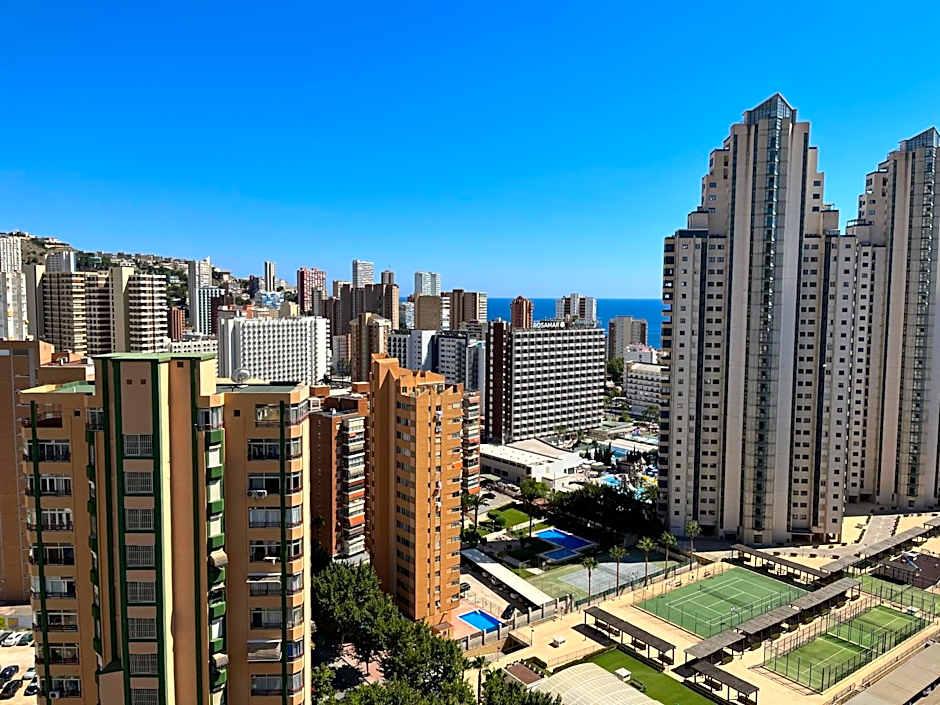
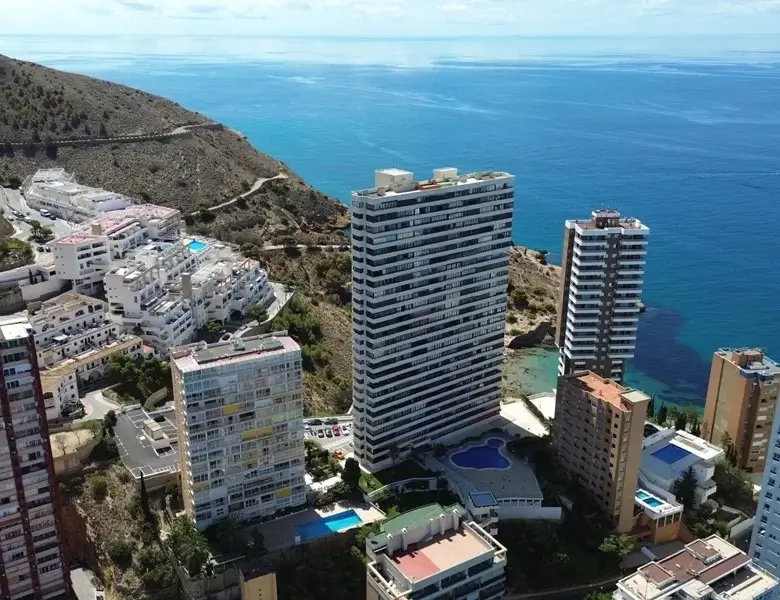
Benidorm can also encourage rushed decisions.
A sea view, large terrace or apartment close to the beach can create a strong emotional reaction, especially if you have only experienced the city on holiday.
That is exactly when buyers need to slow down.
The most expensive mistakes often happen before the sale reaches the notary: choosing the wrong location, signing too early, underestimating costs or assuming something has been checked when it has not.
This guide covers some of the most common mistakes foreign buyers make and, more importantly, how to reduce the risk of making them yourself.
The buyer is dealing with a large financial decision in another country, often in another language, while trying to understand unfamiliar taxes, contracts, professionals and local procedures.
There are also several patterns that appear repeatedly.
Buying with holiday eyes
A place that works brilliantly for a two-week holiday may not work nearly as well as a permanent home.
and whether the area still feels comfortable outside the tourist season.
A holiday experience tells you something about Benidorm.
It does not necessarily tell you what daily life will feel like.
Assuming the process works like it does at home
Foreign buyers sometimes assume that the people involved in the transaction perform the same roles as professionals in their home country.
That can create dangerous misunderstandings.
An estate agent markets and negotiates the property.
A notary is an impartial public official who formalises the transaction and performs important legal checks.
Neither should automatically be treated as the buyer’s personal legal adviser.
The buyer needs to understand who is responsible for checking:
ownership;
registered charges;
contracts;
community issues;
planning matters;
mortgage conditions;
and anything else that could materially affect the purchase.
Never assume somebody else has checked something simply because it seems obvious that they should have done.
Rushing because the property feels unique
Property sales often involve urgency.
You may hear that:
another buyer is interested;
the seller wants an immediate decision;
the apartment will not remain available;
or a reservation payment is needed today.
Sometimes that urgency is genuine.
But urgency does not make legal or financial risk disappear.
A property is not a good purchase merely because somebody else might buy it first.
If important checks have not been completed, losing one apartment may be considerably cheaper than buying the wrong one.
Mistake 1: Choosing the Property Before Understanding the Area
One of the easiest mistakes to make in Benidorm is to fall in love with an apartment before deciding whether you actually want to live in that part of the city.
Benidorm is compact, but its neighbourhoods can feel very different.
Poniente, Levante, Rincón de Loix, the Old Town and central Benidorm offer different combinations of:
noise;
beach access;
tourism;
everyday services;
gradients;
parking;
building styles;
and year-round atmosphere.
Even within the same neighbourhood, moving two or three streets can change the experience considerably.
Do not buy only because you know the area from holidays
Foreign buyers often begin their search where they normally stay.
That is logical, but it can create tunnel vision.
If every holiday has been in Levante, you may assume Levante is automatically where you should buy.
If you normally stay in Poniente, you may never seriously investigate central Benidorm or Rincón.
Before committing, compare several areas according to your real long-term priorities.
The apartment should fit the life you want to live, not simply reproduce your previous holidays.
Check the micro-location
Do not stop at the neighbourhood name.
Check:
the exact street;
traffic;
nearby bars and restaurants;
pedestrian activity;
gradients;
supermarket distance;
bus stops;
parking;
and what surrounds the building.
A listing can truthfully say that an apartment is “in Levante” or “near Poniente Beach” while still offering a very different daily experience from another property with the same description.
The correct rule is:
Choose the area first, but buy the micro-location.
Visit at different times
A viewing at 11:00 on a Tuesday tells you very little about what the building or street may feel like at 23:00 on a Saturday.
If possible, return:
in the evening;
during a busy period;
and without the estate agent.
If you are planning permanent residence, seeing the area outside summer can be even more valuable.
Do not ask only whether you can afford to buy the property. Ask whether you can afford to own it comfortably after the purchase is complete.
Mistake 3: Signing or Paying Money Too Early
One of the most dangerous moments in a property purchase can come before the formal sale begins.
The buyer finds an apartment, worries that somebody else will take it and is asked to make a reservation payment or sign an arras contract.
At that point, the natural reaction is:
“I need to secure it now and sort out the details afterwards.”
That can be a costly mistake.
A reservation payment is not just a gesture
Reservation agreements vary.
The amount, purpose, refund conditions and consequences of withdrawing depend on what has actually been signed.
Do not assume that a reservation payment will automatically be returned if you later discover a problem.
Before paying, understand:
who is receiving the money;
what the payment is for;
whether it is refundable;
under what circumstances;
how long the property will be removed from the market;
and what happens if legal or mortgage checks reveal an issue.
The word “reservation” can sound informal.
The document may not be.
Arras can have serious consequences
An arras contract is also not harmless preliminary paperwork.
Depending on how it is drafted and the legal nature of the agreement, withdrawing can have significant financial consequences.
For example, in the common form of arras penitenciales, the buyer may lose the deposit if they withdraw, while the seller may have to return double if the seller withdraws.
But buyers should not assume that every document labelled “arras” works in exactly the same way.
The wording matters.
That is why important checks should ideally happen before signing or, where appropriate, the agreement should contain suitable conditions covering unresolved matters.
Be especially careful if you need a mortgage
A buyer may assume:
“If the bank does not approve the mortgage, I can simply cancel.”
That is not automatically safe.
If financing is essential, the contract should be reviewed carefully to determine what happens if the mortgage is refused or approved on terms that do not make the purchase viable.
Do not rely on verbal assurances.
If the purchase depends on financing, that dependency needs to be understood before substantial money is put at risk.
Do not let urgency replace verification
A genuinely desirable property may attract other buyers.
That does not mean you should sign without understanding the consequences.
The correct objective is not to move as slowly as possible.
It is to move as quickly as proper checking allows.
There is a significant difference.
Mistake 4: Not Carrying Out Proper Legal Due Diligence
Many buyers focus almost entirely on the physical apartment.
They inspect the kitchen, bathroom, terrace and view.
But a property purchase also involves a legal object that must match what the buyer believes they are acquiring.
That means checking more than what can be seen during a viewing.
Check who legally owns the property
The seller should have the legal right to sell.
A Land Registry check can help confirm:
registered ownership;
mortgages;
liens;
usufructs;
embargoes;
and other registered charges or limitations.
A nota simple is commonly used as an initial source of this information.
It is not a substitute for professional legal review, but it is one of the basic documents a buyer should expect to be checked.
Make sure the registered property matches what you are buying
Foreign buyers sometimes assume that everything physically attached to the property is automatically included in the legal title.
That is not always a safe assumption.
Particular attention may be needed for:
parking spaces;
storage rooms;
terraces;
enclosed balconies;
extensions;
converted areas;
and other alterations.
If an apartment is marketed as including a garage and storage room, make sure those rights are properly identified.
If significant modifications have been made, ask whether they are legally documented where required.
Do not assume planning or occupancy issues are somebody else’s problem
A beautiful renovation does not prove that every alteration was authorised.
Likewise, the fact that a property has been occupied for years does not automatically answer every legal or technical question.
Depending on the property and circumstances, checks may involve issues such as:
planning status;
occupancy documentation;
building permits;
alterations;
cadastral information;
and consistency between different records.
The level of investigation should reflect the property.
A conventional apartment with no apparent alterations may present a different risk profile from a heavily modified penthouse or house.
Use an independent professional where appropriate
This is where an independent lawyer can be particularly useful for foreign buyers.
The purpose is not simply to translate documents.
It is to identify whether the transaction contains legal issues that need to be resolved before you commit.
That distinction matters.
Translation tells you what a document says.
Legal advice helps you understand what it means for you.
Mistake 5: Ignoring the Community of Owners
In Benidorm, this is one of the easiest areas for an apartment buyer to underestimate.
A flat is not just the interior space behind your front door.
You are also becoming part of a community of owners.
A low monthly fee can look attractive while major works are about to be approved.
A higher fee may be completely reasonable in a well-maintained development with extensive facilities.
The number only makes sense in context.
Ask what the fee covers and whether there are additional recurring or exceptional charges.
Not checking for extraordinary assessments
Large buildings eventually require major expenditure.
Examples can include:
lift replacement;
façade repairs;
waterproofing;
roof works;
garage repairs;
pool refurbishment;
or major accessibility improvements.
These costs may be financed through extraordinary community contributions, often referred to as derramas.
A buyer who completes just before a major project is approved can face an unpleasant surprise.
Recent community meeting minutes can therefore be very informative.
They may reveal discussions about:
planned works;
disputes;
unpaid debts;
building defects;
rental rules;
or recurring maintenance problems.
Not checking community debts
Spanish horizontal-property rules give community debts particular importance in a sale.
The property can be legally affected by certain outstanding community amounts relating to the previous owner.
For that reason, the seller normally provides certification regarding the status of community payments in connection with the sale, subject to the legal rules governing the transaction.
Do not casually waive documentation designed to clarify whether money is owed.
Ignoring the building’s internal rules
Community rules can influence how you use the property.
Depending on the building and the applicable legal framework, they may deal with matters such as:
use of communal facilities;
pets;
works;
noise;
façades;
parking;
and certain rental activities.
If a particular use is important to you, check the rules before buying.
Do not discover afterwards that the community operates in a way you strongly dislike.
Building management matters too
Two apartments with similar prices and views can produce very different ownership experiences if one is in a well-run building and the other is not.
and whether residents appear to take care of the building.
A property viewing should therefore include the entire route from the street to the apartment.
The entrance hall, lifts, corridors, garage and communal areas are part of what you are buying into.
A useful rule is:
Do not buy only the apartment. Buy the building as well.
Mistake 6: Assuming Tourist Rental Will Be Allowed
Some foreign buyers look at Benidorm and immediately think about tourist demand.
That is understandable.
But a property being in a popular holiday destination does not automatically mean you will be allowed to operate it as tourist accommodation.
This is one of the most dangerous assumptions an investment-minded buyer can make.
Tourist demand is not the same as legal permission
A property may be attractive to visitors and still face legal or community restrictions.
The rules can involve:
Valencian tourism regulations;
registration requirements;
municipal rules;
community approval;
building statutes;
and the specific legal status of the property.
Since April 2025, owners who want to begin tourist accommodation activity in a property subject to horizontal ownership rules must also consider the community-approval requirements introduced at national level.
The practical lesson is simple:
Never buy a property on the assumption that tourist-rental income will be available unless the specific property has been checked properly.
Do not rely only on statements such as:
“Many apartments here are rented to tourists.”
“The previous owner did it.”
“The agent says it should be fine.”
“The building is full of holiday rentals.”
Those facts may be relevant, but they do not replace verification.
If rental income is essential to the purchase, the legal position should be confirmed before you commit.
Mistake 7: Using the Wrong Professional — or No Independent Professional
A property purchase involves several people, but they do not all have the same role.
Understanding who does what is particularly important for foreign buyers.
The estate agent
The agent can be extremely useful.
They help find properties, arrange viewings, negotiate and coordinate communication between the parties.
But the agent is part of the transaction.
Do not automatically assume that the agent is acting as your independent legal adviser.
The independent lawyer
A lawyer acting specifically for you can review contracts, investigate legal issues and advise you before money or signatures are committed.
For a foreign buyer, this can be especially valuable when:
documents are in Spanish;
you are buying remotely;
there are unusual property features;
financing is involved;
rental use matters;
or you simply do not know the Spanish process well.
Independence matters.
You should understand who selected the lawyer and whose interests that professional represents.
The notary
The Spanish notary plays an essential role in the transaction.
The notary is a public official who verifies important legal aspects of the deed, identifies the parties and formalises the sale.
But the notary is impartial.
The notary does not replace the buyer’s own lawyer or act solely in the buyer’s interests.
That distinction is easy for foreign purchasers to misunderstand.
The bank or mortgage adviser
A lender assesses whether it is willing to finance the transaction and on what terms.
That does not mean the bank has confirmed that the property is the right purchase for you.
Mortgage approval and property due diligence are different things.
Technical professionals
Not every apartment requires an extensive technical survey.
But where there are concerns about condition, major alterations, structural issues or unusual construction, an architect, surveyor or other appropriate technical professional may be worth involving.
A freshly painted apartment can still have problems that are invisible during a short viewing.
Mistake 8: Buying for Today Instead of for the Next Ten Years
A property can suit your life perfectly today and become inconvenient surprisingly quickly.
This matters particularly for buyers moving to Benidorm for retirement or long-term residence.
Try to imagine how the apartment will work several years from now.
Think about mobility
A steep hill may not bother you today.
Neither may several steps before reaching the lift.
But if you intend to remain in the property for a long time, accessibility deserves attention.
Check:
street gradients;
steps;
entrance accessibility;
lift access;
parking distance;
and the route to everyday services.
Think about the building, not just the apartment
A high floor can offer outstanding views.
It also makes you more dependent on lifts.
A large residential complex may offer excellent facilities.
It may also create higher maintenance costs.
An older building may have character and a superb central location.
It may eventually need expensive communal work.
The correct question is not:
“Do I love this apartment today?”
It is:
“Can I imagine this property still working for me in ten years?”
Think about long absences
Many foreign owners do not live in Benidorm twelve months a year.
If the property will sometimes remain empty, consider:
security;
water leaks;
key holding;
property checks;
insurance;
ventilation;
mail;
and who can respond if something goes wrong.
A home that works well while occupied may require a management plan when you are abroad.
Think about eventual resale
You should not buy purely for resale value, but future marketability is still worth considering.
Very unusual layouts, difficult access, serious parking problems or high ongoing costs may reduce the number of future buyers interested in the property.
You do not need to predict future prices.
You simply need to ask whether the apartment has characteristics that other buyers are also likely to value.
A Pre-Purchase Checklist for Foreign Buyers
Before paying a reservation deposit or signing an arras agreement, make sure you understand the following:
Who legally owns the property?
Are there registered mortgages, charges or other limitations?
Exactly what is included in the sale?
Are parking and storage rights properly documented?
Have significant alterations been checked?
What are the community fees?
Are there community debts?
Are major works or extraordinary assessments being discussed?
Have you reviewed recent community meeting minutes where available?
What are the full acquisition costs?
Does your financing depend on mortgage approval?
If you intend to rent the property, has that use been legally checked?
Have important contracts been independently reviewed?
Have you visited the area at different times?
Does the apartment work for your real long-term lifestyle?
You do not need to personally become an expert in Spanish property law.
You do need to make sure the right questions are being asked before the purchase becomes difficult or expensive to reverse.
Frequently Asked Questions
Do I need a lawyer to buy property in Benidorm?
Spanish law does not generally require a buyer to appoint a private lawyer for a standard property purchase.
However, independent legal advice can be very useful, particularly for foreign buyers who are unfamiliar with Spanish contracts, property records or buying procedures.
The important point is to understand that the notary is impartial and is not your personal legal representative.
Should I sign a reservation agreement before speaking to a lawyer?
It is safer to understand the document before signing or paying.
Reservation agreements can contain important conditions about refunds, deadlines and withdrawal.
If significant money is involved, having the terms reviewed before committing can prevent misunderstandings later.
Can I rely on the estate agent’s checks?
An estate agent can provide useful information and may help collect documentation.
But buyers should understand what has actually been checked and should not assume that marketing or transaction support replaces independent legal due diligence.
How can I check whether there are community debts?
The status of community payments should be addressed as part of the sale documentation.
The seller normally provides a certificate concerning community debts in accordance with the applicable legal framework.
Your lawyer or other appropriate professional can also help verify the position before completion.
Can I assume I will be allowed to rent the apartment to tourists?
No.
Tourist accommodation is subject to legal and administrative requirements, and community rules or approvals may also affect the property.
If tourist rental is important to your financial plan, verify the current position for that specific apartment before purchasing.
Slow Down Before You Commit
Most expensive buying mistakes are not created at the notary’s office.
They are created earlier.
They happen when a buyer:
chooses a property too quickly;
assumes costs will be lower than they are;
signs before understanding the contract;
skips legal checks;
ignores the community;
or bases the purchase on an intended use that has not been verified.
Benidorm has a large and varied property market.
If one apartment disappears while you are completing sensible checks, another opportunity will come.
The objective is not to secure a property at any cost.
It is to complete a purchase that still feels sensible once the excitement of the viewing has passed.
For a foreign buyer, patience, independent advice and careful verification are not obstacles to the purchase.