
Sierra de Bernia from Benidorm: Hike Through the Mountain to One of the Costa Blanca’s Best Views
Sierra de Bernia is one of those hikes that sounds good on paper and becomes much more memorable once you are actually there.
The mountain itself is already impressive: a long, rugged limestone ridge rising above the Marina Baixa and Marina Alta, with views stretching toward Altea, Calpe, Serra Gelada and the Mediterranean. But the feature that makes Bernia stand out from other hikes near Benidorm is much more unusual.
You walk through the mountain.
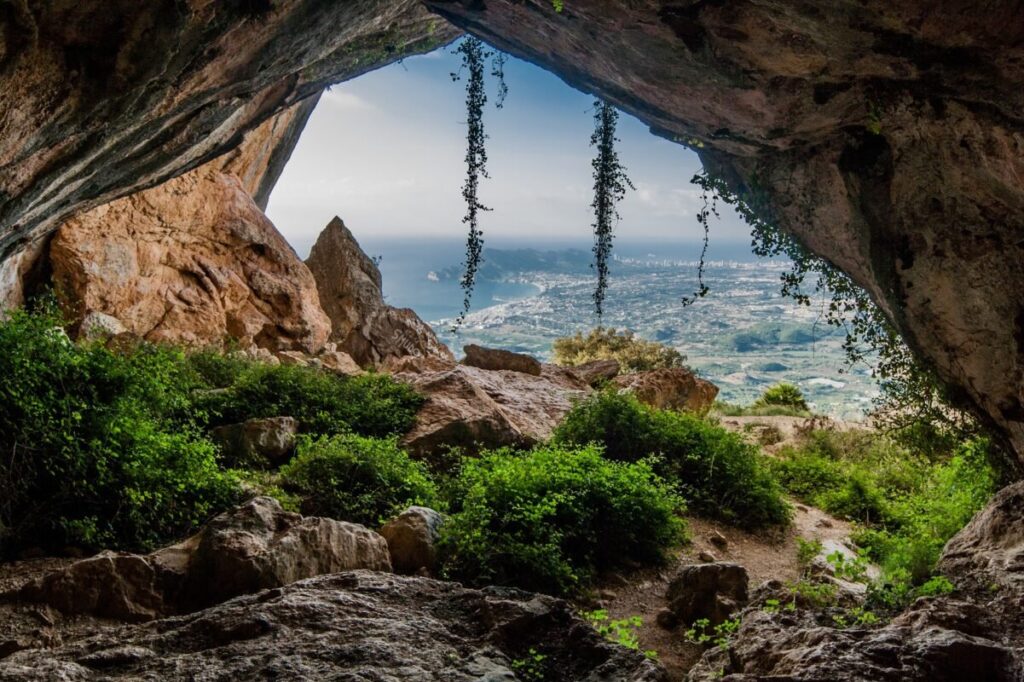
The Forat de Bèrnia is a natural tunnel that pierces the ridge from one side to the other. You approach it through rocky terrain, enter a narrow passage in the limestone and emerge on the opposite side to a completely different view of the landscape.
That moment is the reason many people remember the hike.
It feels less like reaching a conventional viewpoint and more like crossing a natural gateway.
The wider route adds another layer. The PR-CV 75.1 circular trail links the Forat with the remains of Fort de Bèrnia, mountain terraces, rural tracks and broad views over both sides of the sierra. Official route information gives the circular itinerary at roughly 11 kilometres, with a typical duration of around 3 hours 30 minutes and medium difficulty.
For someone staying in Benidorm, that makes Sierra de Bernia one of the strongest options for a proper mountain day.
It is more demanding than a scenic walk.
Less tourist-oriented than Guadalest.
More adventurous than simply following coastal viewpoints.
And unlike Peñón de Ifach, where the summit is the obvious objective, Bernia gives you a route built around several distinct experiences rather than one final destination.
The mountain is part of the Paisaje Protegido de la Sierra de Bèrnia y Ferrer, a protected landscape that extends across several municipalities and reaches approximately 1,129 metres at its highest point.
But you do not need to be an experienced mountaineer to enjoy it.
The main question is how much of the route you want to do.
A shorter out-and-back hike to the Forat provides the most famous part of the experience with less time and effort.
The full circular route gives you a much broader sense of the mountain and is the version that turns Bernia into a complete day trip rather than a single viewpoint excursion.
That choice will be one of the central themes of this guide.
What Is Sierra de Bernia?
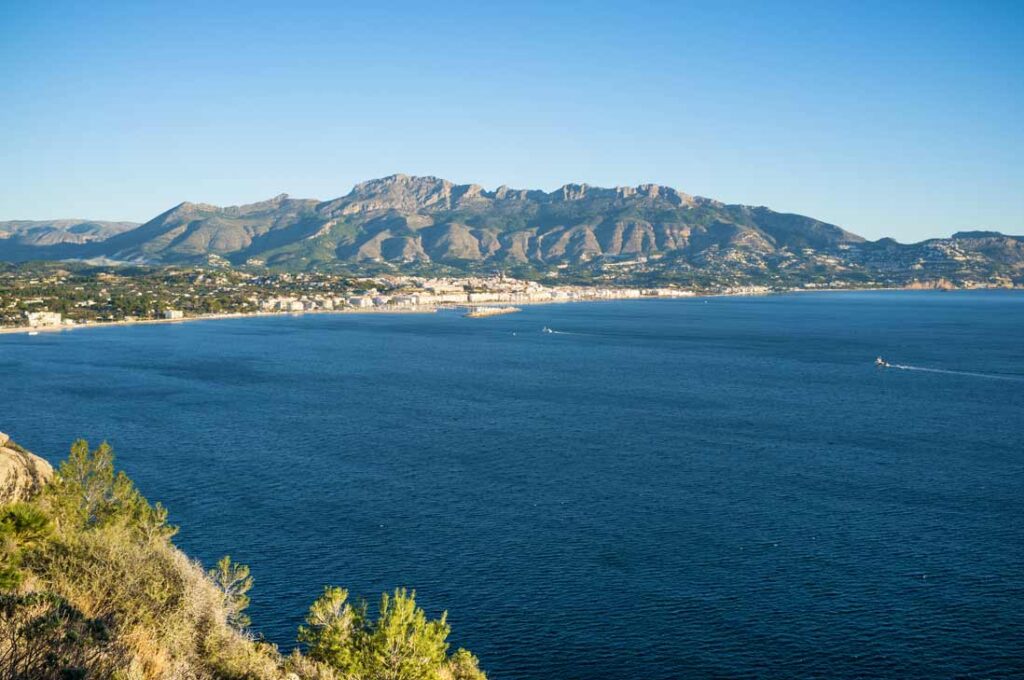
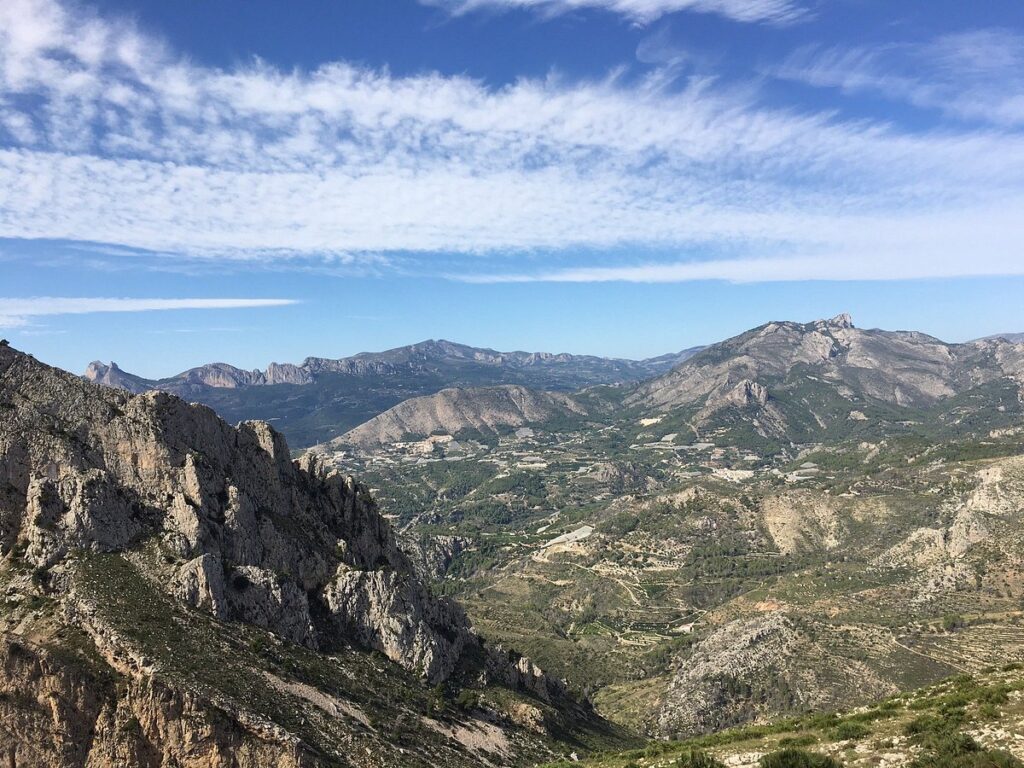
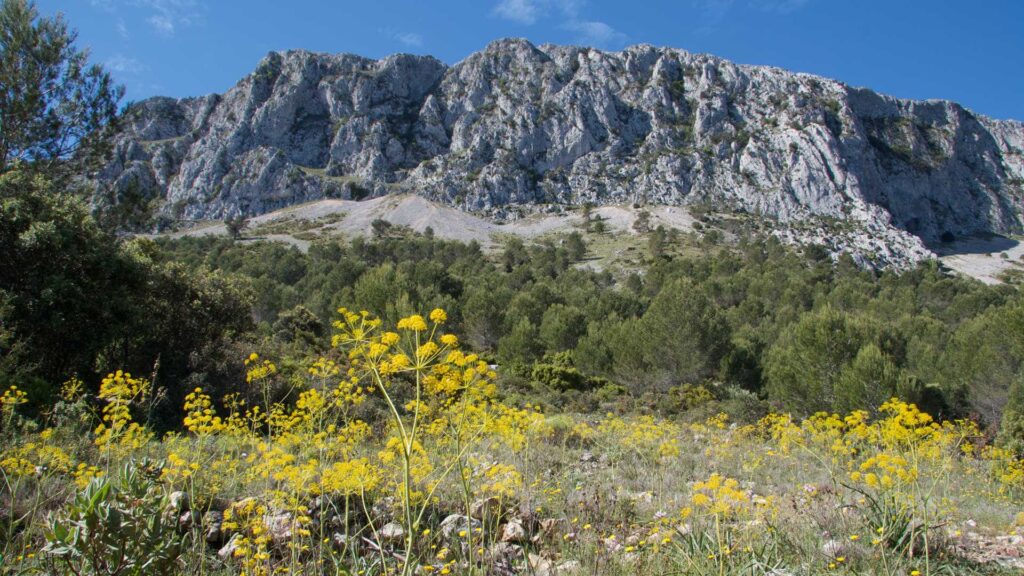
Sierra de Bernia is a long limestone mountain ridge running east to west across the northern Costa Blanca.
Its position makes it visually dominant from a surprising number of places.
From Altea and the surrounding coast, the ridge forms a rugged wall behind the Mediterranean landscape.
From inland valleys, it becomes an equally strong barrier between different sides of the region.
This geography explains much of its appeal.
The ridge is not simply high.
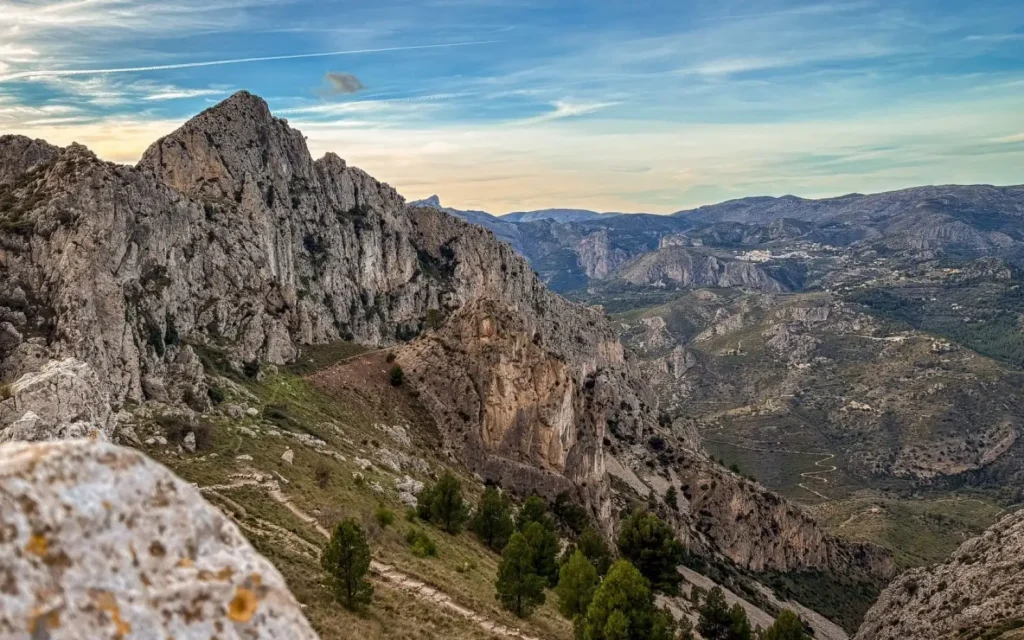
It is narrow, rocky and visually dramatic.
Steep limestone walls create a strong contrast with the cultivated terraces, pine-covered areas and villages lower down.
A Natural Divide Between Coast and Interior
Bernia acts almost like a boundary.
On the southern side, the landscape opens toward Altea, Benidorm and the Mediterranean.
On the northern side, the views turn toward inland valleys, rural settlements and mountain terrain.
The Forat allows hikers to move directly through that divide.
That is what makes the route so unusual.
You do not simply climb to a ridge and look over both sides.
You literally pass through the limestone barrier.
The Protected Landscape
The Sierra de Bèrnia y Ferrer was declared a protected landscape because of its combination of geological value, biodiversity, traditional agriculture and cultural heritage.
This is important because Bernia is not just a recreational mountain.
The landscape includes:
- Mediterranean vegetation;
- limestone cliffs;
- traditional agricultural terraces;
- old rural buildings;
- historic paths;
- archaeological and military remains.
That mixture gives the hike more character than a simple fitness route.
Even when you are not at a viewpoint, there is usually something in the landscape that explains how people have used and adapted to the mountain over time.
Why the Mountain Looks So Different From Benidorm
From Benidorm, much of the surrounding terrain feels coastal and open.
Bernia feels more solid.
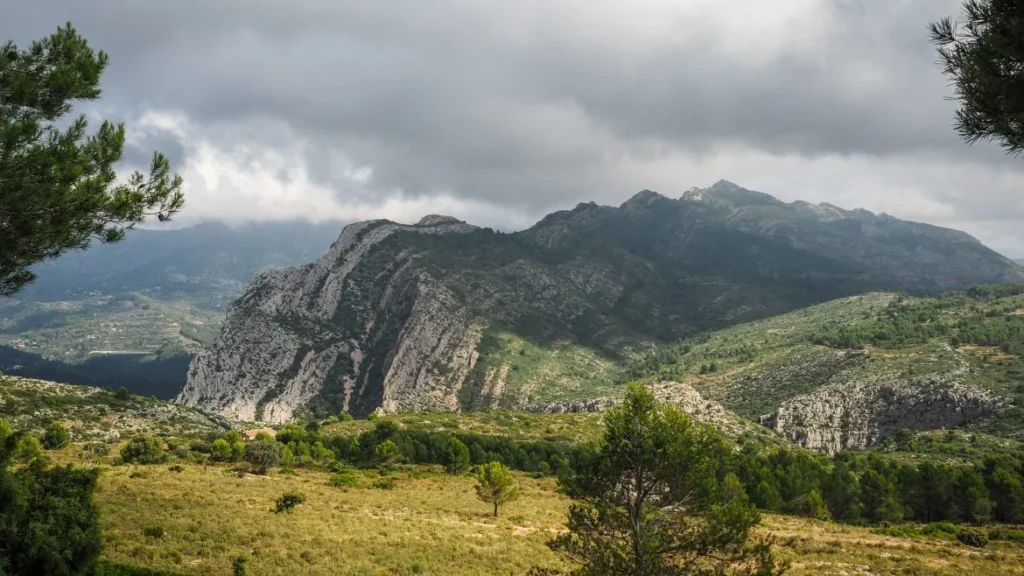
The ridge rises as a continuous wall rather than a single peak.
That visual difference becomes stronger as you approach by car.
The closer you get, the less the mountain looks like a distant backdrop and the more it begins to dominate the entire view.
This is one of the reasons the drive itself feels worthwhile.
You are clearly leaving the resort landscape behind and entering a more rural, mountainous part of Alicante province.
Why Hike Sierra de Bernia from Benidorm?
There are several excellent hikes closer to Benidorm.
Serra Gelada gives you cliffs and sea views.
Peñón de Ifach gives you a short but intense climb.
Puig Campana offers a much more serious mountain challenge.
So Bernia needs to offer something different.
It does.
The Forat Makes the Experience Unique
The natural tunnel is the strongest reason.
Many hikes give you a viewpoint at the end.
Far fewer include a moment where the route physically passes through the mountain itself.
The Forat creates a clear sense of progression.
You approach from one side.
The terrain narrows.
The light changes.
You enter the rock.
Then you emerge into a completely different landscape.
That sequence is simple, but it creates a surprisingly strong memory.
The Views Are Broad Rather Than Urban
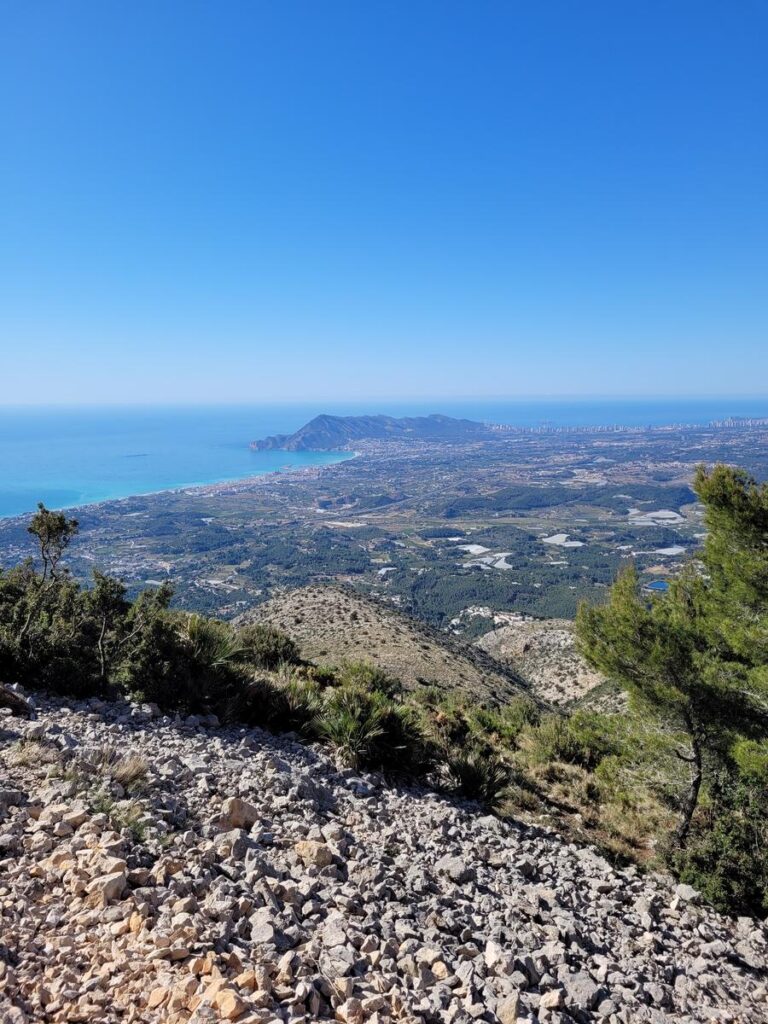
From the southern side of Bernia, the coast stretches out below you.
On clear days, the view can include:
- Altea;
- Serra Gelada;
- Benidorm;
- the Mediterranean;
- Calpe;
- surrounding mountain ranges.
The effect is very different from viewing the coast from within Benidorm itself.
You are far enough away for the urban areas to become part of the landscape rather than dominate it.
That change of scale is one of the best parts of the hike.
The Route Has Variety
Bernia is not a monotonous climb.
The full circuit includes different types of terrain and scenery.
You move through:
- rural tracks;
- rocky paths;
- the Forat;
- exposed mountain sections;
- historic fort ruins;
- terraces;
- viewpoints on both sides of the ridge.
That variety helps the 11 kilometres feel more interesting than a route where you simply climb and descend the same slope.
It Feels Like a Proper Mountain Day
This is an important distinction.
The shorter Forat route can work as a half-day excursion.
The full circuit feels much more substantial.
You need to think about footwear.
Water.
Weather.
Route finding.
Pace.
That makes the day feel more intentional than a casual sightseeing stop.
For many long-stay residents in Benidorm, that is exactly the appeal.
You spend several hours in a completely different environment and return to the coast feeling that you have actually done something.
It Is Less Tourist-Oriented Than Many Famous Costa Blanca Attractions
Bernia is well known among hikers, but it does not feel like a conventional tourist attraction.
There is no ticket.
No visitor centre you need to pass through.
No fixed entry time.
No souvenir route.
That lack of structure gives the experience a much more natural rhythm.
It also means you need to take more responsibility for planning.
There is no one managing your day for you.
You Can Choose the Level of Commitment
This is one of Bernia’s biggest strengths.
You do not need to complete the full circular route to experience the mountain.
The shorter hike to the Forat still gives you:
- the tunnel;
- strong views;
- mountain terrain;
- the feeling of crossing the ridge.
The full route adds:
- more distance;
- more elevation;
- Fort de Bèrnia;
- a stronger sense of journey.
That makes Bernia suitable for a wider range of visitors than the word “mountain hike” might initially suggest.

The Forat de Bernia: The Highlight of the Route
The Forat is the feature that gives Sierra de Bernia its identity as a hiking destination.
From a distance, the ridge looks almost continuous.
The tunnel is the exception.
It forms a natural passage through the limestone, allowing hikers to move from one side of the mountain to the other without climbing over the top.
Official tourism information describes the Forat as one of the most characteristic features of the sierra and highlights the panoramic coastal view that appears when you emerge on the southern side.
What Is the Tunnel Like?
Do not imagine a large cave where you can walk upright comfortably from beginning to end.
The passage is narrow and low in places.
Depending on your height, you may need to crouch or move carefully through sections.
The floor is natural rock rather than a prepared tourist path.
That is part of what makes the experience feel genuine.
You are not walking through an attraction built for visitors.
You are using a natural opening in the mountain.
Does It Feel Claustrophobic?
For most people, the passage is short enough that it does not become a major problem.
But anyone uncomfortable in tight spaces should know what to expect.
There are sections where the ceiling drops and the tunnel feels enclosed.
It is not a long cave system.
You can usually see or sense the light from the other side relatively quickly.
Still, the experience is more physical than simply walking through a large arch.
The View When You Emerge
This is the moment people remember.
The light suddenly increases.
The rock opens.
And the Mediterranean landscape appears below you.
On a clear day, the contrast can be dramatic.
You have just moved through a dark, narrow passage and suddenly find yourself looking toward Altea, Serra Gelada, the coastline and distant urban areas.
The view feels stronger because of the way you reach it.
If you had driven directly to the same panorama, it would still be beautiful.
But arriving through the mountain gives it a sense of reward.
The Forat Is Not the Summit
This is important.
The Forat is the highlight of the route, but it is not the highest point of Sierra de Bernia.
You are crossing through the ridge at a natural opening rather than climbing to the main summit.
That means visitors should not confuse the standard Forat hike or PR-CV 75.1 circuit with a summit ascent.
The circular route is already a substantial hike without adding a true summit objective.
Why the Short Route Works So Well
The shorter out-and-back option focuses on the strongest part of the experience.
You start from the Casas de Bèrnia area, climb toward the ridge, reach the Forat, pass through and enjoy the southern panorama before retracing your steps.
For hikers with limited time, this is an excellent compromise.
You still get the moment that makes Bernia special without committing to the full circuit.
Why the Full Route Is Better for Some People
The shorter route gives you the highlight.
The full route gives you the mountain.
That difference matters.
If you turn around after the Forat, the experience is concentrated around one objective.
If you continue around the circular route, the day becomes more varied and includes the historic fort, different landscapes and a much stronger sense of completing a journey.
Neither option is automatically better.
The right choice depends on how much time, energy and mountain experience you want to bring to the day.
And that is exactly what we will compare next.
Bernia Fort and the Historical Side of the Mountain
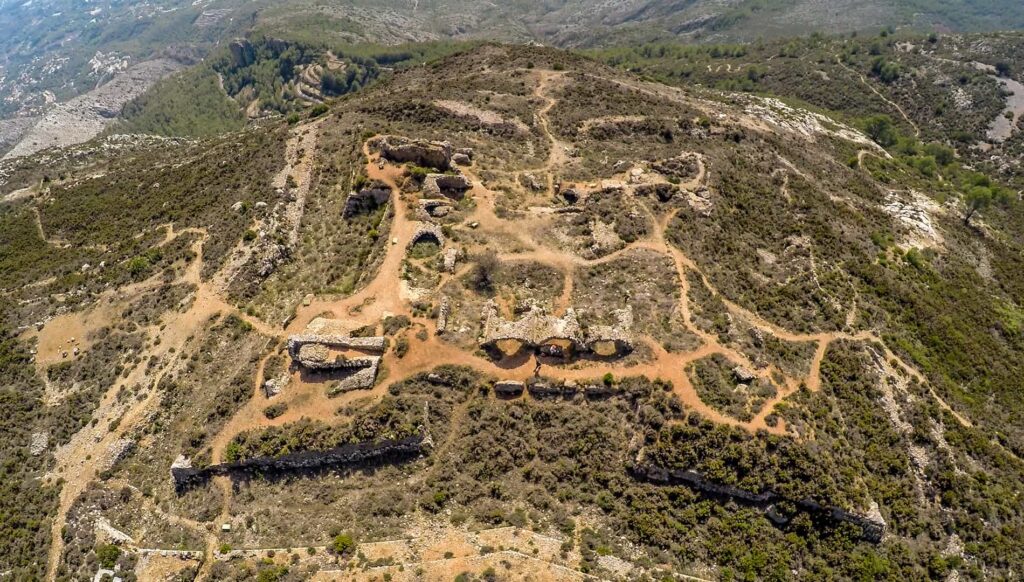
The Forat is the feature most hikers remember first, but the Fort de Bèrnia is what gives the full circular route much of its historical depth.
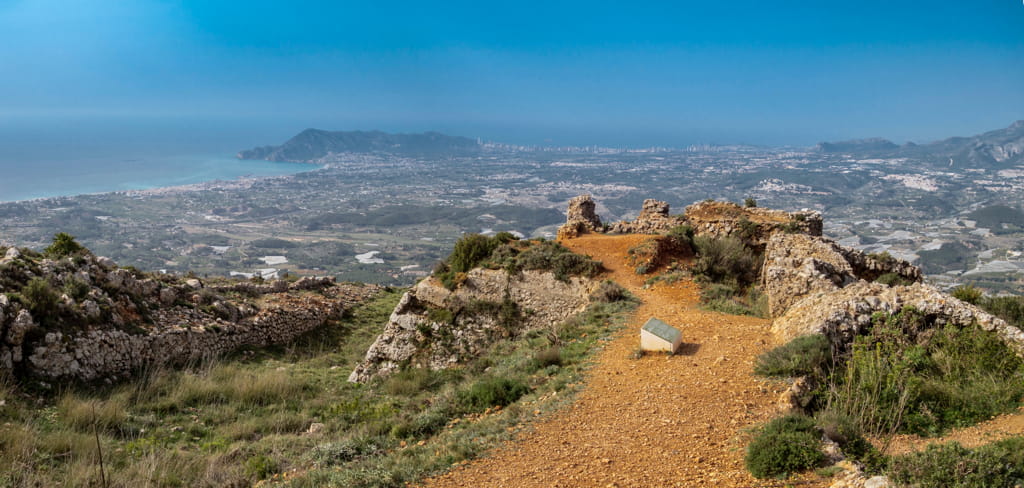
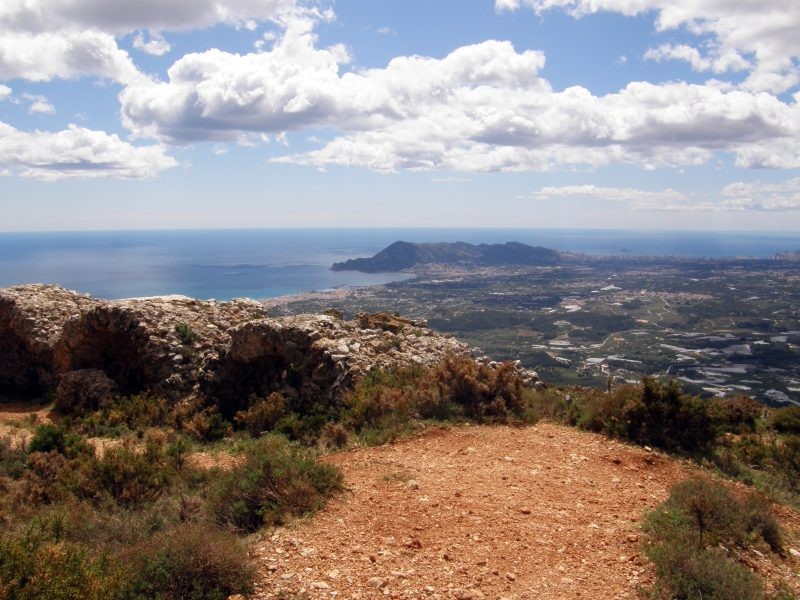
The remains sit on the southern side of the mountain, in a position that immediately explains why this ridge was strategically important.
From here, the coastline, valleys and mountain approaches are visible across a huge area.
That made Bernia useful not only as a natural barrier, but also as a place from which movement could be watched and controlled.
The fort was built in the 16th century during the reign of Philip II, in a period when the coast of the Kingdom of Valencia faced repeated threats from piracy and maritime attacks. Its elevated position allowed soldiers to monitor the surrounding territory while remaining protected by the mountain itself.
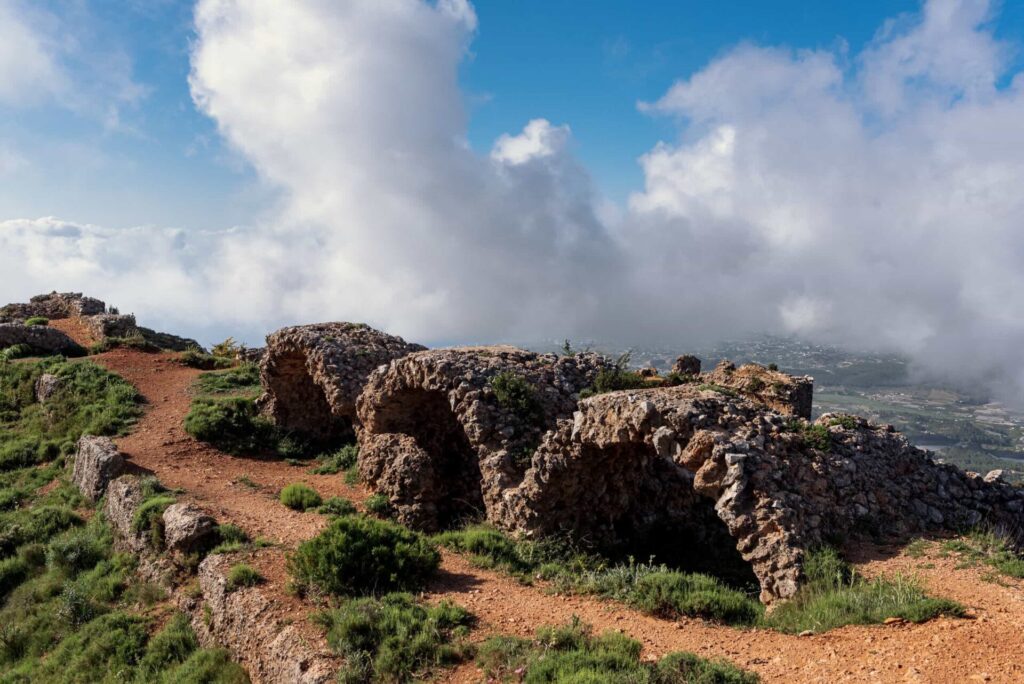
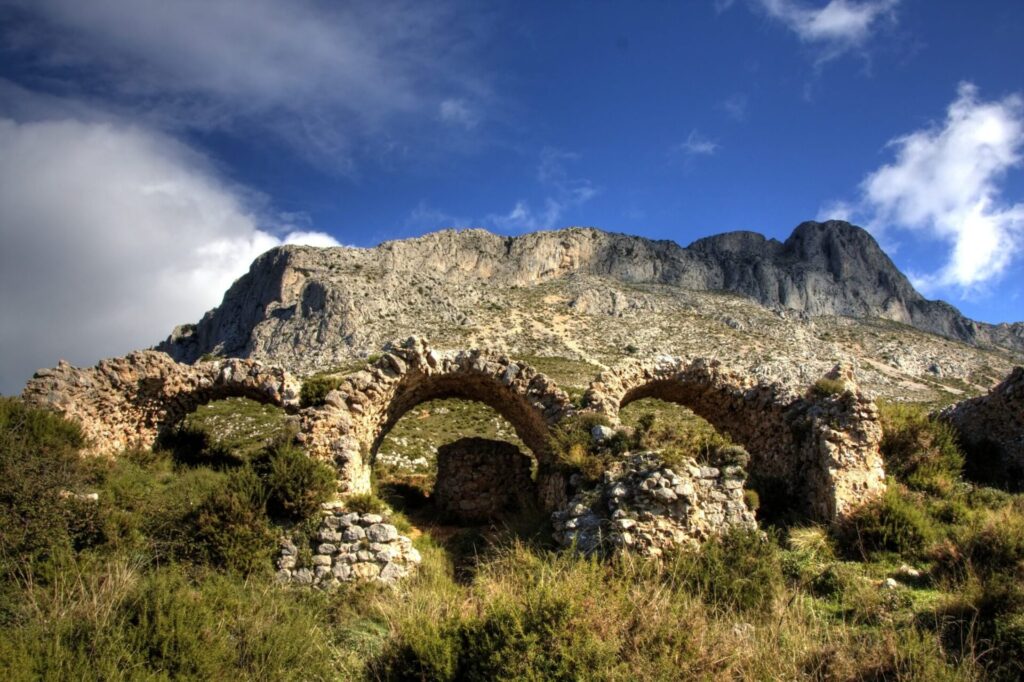
Today, the fort is largely ruined.
That does not make it disappointing.
In fact, the opposite is often true.
The surviving walls, foundations and stone structures feel completely integrated into the landscape, and the absence of heavy reconstruction helps preserve the sense that you have reached an abandoned military position rather than a conventional historic attraction.
Why the Fort Matters
Without the fort, the full circular route could still be an excellent mountain hike.
With it, the route gains another layer.
You are no longer moving only through geology and scenery.
You are also following a landscape that people deliberately fortified because of its strategic value.
Standing among the ruins, with the Mediterranean far below, it is easy to understand why this place mattered.
The same visibility that now attracts hikers and photographers once had military importance.
That is one of the best things about Bernia: the landscape repeatedly explains its own history.
The Fort Is Not a Restored Castle
Do not expect towers, furnished interiors or ticketed access.
This is an archaeological ruin rather than a reconstructed monument.
The appeal comes from:
- the surviving stonework;
- the mountain setting;
- the views;
- the historical context.
If you are expecting something like Guadalest Castle, you may initially find the remains modest.
But if you approach the fort as part of the hiking landscape, it becomes one of the most atmospheric sections of the route.
The Position Is the Main Attraction
The fort sits at roughly 850 metres above sea level according to official route information, making it one of the higher key points on the standard circular hike. The full PR-CV 75.1 route begins around 630 metres at Casas de Bèrnia and reaches its main high sections around the fort and ridge area.
That elevation gives the fort a completely different atmosphere from the villages below.
On clear days, the southern panorama can extend toward Altea, Serra Gelada, the Mediterranean and other mountain ranges inland.
It is easy to spend more time here than expected.
That is one reason official walking times should always be treated as estimates rather than deadlines.
A Good Place to Stop
If you are completing the full circuit, the fort is one of the natural places to pause.
By this point, you have already covered a significant section of the route, and the open surroundings provide plenty of space to rest without blocking the trail.
A short break here makes sense for:
- food;
- water;
- photography;
- simply letting your legs recover.
There are no facilities.
That is worth repeating because the route feels rural but still relatively close to the coast, which can create a false sense that services will appear somewhere along the way.
They do not.
Official route information specifically notes that there are no reliable water sources on the route, so you should carry everything you need from the beginning.
How Difficult Is the Hike?
Official information classifies the PR-CV 75.1 circular route as medium difficulty, with around 11 kilometres and an estimated walking time of approximately 3 hours 30 minutes.
That description is reasonable, but it needs context.
“Medium” does not mean effortless.
The route involves rocky terrain, uneven surfaces, exposed sections and repeated changes in elevation.
It is not technically difficult in the sense of requiring climbing equipment.
But it is also not a flat countryside walk.
Distance Is Not the Main Challenge
Eleven kilometres sounds manageable to many reasonably active people.
And in pure distance terms, it is.
The difficulty comes more from the terrain.
Rocky paths slow your pace.
Uneven limestone requires attention.
The approach to the Forat becomes steeper and rougher.
Some sections involve more careful foot placement than normal walking.
This means a person who comfortably walks 12 kilometres through a city may still find Bernia much more tiring.
The Forat Adds an Unusual Physical Element
Passing through the Forat is not technically difficult, but it is awkward in places.
The tunnel becomes low enough that taller visitors may need to crouch significantly.
Some people move through almost on hands and knees for short sections.
The floor is natural rock and can feel smooth or damp depending on conditions.
This is not dangerous when approached carefully, but it does require patience.
Trying to move quickly is pointless.
The passage is one of those sections where the correct pace is whatever the terrain allows.
What About Vertigo?
The standard circular route is not generally regarded as an extreme vertigo hike, but there are exposed mountain sections and steep drops in the wider landscape.
Anyone with a strong fear of heights should be aware that the southern side in particular can feel open and elevated.
You do not normally need to walk along a knife-edge ridge.
However, you are clearly in mountain terrain, not inside a protected park with railings.
If exposure makes you uncomfortable, the shorter route to the Forat may feel more manageable.
Do You Need to Use Your Hands?
At certain rocky points, yes, potentially for balance.
This is not rock climbing.
You do not need ropes or technical moves.
But mountain paths sometimes require using a hand against the rock to steady yourself or moving over uneven sections more carefully.
Anyone expecting a perfectly maintained gravel trail will find parts of Bernia rougher than anticipated.
Fitness Level
A reasonably active person with some walking experience should be able to complete the standard circuit in good conditions.
What matters more than athletic ability is pacing.
The route becomes much harder if you:
- start too fast;
- carry too little water;
- hike in excessive heat;
- underestimate the terrain;
- treat the official time as something you need to beat.
For a relaxed first visit, allowing four to five hours for the full circuit is more realistic than assuming you will finish exactly within the official 3 hours 30 minutes.
That gives you time for photographs, the Forat, the fort and short breaks.
Short Route Difficulty
The shorter Casas de Bèrnia–Forat–Casas de Bèrnia option is officially estimated at around two hours return.
This is clearly easier than the full circuit, but do not mistake “shorter” for “flat”.
You still climb toward the ridge.
You still encounter rocky mountain terrain.
And you still need to pass through the Forat if you want the southern viewpoint.
The difference is that you avoid the longer continuation around the mountain and the additional fatigue of completing the full loop.
Who Should Choose the Short Route?
The shorter option makes particular sense if:
- you have limited time;
- you mainly want to experience the Forat;
- you are not used to longer mountain hikes;
- the weather is warm;
- you are hiking with someone whose fitness level is uncertain.
It is also a good introduction to Bernia.
You can always return later for the full circuit.
Who Should Choose the Full Circular Route?
The full route is better for people who want the whole mountain experience rather than only its most famous feature.
It suits hikers who enjoy:
- varied terrain;
- several hours outdoors;
- historic ruins;
- long landscape views;
- the satisfaction of completing a circular route.
If you regularly walk in the mountains, the full circuit is likely to feel much more rewarding.
Footwear Matters
This is not a route for flip-flops or smooth casual shoes.
A good pair of hiking shoes or trail-running shoes with reliable grip is strongly recommended.
The route includes enough loose rock and uneven limestone to make poor footwear unnecessarily risky.
High boots are not mandatory for everyone, but grip is.
Walking Poles
Optional.
Some hikers will find them useful on descents and loose terrain.
Others will find them inconvenient around the Forat and rocky sections.
If you normally use poles in mountain terrain, bring them.
If you never use them, Bernia is not necessarily the place to start experimenting.
Heat Changes the Difficulty Completely
Official guidance recommends spring, autumn and winter as the best seasons for the route.
There is a very good reason.
Large parts of the hike are exposed.
Shade is limited.
The limestone reflects heat.
And there are no dependable water sources.
An 11-kilometre medium-difficulty hike in April can become a completely different experience in August.
Distance does not change.
Terrain does not change.
But the physical demands do.
Rain and Wet Rock
Rain creates the opposite problem.
Limestone can become slippery when wet, particularly around smooth or polished sections.
Low cloud can also remove much of the visual reward.
Bernia is primarily a landscape hike.
If visibility is poor, you lose a large part of what makes the route special.
A dry, clear day is worth waiting for.
Wind
The ridge is exposed, and strong wind can make some sections much less comfortable.
You do not necessarily need perfect calm, but severe wind is a good reason to reconsider.
The Forat itself may be sheltered, but the open sections around the ridge and fort are not.
Navigation
The route is marked as a PR trail, but that does not mean you should switch off your sense of direction.
Trail markers can fade.
Junctions can be missed.
And mountain terrain often looks more obvious on a map than it does on the ground.
Using an offline map or downloaded GPX track is sensible, especially for the full circuit.
Phone signal should never be treated as your navigation plan.
Is It Suitable for Beginners?
Yes, with qualifications.
A fit beginner who chooses good weather, starts early and carries proper equipment can enjoy the full circuit.
A complete beginner with no experience on rocky terrain may be better starting with the shorter Forat route.
Bernia is not technically extreme.
But it is mountain hiking.
That distinction matters.
The Most Important Difficulty Question
The useful question is not:
“Can I physically walk 11 kilometres?”
It is:
“Am I comfortable spending four or more hours on uneven mountain terrain with limited shade and no guaranteed water?”
If the answer is yes, the full Bernia circuit is very achievable.
If the answer is uncertain, the shorter Forat hike gives you the strongest part of the experience with much less commitment.
Either way, there is no prize for choosing the longer route.
The best Bernia day is the one you can enjoy rather than endure.
How to Get There from Benidorm
Sierra de Bernia feels remote once you are walking, but the journey from Benidorm is reasonably straightforward by car.
The important thing is understanding that you are not driving to a conventional visitor centre or a large mountain car park. The standard PR-CV 75.1 route begins near Casas de Bèrnia, a small rural settlement on the northern side of the ridge.
Official route information describes the usual access from Benissa, following the local CV-749 toward Pinós and then climbing steeply toward the plateau near Casas de Bèrnia, where the hiking route starts.
From Benidorm, the drive is typically around one hour to one hour and fifteen minutes, depending on traffic and the route you take.
That may sound slightly longer than some other hikes in the series, but the final approach is part of the experience.
The closer you get to Bernia, the more the landscape changes.
Coastal development disappears.
Terraces, rural houses and mountain roads take over.
And the ridge gradually becomes much more imposing.
Where Does the Hike Actually Start?
The usual starting point is around Casas de Bèrnia.
Official route documentation identifies the parking area there as the beginning of the PR-CV 75.1 circuit, with a trail post and route information panel nearby.
This is worth knowing because simply entering “Sierra de Bernia” into a navigation app may not take you to the correct place.
Use Casas de Bèrnia as the practical target.
From there, the circular route begins directly from the mountain plateau.
What Is the Final Road Like?
The final access climbs significantly.
The road is paved, but it feels much more rural than the main roads around Benidorm.
You should expect:
- bends;
- steeper gradients;
- narrower sections;
- cyclists;
- occasional agricultural or local traffic.
For a normal car, the drive is not inherently difficult.
But it is the kind of road where rushing gains very little.
Take your time and treat the final approach as part of the mountain day rather than something you need to get through as quickly as possible.
Parking
Parking around Casas de Bèrnia is relatively informal compared with a major tourist attraction.
Do not expect a huge managed car park.
That makes early arrival useful, especially on good-weather weekends.
If the main area is already busy, avoid creating your own parking space on narrow access roads or blocking local entrances.
This is still a lived-in rural environment.
The fact that hikers use the area does not make every roadside section public parking.
Best Time to Hike
Bernia can technically be visited throughout the year, but the quality and difficulty of the experience change dramatically with the season.
Official hiking guidance recommends spring, autumn and winter as the best periods.
That recommendation makes sense.
Spring
Probably the strongest all-round season.
Temperatures are usually comfortable, visibility can be excellent and the surrounding landscape feels more alive than in late summer.
This is one of the best periods for completing the full circuit without excessive heat.
Autumn
Another excellent choice.
Temperatures begin to drop, the harshest summer conditions disappear and the mountain becomes much more comfortable for several hours of exposed walking.
For long-stay residents in Benidorm, autumn may be one of the best times to make Bernia a priority.
Winter
Winter can also be very good.
Clear days often provide outstanding visibility, and the route is much more comfortable than in summer.
The main issue is wind.
The ridge is exposed, and a cold or very windy day can feel significantly harsher than conditions on the coast.
Do not assume Benidorm weather tells you exactly what Bernia will feel like.
Summer
Summer is the least forgiving season.
The route is exposed.
There is limited shade.
There are no reliable water sources.
And the limestone retains and reflects heat.
If you hike in summer, start very early.
For the full circular route, a late morning departure in July or August is simply poor planning.
The shorter Forat route is easier to manage, but even then, heat should determine your schedule.
Best Time of Day
Morning.
This is one of those hikes where the answer is simple.
Starting early gives you:
- cooler temperatures;
- more time;
- less pressure;
- better visibility;
- more parking flexibility;
- a safer margin if the route takes longer than expected.
If you are doing the full circuit, I would aim to be walking well before the middle of the morning.
What About Sunset?
Bernia can look spectacular later in the day, but sunset hiking introduces unnecessary complexity.
Mountain terrain becomes much harder to navigate after dark.
The Forat is also not somewhere you want to be searching for footing with minimal light.
Unless you know the route well and are properly equipped, finish with daylight to spare.
What to Bring
Bernia does not require technical mountaineering equipment, but it does require more preparation than a casual coastal walk.
Water
This is the most important item.
Official route documentation specifically warns that there are no dependable water sources on the route.
Carry enough from the start.
For the full circuit, especially in warm weather, this is not the place to be conservative.
Proper Footwear
Trail shoes or hiking shoes with good grip are strongly recommended.
Loose rock and uneven limestone make smooth-soled casual shoes a poor choice.
You do not need heavy boots if you are comfortable in trail footwear, but grip matters.
Food
For the short Forat route, a snack may be enough.
For the full circuit, bring something more substantial.
The fort area is a natural place to stop and eat.
You do not need a picnic banquet.
Sun Protection
Bring:
- sunscreen;
- hat;
- sunglasses.
The route contains long exposed sections with very little shade.
A Light Layer
Even on warm days, wind on the ridge can change conditions quickly.
A light windproof layer is useful outside midsummer and can still be worth carrying in warmer months.
Offline Navigation
Download the route before you leave Benidorm.
A GPX track or offline map is a very good idea.
Trail markings help, but they should not be your only navigation system.
Phone coverage is not something you should depend on.
Power Bank
Optional, but useful.
Navigation and photography can drain a phone battery much faster than normal.
If your phone is your map, camera and emergency communication device, carrying extra power makes sense.
First-Aid Basics
A small kit is enough.
Blister treatment, basic dressings and pain relief cover the most common minor problems.
You do not need to carry a large emergency pack for a standard day hike.
Binoculars
Completely optional.
But the broad coastal views make them surprisingly useful.
You can pick out distant towns, ridges and coastal landmarks much more easily.
Should You Bring a Laptop?
No.
This is one of the clearest no-laptop days in the entire series.
There is no practical reason to carry a computer through the Forat, around rocky terrain and past the fort.
Leave it in Benidorm.
This is a mountain day, not a workday.
Planning the Day Properly
The best way to think about Bernia is to decide first which version you are doing.
Short Forat Day
Choose this if you want the signature experience without committing to the full circuit.
A realistic plan is:
drive from Benidorm;
start early at Casas de Bèrnia;
hike to the Forat;
cross through;
spend time at the southern viewpoint;
return the same way;
have lunch afterwards.
This works well as a half-day.
Full Circular Day
For the PR-CV 75.1, give yourself more space.
Allow four to five hours on the mountain, even though official walking time is shorter.
Then add:
- driving;
- parking;
- breaks;
- lunch.
The whole excursion can easily occupy most of the day.
Food After the Hike
Official route information notes restaurants around Casas de Bèrnia, Xaló and Pinós, and recommends booking ahead on weekends.
That makes lunch after the hike an easy addition.
It also gives the day a much better rhythm than trying to rush back to Benidorm immediately after finishing.
Finish the route.
Change shoes if necessary.
Sit down.
Eat.
Then drive back.
Should You Combine Bernia With Another Major Attraction?
Usually, no.
The full circular route is enough.
This is not the kind of day where you need to add Guadalest, Algar Waterfalls or another major stop simply because they are somewhere in the wider region.
If you do the short Forat route, then adding a relaxed lunch or short visit to a nearby village can make sense.
But for the full circuit, leave the rest of the day open.
The mountain is the experience.
The Best Planning Rule
Do not organise Bernia around how quickly you think you can complete it.
Organise it around how comfortably you want to enjoy it.
The difference between a rushed four-hour hike and a relaxed five-hour hike can be enormous.
Bernia rewards people who stop.
At the Forat.
At the fort.
At the viewpoints.
This is one of those days where moving slower usually makes the experience better.
Common Mistakes and Safety
Sierra de Bernia is not a dangerous route when conditions are good and you prepare properly, but it is still mountain terrain.
Most problems come from treating it too casually.
The landscape feels accessible because you are never extremely far from towns or roads, but once you are on the route, heat, wind, rocky ground and poor planning can make a medium-difficulty hike much harder than expected.
Starting Too Late
This is one of the easiest mistakes to avoid.
A late start compresses the whole day.
You have less time for breaks.
Less margin if navigation takes longer.
More exposure to heat.
And more pressure to keep moving instead of actually enjoying the route.
For the full circuit, early morning is the obvious choice.
Taking Too Little Water
Bernia is not the place to assume you will find a fountain later.
Official route information specifically warns that there are no reliable water sources along the trail.
Carry what you need from the start.
In warm weather, take more than you think you will use.
Wearing the Wrong Shoes
The route is not technically extreme, but there is enough loose rock and uneven limestone to make poor footwear a real problem.
Smooth trainers, casual shoes or sandals can turn simple sections into unnecessary risks.
Good grip matters more than having expensive hiking gear.
Treating the Forat Like a Tourist Tunnel
It is natural rock.
It is low in places.
It can be awkward.
Move slowly.
Use your hands if necessary.
Do not push past other hikers or try to rush through.
The tunnel is part of the experience, not an obstacle to get over with.
Underestimating the Heat
This is probably the most serious planning mistake in summer.
The full circuit is exposed and long enough for heat stress to become a genuine concern.
Do not assume that because the official difficulty is “medium”, the route remains medium at 35°C.
Conditions change the difficulty.
Ignoring Wind
Strong wind can make exposed sections uncomfortable and potentially unsafe.
The ridge and southern side are much more open than the lower approach.
If the forecast shows severe wind, postpone.
The mountain will still be there another day.
Relying Only on Trail Markers
PR markings are helpful, but they are not infallible.
Paint fades.
Junctions can be missed.
Paths can look more obvious in one direction than another.
Use offline navigation and keep checking where you are rather than waiting until you feel lost.
Trying to Beat the Official Time
There is nothing to gain from completing the circuit faster.
Official times are useful planning references, not targets.
If you stop for photographs, eat at the fort and take time at the Forat, your day will naturally be longer.
That is a better experience.
Suggested Half-Day and Full-Day Plans
Bernia works very well in two different formats.
The short route gives you the signature experience.
The full circuit gives you the mountain as a whole.
Half-Day: Forat de Bernia
This is the strongest option if you want Bernia without committing to a long day.
Leave Benidorm early and drive to Casas de Bèrnia.
Start the hike while temperatures are still comfortable.
Follow the route toward the Forat, taking time to enjoy the northern landscape as you climb.
Pass through the tunnel and spend a while on the southern side.
This is the point where the hike becomes memorable.
Do not rush the viewpoint.
Then return the same way.
Afterwards, stop for lunch around Casas de Bèrnia, Xaló or another nearby village before heading back to Benidorm.
This version gives you the best-known part of Bernia with much less physical demand.
Full Day: PR-CV 75.1 Circular Route
For the full circuit, start early enough that you never feel pressed for daylight.
Follow the route toward the Forat and cross the ridge.
Continue along the southern side toward the fort.
Take a proper break there.
Then continue around the mountain until the route reconnects with the northern side and returns toward Casas de Bèrnia.
Allow plenty of time.
Four to five hours on the trail is a realistic relaxed estimate for many hikers.
Add the drive, stops and lunch, and Bernia becomes a complete day out.
That is exactly how I would treat it.
Should You Add Another Attraction?
For the half-day route, perhaps.
You could combine it with a nearby village or a relaxed lunch.
For the full circuit, no.
There is very little to gain from turning a satisfying mountain day into a sightseeing marathon.
Finish the hike and enjoy the fact that you have done enough.
Is Sierra de Bernia Worth It for Digital Nomads?
Yes.
Very much so.
Bernia is one of the strongest “reset” days in this series because it removes you completely from the rhythm of remote work.
You cannot realistically multitask here.
You are walking on rocky terrain.
Watching the weather.
Looking for route markers.
Crossing a natural tunnel.
Stopping at a ruined fort.
That forces your attention into the present.
For someone who spends most weekdays in front of a screen, that is valuable.
Can You Work During the Day?
Not meaningfully.
This is not a laptop-friendly excursion.
There is no sensible way to integrate a proper work session into the mountain route.
You could work before leaving Benidorm or after returning, but that misses the point.
Treat the hike as time off.
Who Will Enjoy Bernia Most?
The route is especially good for:
people who already enjoy hiking;
photographers;
nature lovers;
visitors who want something more adventurous than a village or museum day;
anyone who enjoys a sense of progression in a route rather than one single attraction.
It is also ideal for long-stay residents who want to explore inland landscapes without committing to a major summit ascent.
Who Might Be Disappointed?
Someone looking for an easy scenic stroll may find the full circuit more demanding than expected.
People uncomfortable with rough terrain may prefer the shorter route.
Anyone who hates crouching in confined spaces may dislike the Forat.
And visitors who choose a hot summer afternoon may come away with a very different impression from someone hiking in spring.
The mountain itself is not the problem.
Timing and expectations usually are.

BenidormNomads Verdict
Sierra de Bernia is one of the most complete hiking experiences near Benidorm because it combines scenery, geology, history and a strong sense of movement through the landscape.
Scenery: 9.5/10
The coastal views from the southern side are outstanding.
The contrast between inland valleys and Mediterranean coastline gives the route exceptional visual variety.
Hiking Experience: 9.5/10
The combination of rocky terrain, the Forat, the fort and the circular route makes this much more memorable than a straightforward climb.
Uniqueness: 10/10
Walking through a natural tunnel in the ridge and emerging above the coast is one of the most distinctive hiking moments in the region.
Difficulty Balance: 8.5/10
Challenging enough to feel substantial, but still accessible to reasonably fit hikers in good conditions.
Accessibility from Benidorm: 7.5/10
The drive is manageable, but the rural access and dependence on a car reduce convenience slightly.
Value for Money: 10/10
The route itself is free.
Your main costs are transport, food and whatever you choose to spend after the hike.
Photography: 9.5/10
Excellent throughout the route, especially around the Forat and southern viewpoints.
Historic Interest: 8.5/10
The Fort de Bèrnia adds genuine depth and makes the route more than a purely natural experience.
Crowd Management: 8/10
Popular on good-weather weekends, but still far less controlled or commercial than major tourist attractions.
Remote Work Compatibility: 2/10
Almost irrelevant for work.
Excellent for getting away from it.
Digital Detox Value: 10/10
One of the strongest in the series.
The terrain demands enough attention that work tends to disappear from your head quickly.
Atmosphere: 9.5/10
Rugged, open and much more mountain-focused than many visitors expect from the Costa Blanca.
Overall Rating: 9.3/10
Bernia combines almost everything a good mountain day needs without requiring a technically difficult summit route.

Is Sierra de Bernia Worth the Trip from Benidorm?
Yes.
And for hikers, it is one of the strongest day trips in the region.
The route gives you more than one memorable moment.
The approach into the mountains.
The climb toward the ridge.
The Forat.
The sudden coastal view on the other side.
The fort.
The long return around the mountain.
Each section adds something.
That is what makes Bernia different from hikes built around one summit or one viewpoint.
The mountain keeps changing.
For someone staying in Benidorm for several weeks or months, the full circular route is particularly worthwhile because it shows a side of the Costa Blanca that is easy to miss from the coast.
The beaches disappear.
The resort skyline becomes distant.
The landscape becomes rougher, quieter and much more rural.
And yet, from the southern side, you can still look back toward the Mediterranean and recognise the places you came from.
That contrast is what makes the hike feel complete.
If you are unsure about the full circuit, start with the Forat.
You will still experience the best-known part of Bernia and get one of the most rewarding views in the area.
If you already enjoy mountain walking, do the full loop.
Take your time.
Bring enough water.
Choose a clear day.
And let Bernia be the main event.
It deserves it.